How Long Does Oxycodone Stay In The Body?
According to the South Carolina Department of Alcohol and Other Drug Abuse Services (DAODAS) (2023), over 3,000 opioid-related admissions were recorded statewide, many involving oxycodone.
Oxycodone is a prescription opioid used to treat pain, but it is misused for its euphoric effects. Knowing how long it stays in your system matters for drug testing, treatment planning, and preventing overdose. Detection varies by method, such as urine, blood, saliva, or hair. In South Carolina, prescription opioid misuse remains a public health concern.
What Is Oxycodone
Oxycodone is a prescription opioid classified as a Schedule II controlled substance under the Controlled Substances Act. It is primarily used to manage moderate to severe pain that requires continuous, long-term opioid treatment. The drug works by binding to opioid receptors in your brain and spinal cord, reducing the perception of pain.
It is FDA-approved and widely available in both immediate-release and extended-release formulations. Common brand names include OxyContin, Roxicodone, and Percocet (when combined with acetaminophen). You usually take oxycodone orally, as tablets or capsules. Injectable forms are used in medical settings but are far less common in outpatient use.
How Long Does Oxycodone Stay In Your System After Quitting?
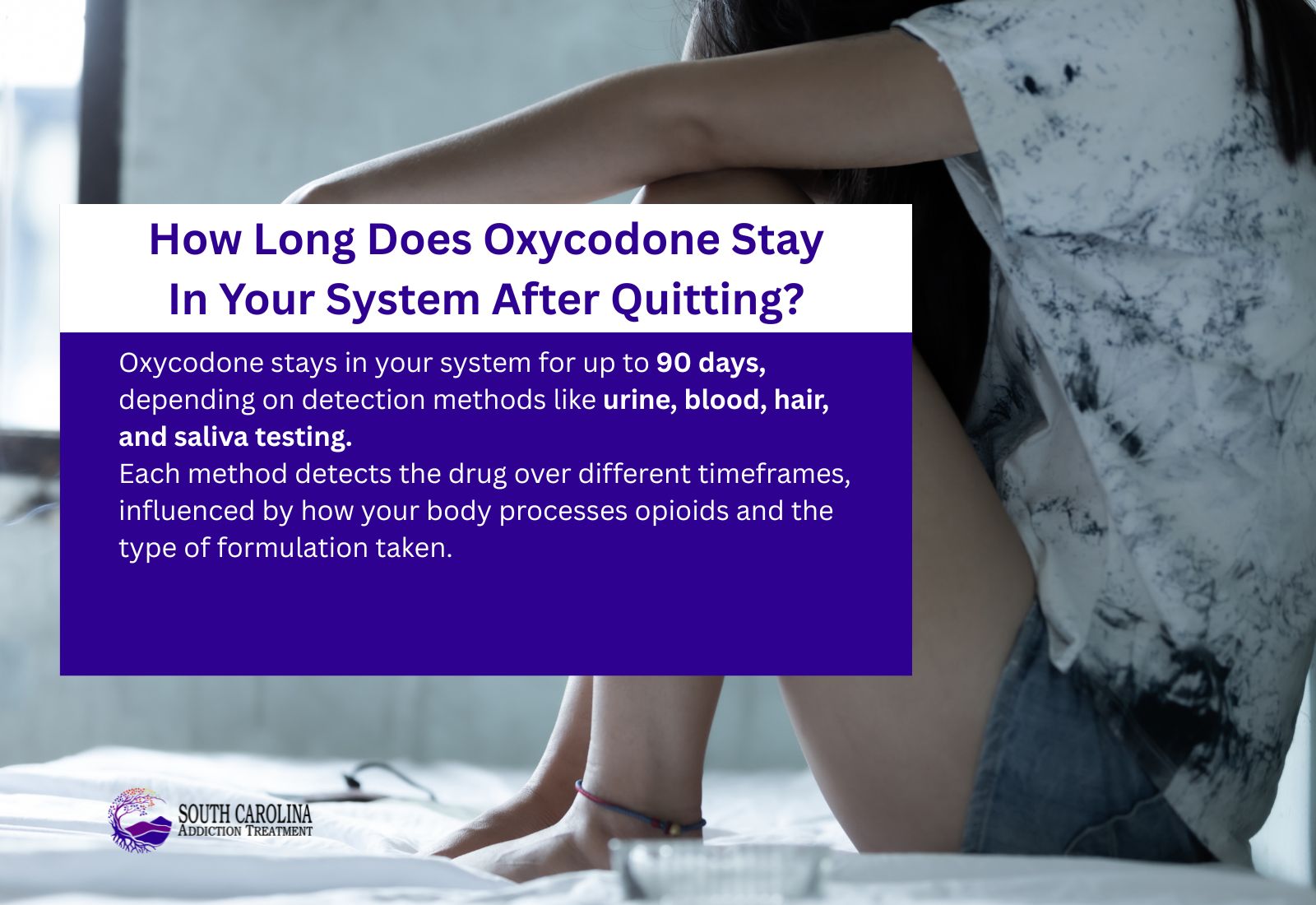
Oxycodone stays in your system for up to 90 days, depending on detection methods like urine, blood, hair, and saliva testing. Each method detects the drug over different timeframes, influenced by how your body processes opioids and the type of formulation taken.
In urine, oxycodone is usually detectable for 1 to 4 days after your last dose. In blood tests, it appears for up to 24 hours. Saliva tests detect it for 1 to 2 days, while hair follicle tests show traces for up to 90 days. Detection time depends on factors like metabolism, age, body fat, and dose frequency.
How Is Oxycodone Processed In The Body?
Oxycodone is processed in the body through the liver, where enzymes break it down into active and inactive metabolites. The primary enzyme involved is CYP3A4, which converts oxycodone into noroxycodone. Another enzyme, CYP2D6, transforms it into oxymorphone, a more potent metabolite with additional analgesic effects.
After liver metabolism, the drug and its byproducts are excreted mostly through urine. The average half-life of oxycodone in the bloodstream ranges from 3.5 to 5.5 hours for immediate-release forms. For extended-release formulations, the half-life stretches to around 7 to 9 hours, depending on the dosage and individual metabolic rate.
What Tests Are Done To Detect Oxycodone In The Body?
The tests done to detect oxycodone in the body are urine tests, blood tests, saliva tests, and hair follicle tests. These methods vary in how long they detect the drug and are used in medical, legal, and employment settings.
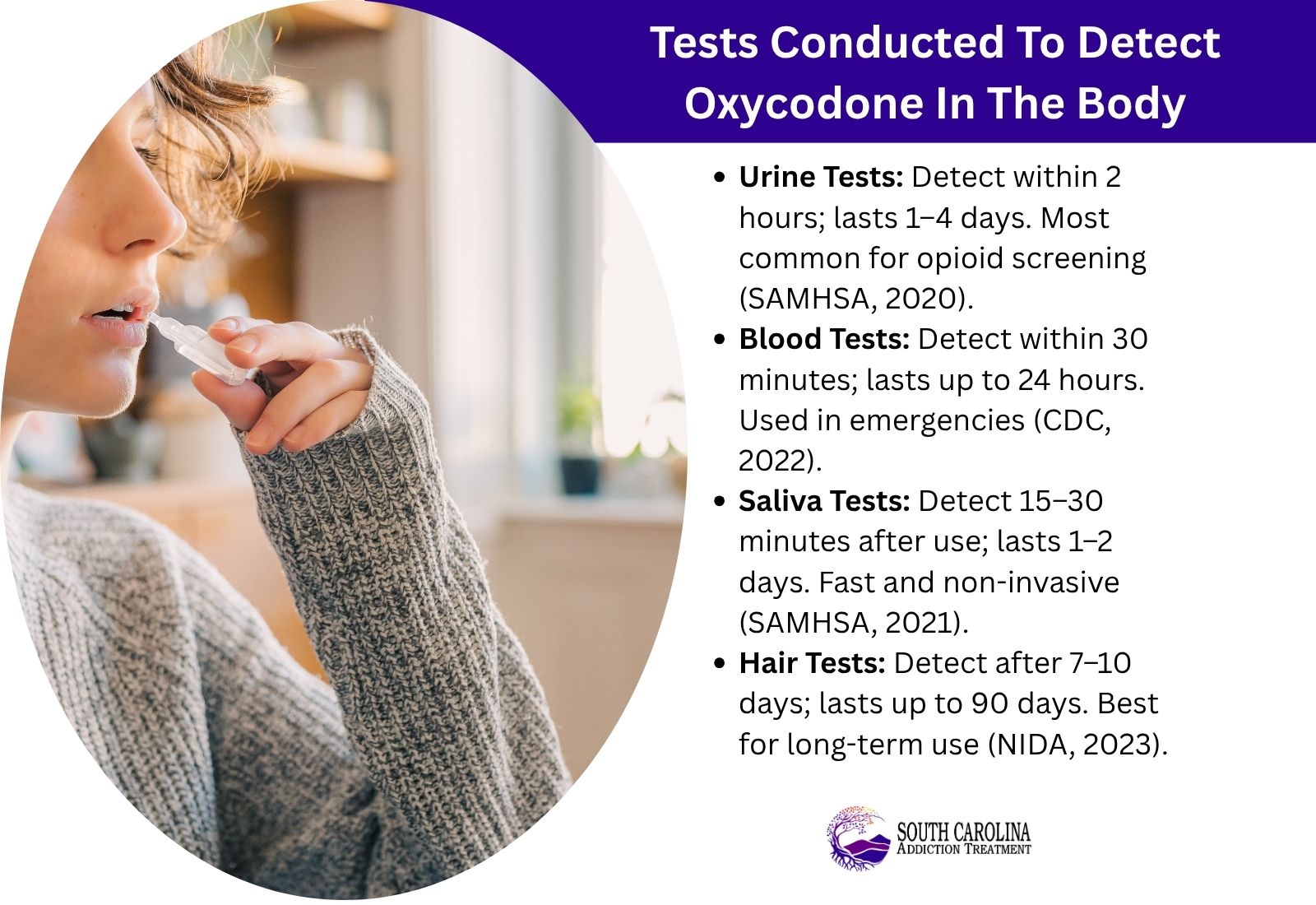
- Urine Tests: Oxycodone is detectable in urine within 2 hours and remains present for 1 to 4 days after use. Urine testing is the most widely used method for opioid screening. According to the Substance Abuse and Mental Health Services Administration (SAMHSA) (2020), urine tests detect opioids in 95% of workplace screenings within 48 hours of use.
- Blood Tests: Oxycodone appears in the blood within 30 minutes and is detectable for up to 24 hours. Blood testing is used when immediate detection is necessary. The Centers for Disease Control and Prevention (CDC) (2022) notes that blood tests are most effective for confirming opioid levels during overdose or acute care situations.
- Saliva Tests: Oxycodone is detectable in saliva 15 to 30 minutes after ingestion and stays for 1 to 2 days. This method is useful for fast, non-invasive drug testing. According to SAMHSA (2021), oral fluid tests detect opioids with 90% accuracy within the first 24 hours post-use.
- Hair Follicle Tests: Traces of oxycodone appear in hair about 7 to 10 days after use and last up to 90 days. It is the best option for detecting long-term patterns of drug use. The National Institute on Drug Abuse (NIDA) (2023) reports hair testing identifies opioid use within a 1.5-inch hair segment covering a 90-day window.
What Are The Factors That Influence Oxycodone Detection Time?
The factors that influence oxycodone drug detection time are frequency of use, metabolism, dosage, hydration, body composition, and age. These elements determine how long the drug remains traceable in your system through urine, blood, saliva, or hair tests.
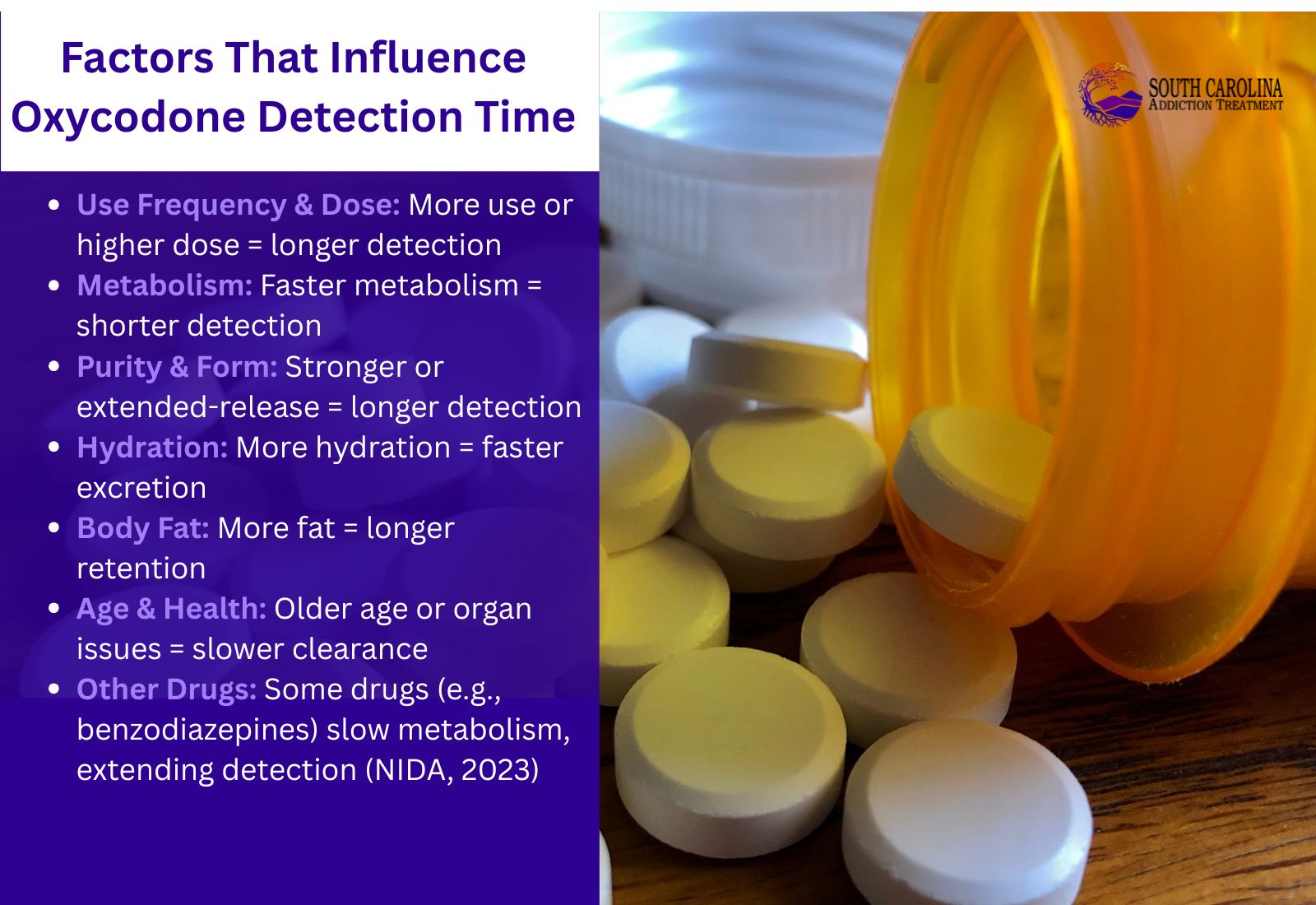
- Frequency and Amount of Use: Repeated or high-dose use of oxycodone causes the drug to build up in your system. This extends the detection window, especially in urine and hair tests.
- Individual Metabolism: Faster metabolism leads to quicker processing and elimination of oxycodone. Slower metabolism means longer retention and detectability of the drug.
- Purity and Dose: Higher-purity or extended-release forms take longer to clear from the body. The strength of the dose also impacts how long it stays detectable in fluids and tissues.
- Hydration: Being well-hydrated slightly speeds up excretion through urine. Dehydration concentrates drug metabolites, possibly increasing detection time.
- Body Fat: Oxycodone is lipophilic, meaning it binds to fat cells. People with higher body fat retain the drug longer, especially in long-term hair testing.
- Age and Organ Function: Older adults or those with impaired liver or kidney function process oxycodone more slowly. This prolongs its presence in the bloodstream and other fluids.
- Polydrug Use: Using other substances alongside oxycodone affects how your body metabolizes it. Some drugs slow down liver enzymes, increasing detection duration. A study by the National Institute on Drug Abuse (NIDA) (2023) showed that individuals using benzodiazepines with opioids had 35% longer opioid detection times due to metabolic interference.
What Is The Half-Life Of Oxycodone?
The half-life of oxycodone is around 3.5 to 5.5 hours for immediate-release forms and 7 to 9 hours for extended-release versions. The half-life of a drug refers to the time it takes for half of the drug to be eliminated from your bloodstream. This measure helps determine how long a substance remains active and detectable in your system.
A shorter half-life means the drug leaves your bloodstream quickly, reducing its detectability in blood tests after about 24 hours. However, even after the drug is inactive, its metabolites remain in urine, saliva, or hair. This affects how reliable different testing methods are, with blood being best for recent use, while hair testing remains effective long after.
Are There Withdrawal Symptoms With Oxycodone?
Yes, there are withdrawal symptoms with oxycodone. These symptoms begin when you suddenly stop or reduce use after regular intake. They are common among people who have used the drug for several weeks or more.
Withdrawal usually starts within 8 to 12 hours after the last dose. Early signs include anxiety, muscle aches, and sweating. Symptoms peak between 48 and 72 hours and include nausea, diarrhea, chills, and intense cravings. Most withdrawal symptoms resolve within 7 to 10 days, but emotional effects like irritability or insomnia last longer.
How To Get Treatment For Oxycodone In South Carolina?
The places to find treatment for oxycodone addiction in South Carolina include licensed rehab centers, local health departments, and the SC HHS opioid treatment directory. You also use the SAMHSA treatment locator to find programs offering detox, inpatient rehab, outpatient services, and medication-assisted treatment (MAT).
Prescription addiction treatment in South Carolina is available through MAT programs using buprenorphine, methadone, or naltrexone. Behavioral therapy, counseling, and relapse prevention planning are also included. Look for centers that offer individualized care plans and support for co-occurring mental health issues.
Does Oxycodone Show Up On A Drug Test?
Yes, oxycodone shows up on a drug test. Most standard 5-panel tests do not detect it unless specifically configured to include synthetic opioids. Extended opioid panels or tests labeled “oxycodone-specific” identify it in urine, blood, saliva, and hair samples.
How Does Oxycodone Compare To Cocaine In Terms Of Detection Times?
Yes, oxycodone generally stays detectable longer than cocaine across most test methods. Cocaine is traceable in urine for 1 to 3 days, while oxycodone remains for 1 to 4 days. In hair tests, both drugs are detected for up to 90 days, but oxycodone’s metabolism is slower, leading to longer presence in blood and saliva.
Can Oxycodone Be Detected After A Week?
Yes, oxycodone can be detected after a week, but only through hair follicle testing. Urine, blood, and saliva tests fall below detection thresholds within 1 to 4 days, making hair the only method that shows traces beyond 7 days.
What Is The Elimination Process For Oxycodone?
Oxycodone is eliminated primarily through liver metabolism and renal excretion. The liver converts it into noroxycodone and oxymorphone, which are then filtered by the kidneys and passed out in urine. Most of the drug leaves your body within 24 to 48 hours, depending on dose and metabolic rate.
Is Oxycodone Addictive?
Yes, oxycodone is addictive. It activates the brain’s reward system, creating a high risk for dependence with repeated use. Physical and psychological cravings develop quickly, especially when taken outside prescribed guidelines.