What Does Cross Faded Mean? Risks of Mixing Alcohol and Weed
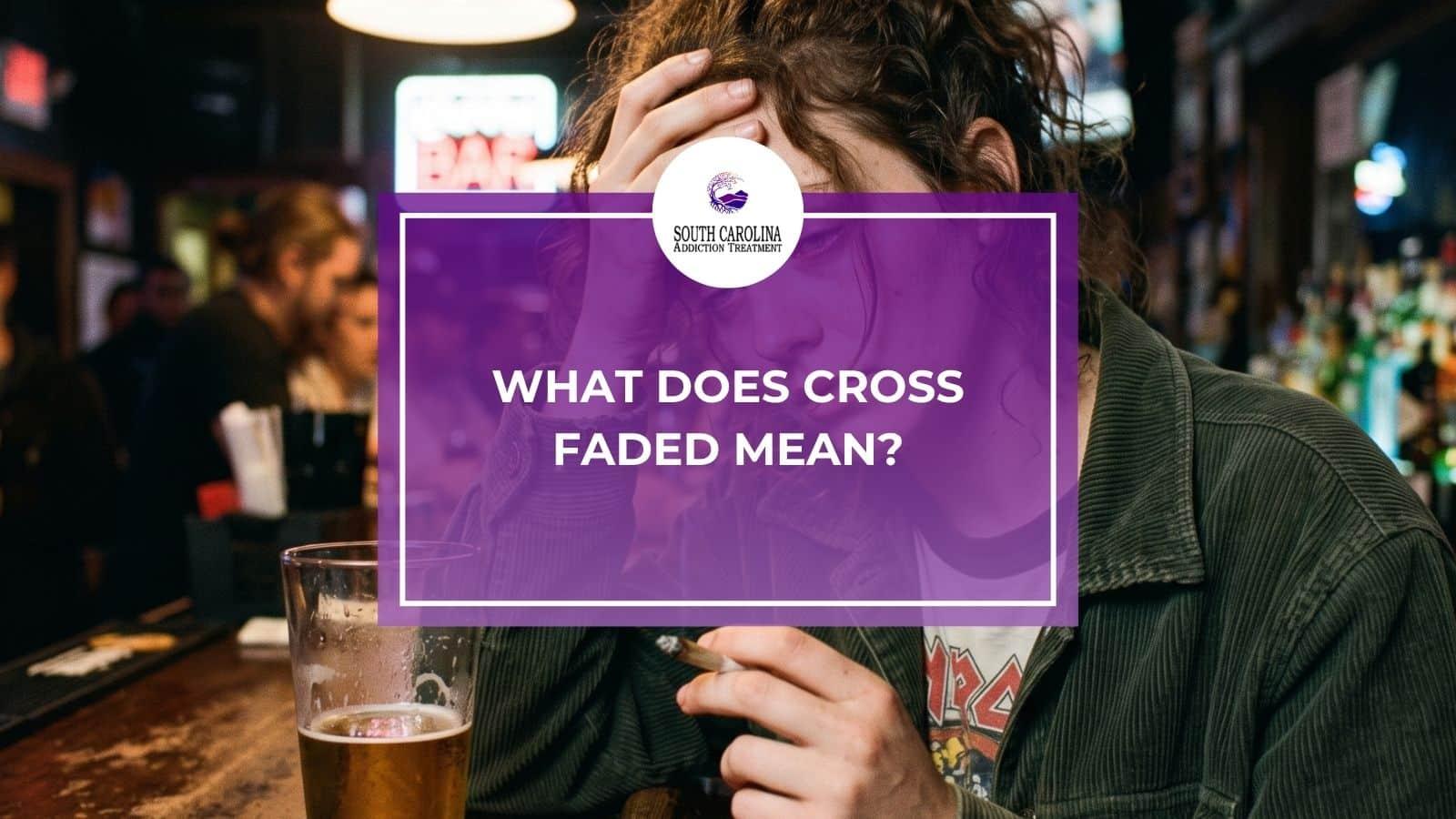
Cross faded means being drunk and high at the same time, intoxicated by both alcohol and cannabis in a single session. The combined effect feels stronger and harder to predict than either substance produces alone.
Most people first try it as a social experiment at a party or concert. For some, the pattern repeats and starts to look like a substance use problem. Knowing how the two drugs interact, how long the effects last, and when casual use crosses a line helps anyone make a safer, informed choice.
Key Takeaways
- Research led by toxicologist Marilyn Huestis found that drinking before smoking roughly doubles peak blood THC concentration, which intensifies the high beyond the dose alone.
- SAMHSA's 2023 National Survey on Drug Use and Health reports that roughly 14 million Americans aged 12 and older used alcohol and cannabis in the same month.
- THC suppresses the vomiting reflex, which removes the body's natural defense against overdrinking and raises the risk of alcohol poisoning during a cross-faded session.
- The DSM-5-TR classifies alcohol use disorder (AUD) and cannabis use disorder (CUD) as separate diagnoses, and repeated cross-fading can drive both at once.
What Does Cross Faded Mean?
Cross faded describes simultaneous intoxication from alcohol and cannabis, where the two substances combine to produce a stronger psychoactive effect than either drug delivers on its own.
What is the Difference Between Cross Faded and Cross Fading?
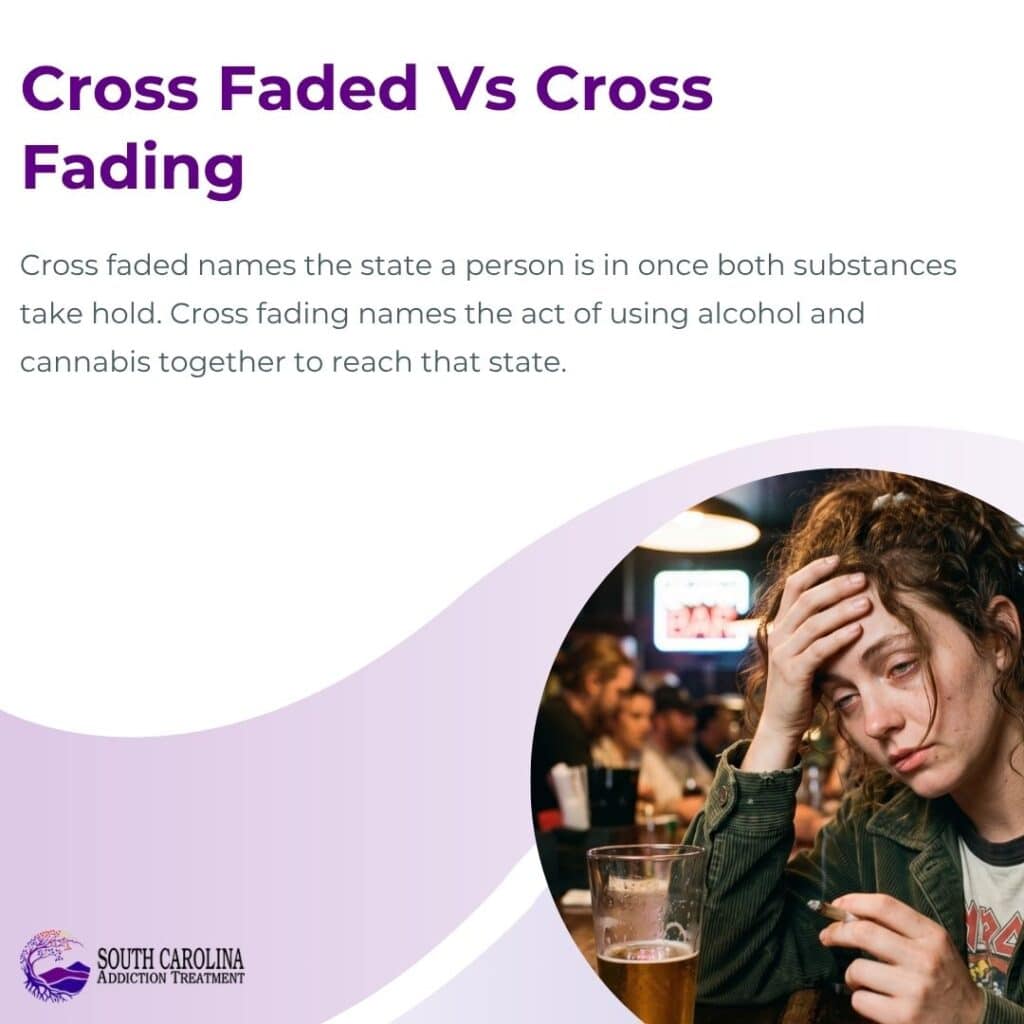
Cross faded names the state a person is in once both substances take hold. Cross fading names the act of using alcohol and cannabis together to reach that state.
The slang spread through college and party culture before social media and hip-hop lyrics carried it into everyday speech. People also call the same state faded, zooted, twisted, or blasted, depending on the region and the crowd.
Why People Mix Alcohol and Weed?
Young adults most often cross fade to intensify a buzz and stretch the good feelings across a longer night out. Many believe cannabis settles alcohol-induced nausea while alcohol deepens the THC high, so the two seem to balance each other.
That balance is mostly a myth. The widespread sense that the combination stays controllable does not match what clinical pharmacology shows, because alcohol changes how the body absorbs THC and removes the warning signs of overconsumption.
How do alcohol and cannabis interact in the brain?
Alcohol and cannabis depress the central nervous system through two different receptor systems at the same time. Ethanol widens blood vessels and pushes more THC into the bloodstream, so the cannabis high lands faster and stronger than the dose alone explains.
How Alcohol Pushes More THC Into the Blood
Ethanol acts as a vasodilator, widening blood vessels and speeding the rate at which THC crosses into circulation. This mechanism roughly doubles peak blood THC concentration compared with smoking the same amount without drinking.
Toxicologist Marilyn Huestis documented this THC spike in controlled dosing studies, showing that alcohol measurably raises plasma THC after identical cannabis doses. Her pharmacokinetic work explains why a familiar amount of weed hits far harder once alcohol is in the system.
Why Coordination and Judgment Collapse Together
THC binds to CB1 cannabinoid receptors concentrated in the cerebellum, the brain's balance and timing center. Alcohol simultaneously boosts GABA inhibitory signaling, and the two effects stack to slow movement and reaction time more than either drug does alone.
Higher THC concentrations also flood CB1 receptors in the prefrontal cortex, the region that governs impulse control and risk assessment. This combined hit impairs judgment quickly, which is why cross-faded people misjudge how impaired they actually are.
How Long Does Being Cross Faded Last?
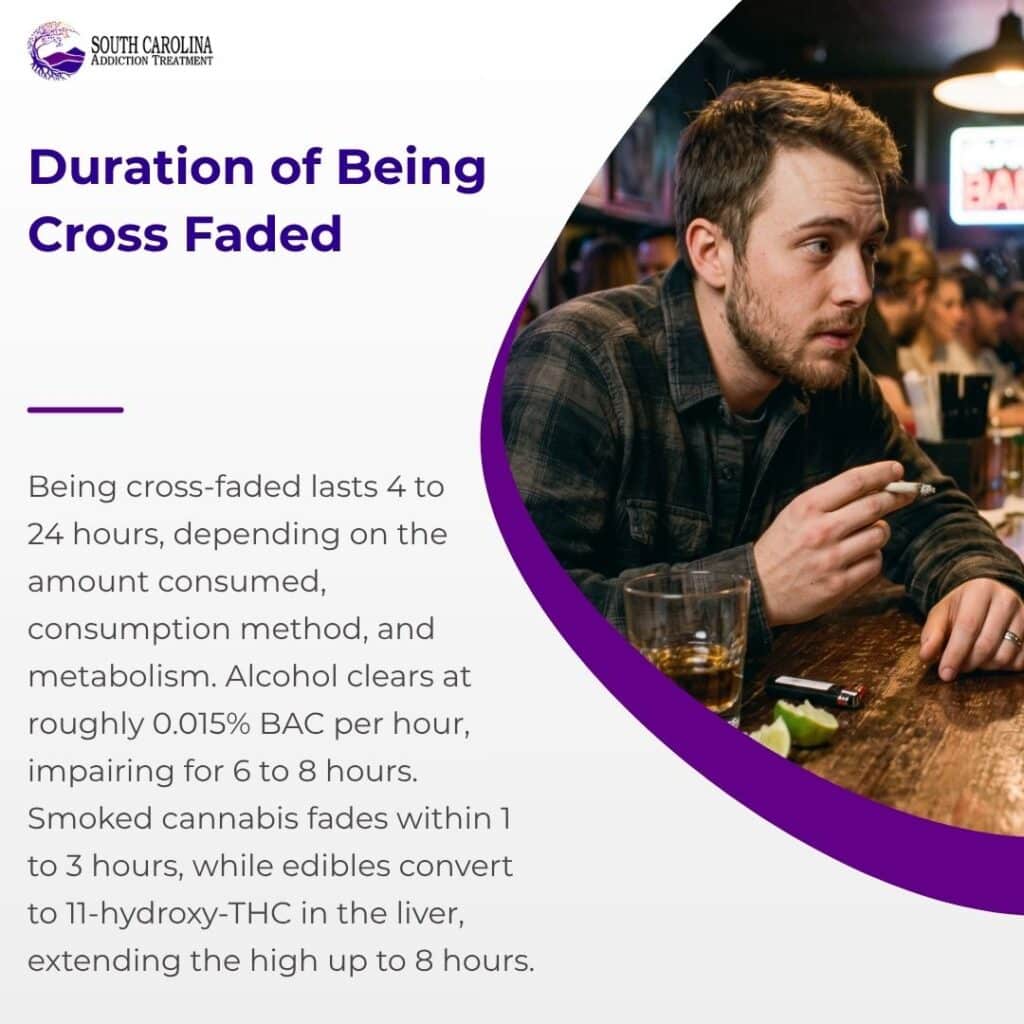
Being cross faded lasts 4 to 24 hours. The exact window depends on the amount consumed, whether the cannabis was smoked or eaten, and the person's metabolism.
Alcohol clears at roughly 0.015 percent blood alcohol concentration (BAC) per hour, so heavy drinking impairs a person for 6 to 8 hours. Smoked cannabis peaks fast and fades within 1 to 3 hours, while edibles convert in the liver to 11-hydroxy-THC and can extend the high up to 8 hours.
- 0 to 30 minutes: Onset begins as alcohol slows coordination and smoked cannabis reaches CB1 receptors within minutes. Effects still feel manageable in this window.
- 30 to 90 minutes: The cross-fade peaks as alcohol-driven vasodilation drives blood THC to its highest point. Nausea, dizziness, and paranoia are most intense here.
- 1 to 3 hours: Alcohol metabolism lowers BAC while THC effects persist, and edible effects may still be climbing during this stretch.
- 3 to 8 hours: Most of the alcohol and smoked THC clear, yet reaction time and judgment stay measurably below normal.
- 8 to 24 hours: Hangover symptoms set in and lingering THC metabolites leave fatigue, brain fog, and a low mood often called the comedown.
What are the symptoms of being cross faded?
Symptoms of being cross faded run from intensified euphoria and dizziness to greening out, panic, and alcohol poisoning. The severity scales with the amount of each substance consumed and the person's individual tolerance.
Common Symptoms of Being Cross Faded
Common symptoms of cross fading reflect the overlap of alcohol sedation and amplified THC effects on the brain and body.
- Dizziness and the spins: CB1 activation in the cerebellum plus alcohol's effect on the inner ear produces a spinning-room sensation stronger than either drug causes alone.
- Nausea and vomiting: Alcohol irritates the stomach lining while high THC levels flip cannabis from a nausea reliever into a nausea trigger.
- Loss of coordination: Combined GABA potentiation and CB1 activation slow cerebellar timing, producing visible unsteadiness and stumbling.
- Paranoia and anxiety: Alcohol-boosted THC overstimulates the amygdala, the brain's fear center, which can tip a calm mood into sudden panic.
- Racing heart: Alcohol raises resting heart rate and high-dose THC adds to it, straining the cardiovascular system in anyone with a heart condition.
Severe Symptoms of Being Cross Faded
Severe cross-faded reactions signal a medical emergency and require an immediate call to 911.
- Loss of consciousness or inability to wake the person
- Slow, shallow, or stopped breathing
- Seizures or uncontrolled shaking
- Chest pain or a severely irregular heartbeat
- Vomiting while passed out or only half awake
- Confusion so deep the person cannot speak or respond
Greening out is the body's reaction to too much THC, made worse when alcohol drives blood THC higher. It brings intense anxiety, heavy sweating, pale skin, and repeated vomiting, and choking on vomit while impaired is a known cause of preventable death.
Long-Term Effects of Regular Cross-Fading
Regular cross fading builds tolerance to both alcohol and THC, pushing a person to use more of each to feel the same effect and accelerating the slide toward dependence.
- Liver strain: Alcohol metabolism generates acetaldehyde, a toxic byproduct that damages liver cells, and adding THC increases the oxidative load the liver must process.
- Memory problems: Heavy alcohol use shrinks the hippocampus while THC suppresses new cell growth there, and together they erode the brain's ability to form memories.
- Weakened judgment: Sustained use thins gray matter in the prefrontal cortex, which dulls impulse control and the ability to weigh risk.
- Worsening mental health: Cannabis use disorder doubles the risk of major depressive disorder, and adding alcohol use disorder deepens that risk into a common dual diagnosis.
When does cross-fading become a substance use problem?
Cross fading becomes a clinical problem once the pattern meets DSM-5-TR criteria for alcohol use disorder, cannabis use disorder, or both at once. Repeated use that continues despite clear harm is the central warning sign.
The DSM-5-TR diagnoses alcohol use disorder and cannabis use disorder separately, with two or more criteria in a 12-month span marking a mild disorder.
The following patterns suggest one or both disorders may be taking hold:
- Using more than planned: Repeatedly drinking or smoking past the limit set at the start of a session.
- Failed attempts to cut back: Trying without success to reduce how often cross fading happens.
- Persistent cravings: Strong urges to combine the two that intrude on work, sleep, or daily life.
- Mounting consequences: Slipping performance, strained relationships, or dropped activities tied directly to the pattern.
- Using despite harm: Continuing even after clear physical or emotional damage shows up.
Greening Out vs. Alcohol Poisoning: Which Emergency Is This?
Greening out and alcohol poisoning both appear during cross-faded sessions, and telling them apart guides whether the danger is mainly THC overconsumption or a life-threatening alcohol overdose. The table below separates the two.
| Feature | Greening Out (Too Much THC) | Alcohol Poisoning (Too Much Alcohol) |
|---|---|---|
| Breathing | Usually normal, sometimes rapid | Slow, shallow, or stopped |
| Consciousness | Anxious, pale, but rousable | Unresponsive, cannot be woken |
| Main risk | Vomiting, panic, choking on vomit | Respiratory failure, death |
| Typical course | Eases within hours with rest | Worsens without emergency care |
| Action | Monitor closely, call 911 if breathing changes | Call 911 immediately |
When either set of signs appears, the safest response is to keep the person on their side and call for help. A person who cannot stay awake or whose breathing slows needs emergency care without delay.
Treatment For Polysubstance Use at South Crolina Addiction Treatment
South Carolina Addiction Treatment treats polysubstance use through medically supervised detox and residential care at its family-owned facility in Simpsonville, South Carolina. The program covers alcohol use disorder, cannabis use disorder, and co-occurring conditions in one plan.
South Carolina Addiction Treatment begins every admission with Track One, a minimum seven-day medical detox supervised by a licensed medical team and overseen by medical director Dr. Dimitrova. The facility extends care into Track Two, a 14-day program that steps clients down to residential treatment on day eight once they are medically cleared.
Frequently Asked Questions
Is being cross faded worse than just being drunk?
Being cross faded carries higher risk than alcohol alone because the two drugs amplify each other. The combination doubles the odds of impaired driving and removes the body's ability to vomit out excess alcohol, which raises overdose risk.
Why does weed make you more drunk?
Cannabis does not raise blood alcohol, but it intensifies the feeling of being drunk by adding sedation and disorientation. Alcohol, in turn, pushes more THC into the blood, so each substance makes the other feel stronger than expected.
Does cross fading show up on a drug test?
Yes. Standard tests detect alcohol and THC separately, and THC metabolites in particular can stay detectable for days to weeks. A test does not show "cross fading" as one result; it flags each substance on its own.
Can you get addicted to being cross faded?
A person can develop dependence on alcohol, cannabis, or both at once. The DSM-5-TR treats them as separate disorders, and alcohol use disorder can advance alongside cannabis dependence in regular users.
References
- National Institute on Drug Abuse. (2023). Polysubstance use facts. https://nida.nih.gov/research-topics/polysubstance-use NIDA
- Substance Abuse and Mental Health Services Administration. (2023). Key substance use and mental health indicators in the United States: Results from the 2023 National Survey on Drug Use and Health.
- American Psychiatric Association. (2022). Diagnostic and Statistical Manual of Mental Disorders, Fifth Edition, Text Revision (DSM-5-TR). American Psychiatric Publishing.
- National Institute on Alcohol Abuse and Alcoholism. (2023). Understanding the dangers of alcohol overdose. NIA
- Lukas, S. E., & Orozco, S. (2001). Ethanol increases plasma delta-9-tetrahydrocannabinol (THC) levels and subjective effects after marijuana smoking in human volunteers. Drug and Alcohol Dependence, 64(2), 143–149.