What Is Quiet BPD? Signs, Symptoms, and Its Link to Addiction
Quiet BPD is an informal term for borderline personality disorder in which emotional pain turns inward rather than outward toward others.
People with quiet BPD experience the same intense emotional dysregulation as classic BPD but express it through people-pleasing, withdrawal, and self-harm rather than visible rage or impulsivity. The experience is no less severe, only less visible to those around them.
The strong overlap between quiet BPD and substance use disorders means addiction is often what finally brings this presentation to clinical attention.
Key Takeaways
- "Quiet BPD" is not a formal DSM-5-TR diagnosis. The term describes the discouraged subtype of borderline personality disorder, characterized by inward-directed emotional dysregulation rather than externalized impulsivity or outward-directed anger.
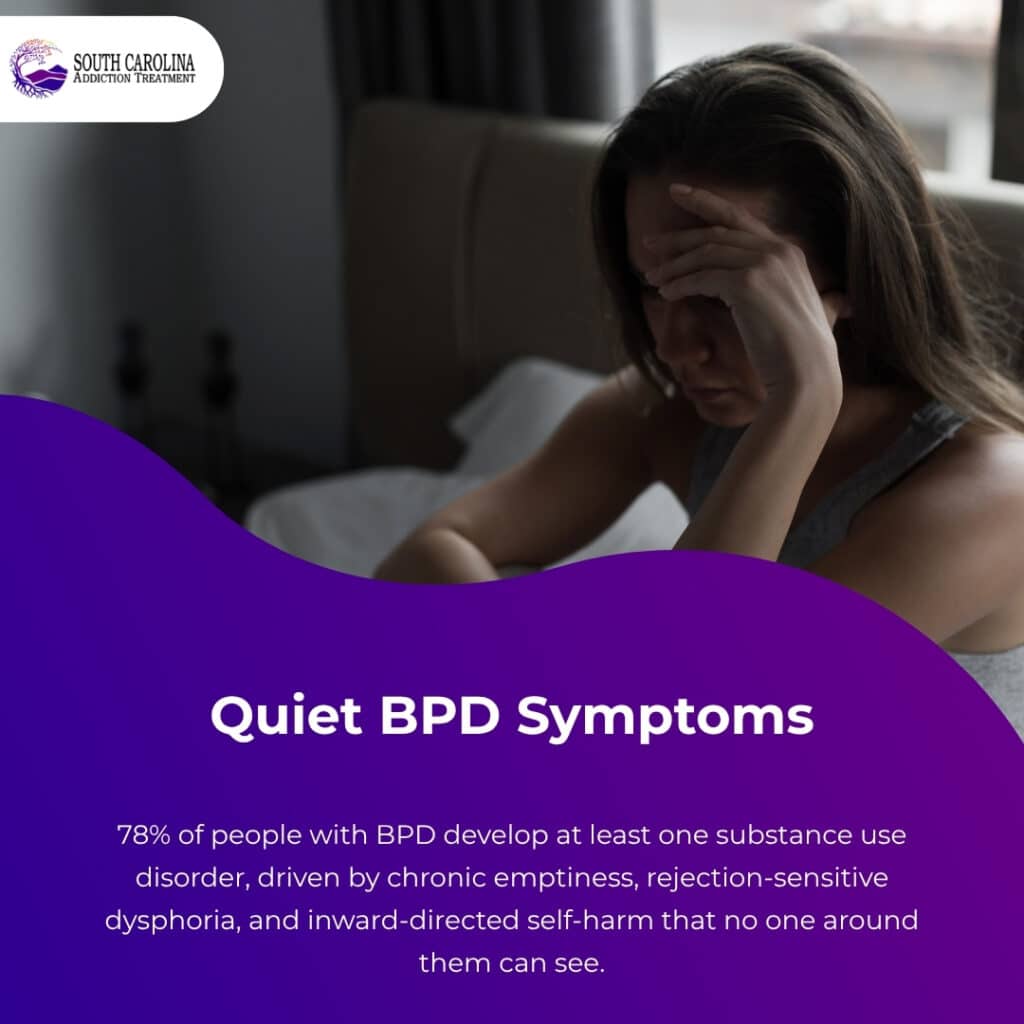
- Approximately 78% of people with borderline personality disorder meet criteria for at least one substance use disorder at some point in their lifetime, according to Trull et al. (2018, Journal of Abnormal Psychology).
- BPD carries an estimated heritability of 40–65%, confirming a substantial neurobiological foundation alongside the environmental causes Linehan's biosocial model identifies (Torgersen et al., 2000, Archives of General Psychiatry).
- Dialectical Behavior Therapy (DBT), developed by Marsha Linehan, is the only treatment validated specifically for BPD across multiple randomized controlled trials and remains the evidence-based first-line intervention for all presentations.
- Co-occurring opioid use disorder, alcohol use disorder, or stimulant use disorder significantly worsens treatment outcomes in quiet BPD when the underlying personality disorder is not simultaneously addressed.
What Is Quiet BPD?
Quiet BPD refers to a borderline personality disorder presentation in which all nine DSM-5-TR diagnostic criteria are expressed primarily through inward-directed behaviors, without the external anger and visible impulsivity most people associate with BPD.
Quiet BPD and the DSM-5-TR: The Formal Diagnosis
- Not an official DSM-5-TR diagnosis: "Quiet BPD" does not appear in the DSM-5-TR. The term describes a recognized presentation pattern within borderline personality disorder (301.83), not a separate condition. Any clinician who identifies "quiet BPD" is formally diagnosing borderline personality disorder with a predominant inward-directed symptom expression.
- DSM-5-TR criteria apply in full: A BPD diagnosis requires five or more of nine criteria: frantic efforts to avoid abandonment, unstable relationships, identity disturbance, impulsivity, suicidal or self-harm behavior, affective instability, chronic emptiness, anger dysregulation, and dissociation or paranoid ideation. All nine apply in quiet BPD; the direction of expression differs.
- The quiet distinction is directional, not categorical: In quiet BPD, anger produces self-harm rather than outward confrontation; abandonment fear generates compulsive self-sufficiency rather than clinging; impulsivity manifests as private substance use or overworking rather than reckless spending or driving.
Theodore Millon's Four BPD Subtypes
- The discouraged subtype: Clinical psychologist Theodore Millon identified the discouraged subtype as the presentation most directly corresponding to quiet BPD. Discouraged BPD is characterized by compliance, submissiveness, and emotions directed inward. Individuals with this subtype appear cooperative and passive while experiencing intense internal suffering.
- The self-destructive subtype: Millon's self-destructive subtype also overlaps with quiet BPD, involving self-punishing behavior, high comorbid depression, and social withdrawal. Both the discouraged and self-destructive subtypes can coexist in the same individual and shift across different relational contexts.
- The petulant and impulsive subtypes: These correspond more closely to the classic outward BPD presentation, including explosive anger and visible impulsivity. Understanding which subtype predominates guides DBT module sequencing and pharmacological selection for each individual client.
What Causes Quiet BPD?
Quiet BPD emerges from the interaction of neurobiological vulnerability and compounding environmental stressors, with no single cause sufficient to produce the disorder.
Neurobiological Causes
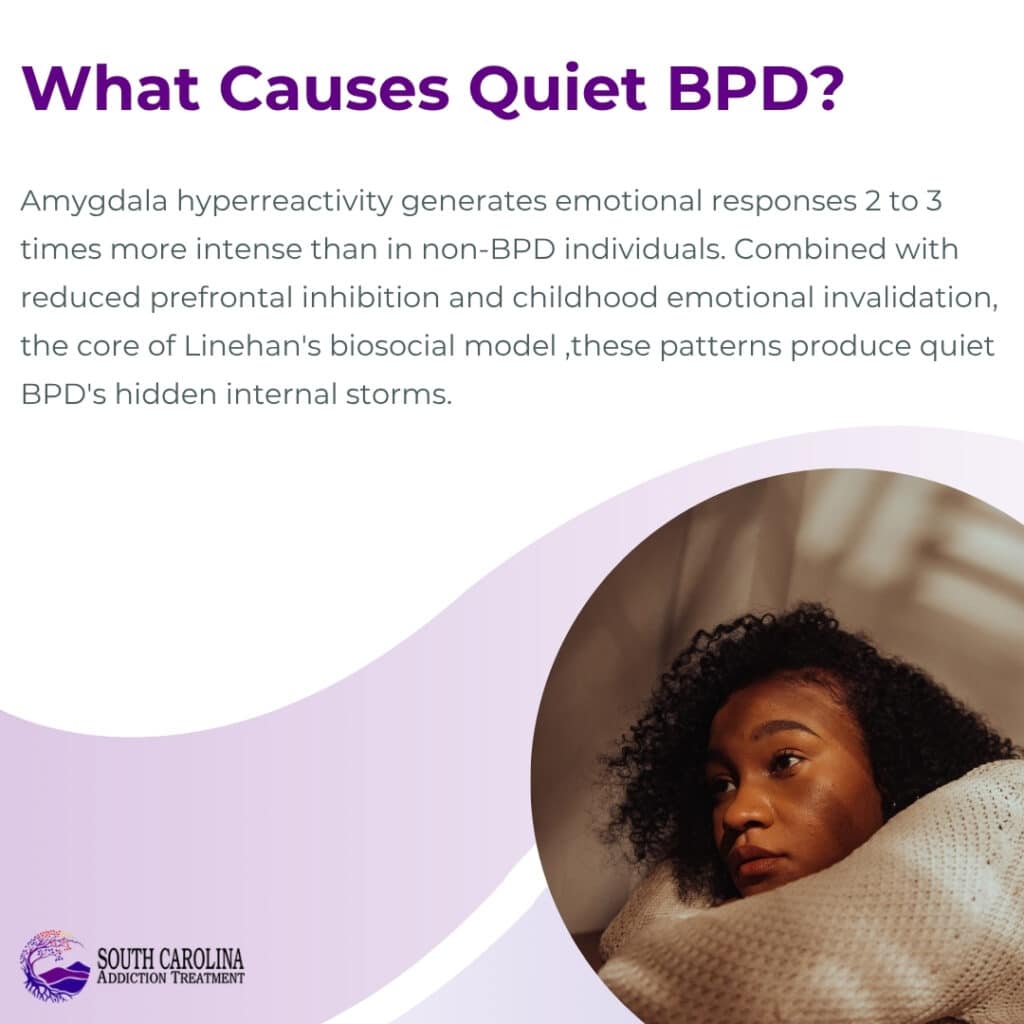
- Amygdala hyperreactivity: The amygdala in BPD generates disproportionate emotional responses to interpersonal cues, including perceived rejection or criticism. Neuroimaging studies show amygdala activation in BPD is two to three times greater than in non-BPD controls, producing an emotional intensity that overwhelms available regulatory capacity.
- Reduced prefrontal cortex inhibition: The prefrontal cortex normally modulates amygdala-generated fear and anger before they overwhelm behavior. In BPD, deficient top-down inhibition allows affective storms to persist, producing the rapid cycling central to emotional dysregulation even when the person appears externally controlled.
- Serotonergic and dopaminergic dysregulation: Serotonergic signaling deficits drive impulsivity, affective instability, and chronic emptiness in BPD. Dopaminergic dysfunction in the mesolimbic pathway produces anhedonia and inner deadness, making substance use disorder a common self-medication pathway in quiet BPD presentations.
Genetic and Hereditary Factors
- Substantial heritability: BPD carries an estimated heritability of 40–65% across twin studies, with first-degree relatives of individuals with BPD showing a five-fold increased disorder risk (Torgersen et al., 2000). Emotional sensitivity, the neurobiological vulnerability at the center of Linehan's biosocial model, is itself heritable.
- Heritable symptom dimensions: Heritability is highest for the affective instability and identity disturbance dimensions of BPD. This means the core features of quiet BPD, intense emotions and an unstable sense of self, have a direct genetic foundation that pharmacological treatment can partially address.
- Gene-environment interaction: Genetic predisposition alone does not produce BPD. A biologically sensitive individual raised without emotional invalidation may not develop the disorder. The interaction between high genetic emotional sensitivity and an invalidating developmental environment is what generates BPD across all subtypes.
Developmental and Environmental Causes
- Linehan's biosocial model of emotional invalidation: Marsha Linehan's biosocial model identifies chronic emotional invalidation as the primary environmental driver of BPD. An invalidating environment systematically dismisses, minimizes, or punishes a child's emotional expression, teaching that internal experiences are wrong or shameful. For biologically sensitive children, this invalidation is especially damaging because their emotional responses are already more intense than their peers.
- Adverse childhood experiences (ACEs): Childhood sexual abuse, physical abuse, emotional neglect, and caregiver separation substantially elevate BPD risk. Retrospective studies find 70–75% of individuals with BPD report childhood trauma (APA, DSM-5-TR). The discouraged subtype associated with quiet BPD shows the strongest link to early emotional neglect, where emotional suppression was an adaptive survival strategy in an unsafe environment.
- Attachment disruption: Insecure attachment styles, particularly anxious and disorganized attachment, predict BPD development in high-risk populations. The "favorite person" phenomenon in quiet BPD directly reflects dysregulated attachment: an intense, destabilizing dependency on one individual to provide external emotional regulation the person cannot generate internally.
Co-occurring Conditions That Amplify Quiet BPD
- Major depressive disorder (MDD): MDD co-occurs with BPD in 41–83% of cases (APA data). MDD deepens the chronic emptiness and anhedonia central to quiet BPD presentations and increases suicidal ideation risk. Distinguishing BPD affective instability from MDD depressive episodes is clinically essential because first-line treatments differ substantially.
- Post-traumatic stress disorder (PTSD): PTSD co-occurs in 25–56% of BPD cases and shares features including hypervigilance, emotional numbing, and dissociation with quiet BPD. Trauma and PTSD in addiction treatment must be addressed alongside BPD for sustained recovery when all three conditions co-occur.
- Anxiety disorders: Generalized anxiety disorder (GAD) and social anxiety disorder frequently co-occur with quiet BPD, reinforcing the social withdrawal and people-pleasing that mask the diagnosis. Anxiety disorders and addiction compound the clinical picture when substances are used to manage both anxiety and BPD emotional dysregulation simultaneously.
Quiet BPD Symptoms
Quiet BPD symptoms are organized below by severity tier: common symptoms present in most presentations, severe symptoms indicating clinical escalation, and long-term effects when the condition remains undiagnosed and untreated.
Common Quiet BPD Symptoms
- Chronic feelings of emptiness: A persistent internal void described as "feeling empty inside" or "going numb" that does not respond to ordinary positive experiences. This symptom directly drives substance use as a means of generating sensation or temporary emotional connection.
- Rejection-sensitive dysphoria: Intense emotional pain triggered by perceived criticism, disappointment, or rejection, experienced internally as shame and self-hatred rather than as anger directed at the other person. Rejection-sensitive dysphoria is one of the most disabling features of quiet BPD and frequently goes unidentified in clinical settings.
- Inward-directed affective instability: Rapid, intense mood shifts cycling over hours to days that are fully experienced internally but suppressed from external expression. Others remain unaware of the person's distress because "masking emotions" is a core adaptive behavior in quiet BPD.
- Compulsive people-pleasing: Systematically suppressing personal needs, preferences, and limits to prevent abandonment. The person withholds authentic self-expression because they believe any disclosure of true feelings or disagreement will cause the loss of important relationships.
- Dissociation and emotional shutdown: Stress-related depersonalization or derealization that functions as an automatic regulatory shutdown when emotional intensity exceeds the threshold the person can consciously manage. Episodes may range from brief moments of unreality to extended periods of emotional numbness.
- Social withdrawal and isolation: Pulling away from relationships entirely after perceived rejection rather than addressing it directly. Clinicians frequently misread this pattern as introversion or clinical depression rather than abandonment-fear avoidance, delaying accurate diagnosis.
Severe Quiet BPD Symptoms
- Non-suicidal self-injury (NSSI): Behaviors such as cutting, burning, or scratching performed privately to regulate emotional overwhelm, generate a sense of being real through physical sensation, or enact self-punishment. NSSI in quiet BPD is rarely disclosed voluntarily due to deep shame and the compulsive pattern of "suffering in silence."
- Substance use as emotional regulation: Alcohol, opioids, benzodiazepines, or stimulants are used specifically to numb rejection pain, suppress dissociation, or fill chronic emptiness. This targeted self-medication produces high risk for co-occurring drug addiction and requires integrated dual-diagnosis treatment to address both the BPD driver and the substance use disorder simultaneously.
- Recurrent suicidal ideation: Active or passive thoughts of suicide driven by emotional overwhelm, perceived burdensomeness, or the sense that the pain is permanent require immediate clinical evaluation. Quiet BPD individuals frequently do not disclose suicidal ideation because they have learned to withhold distress from others throughout their lives.
- Inward-directed splitting: Alternating between viewing the self as completely worthless and others as idealized, with all devaluation directed inward. The person cycles between self-hatred and idealized dependency on others without the outward devaluation cycles that make classic BPD more visible to clinicians and families.
Long-Term Effects of Untreated Quiet BPD
- Progressive substance use disorder: Self-medication of quiet BPD symptoms with alcohol or opioids escalates tolerance and physical dependence over time. Without BPD-specific treatment, relapse rates remain high because the underlying emotional dysregulation driver is never addressed, only pharmacologically suppressed.
- Chronic occupational and relational instability: Untreated quiet BPD produces a repeating pattern of intense relationships that collapse under favorite person dynamics and compulsive self-suppression, resulting in long-term social isolation despite a surface appearance of high functioning.
- Identity erosion: Prolonged people-pleasing and emotional suppression progressively dissolve self-awareness, preferences, and values. The person becomes increasingly uncertain of who they are outside of their relationships, deepening the identity disturbance criterion and making the BPD more treatment-resistant over time.
- Medical consequences of NSSI: Repeated non-suicidal self-injury accumulates tissue damage, infection risk, and the risk of accidental serious injury. Long-term NSSI is associated with a significantly elevated suicide attempt rate in BPD populations, particularly when co-occurring substance intoxication lowers inhibitory control.
How Quiet BPD Is Diagnosed
No diagnostic instrument exists specifically for "quiet BPD"; clinicians diagnose borderline personality disorder using DSM-5-TR criteria and validated instruments, then identify the predominant symptom expression style within that diagnosis.
Clinical Assessment Scales for BPD
- Zanarini Rating Scale for BPD (ZAN-BPD): A clinician-administered instrument measuring BPD symptom severity across affective, cognitive, impulsive, and interpersonal domains on a 0–36 scale. A score of 9 or above indicates clinically significant BPD. The ZAN-BPD captures inward-directed symptom dimensions that behavioral observation alone misses, making it especially valuable for quiet BPD assessment.
- McLean Screening Instrument for BPD (MSI-BPD): A 10-item self-report tool validated as a primary care and emergency department screening measure. Endorsement of 7 or more items correctly identifies BPD in approximately 81% of cases (Zanarini et al., 2003). The MSI-BPD may underperform in quiet BPD because individuals who habitually mask symptoms tend to underreport impulsivity and anger items on self-report.
- SCID-5-PD (Structured Clinical Interview for DSM-5 Personality Disorders): The gold standard for establishing a formal BPD diagnosis. A structured SCID-5-PD interview systematically distinguishes BPD from C-PTSD, major depressive disorder, and other personality disorders with overlapping presentations. It is the recommended diagnostic instrument when quiet BPD is suspected but initial screening tools are inconclusive.
Why Quiet BPD Is Frequently Misdiagnosed
- High-functioning surface presentation: Quiet BPD individuals often present as composed, motivated, and relationally agreeable in clinical settings, concealing the internal dysregulation that defines the disorder. Clinicians relying on behavioral observation rather than structured instruments regularly miss the diagnosis entirely or attribute symptoms to depression alone.
- Symptom overlap with major depression: Chronic emptiness, social withdrawal, and passive suicidal ideation are shared features of quiet BPD and MDD. Without a full structured interview assessing all nine BPD criteria, quiet BPD is routinely diagnosed as treatment-resistant depression and treated with antidepressants alone, with limited effect on the personality disorder dimension.
- Overlap with C-PTSD: Complex PTSD and quiet BPD share emotional dysregulation, dissociation, identity disruption, and self-harm. The primary differential is whether identity disturbance is stable and negatively self-referential (C-PTSD) or rapidly shifting and context-dependent (BPD). Co-occurrence is common and requires concurrent treatment targeting both conditions.
Quiet BPD vs. C-PTSD vs. Major Depression
These three conditions share meaningful symptom overlap; the table below identifies the distinguishing features most useful for differential diagnosis in clinical and treatment settings.
| Feature | Quiet BPD | C-PTSD | Major Depression |
|---|---|---|---|
| Core mechanism | Emotional dysregulation + identity disturbance | Dysregulation rooted in chronic trauma | Sustained low mood and anhedonia |
| Identity pattern | Rapidly shifting, context-dependent | Fragmented, tied to trauma narrative | Intact but negatively distorted |
| Interpersonal pattern | Intense attachment cycles, favorite person dynamics | Avoidant, generalized distrust | Withdrawal without intense attachment cycles |
| Mood reactivity | Rapid shifts cycling hours to days | Triggered primarily by trauma cues | Persistent low baseline, less reactive |
| Abandonment fear | Extreme, central organizing feature | Present but secondary to safety concerns | Not a core diagnostic criterion |
| Self-harm pattern | Common, used for emotional regulation | Present, linked to trauma re-experiencing | Possible but not typically used as a regulation tool |
| First-line treatment | DBT, MBT | EMDR, CPT, trauma-focused CBT | SSRIs, CBT |
Treatment for Quiet BPD and Co-occurring Addiction
Quiet BPD responds to treatments that directly target emotional dysregulation and relational patterns driving self-destructive behavior; co-occurring substance use disorder requires integrated dual-diagnosis treatment rather than sequential single-condition care.
First-Line Evidence-Based Therapies
- Dialectical Behavior Therapy (DBT): Developed by Marsha Linehan specifically for BPD, DBT delivers four skill modules targeting emotional regulation, distress tolerance, interpersonal effectiveness, and mindfulness. DBT is the most extensively validated treatment for BPD across randomized controlled trials and produces direct reductions in self-harm, suicidal behavior, and substance use in BPD populations. It is the first-line recommendation for quiet BPD across all treatment settings.
- Mentalization-Based Treatment (MBT): Developed by Bateman and Fonagy, MBT addresses deficits in mentalization, which is the capacity to understand one's own and others' mental states. MBT reduces BPD symptom severity and is validated in individual and group formats. It directly addresses the attachment pathology that drives favorite person dynamics and relational instability in quiet BPD.
- Cognitive behavioral therapy (CBT): CBT targets the maladaptive cognitions driving abandonment schemas, self-blame cycles, and identity disturbance. When combined with DBT skills training, CBT addresses the cognitive patterns that perpetuate inward-directed self-harm and compulsive people-pleasing in quiet BPD presentations.
Pharmacological Support
- SSRIs and SNRIs: Sertraline, fluoxetine, and venlafaxine reduce affective instability and the co-occurring depression and anxiety that amplify quiet BPD symptom burden. No medication is FDA-approved specifically for BPD; pharmacotherapy addresses symptom dimensions rather than the disorder as a whole.
- Mood stabilizers: Lamotrigine reduces affective instability and impulsivity in BPD with the strongest evidence base among mood stabilizers for the emotional dysregulation dimension. Valproate provides similar benefits for impulsivity when lamotrigine is not tolerated or contraindicated.
- Atypical antipsychotics: Low-dose quetiapine and olanzapine reduce paranoid ideation, dissociation, and acute affective instability. They are used adjunctively during high-acuity periods rather than as primary maintenance treatment.
- MAT for co-occurring opioid use disorder: When co-occurring opioid use disorder is present, medication-assisted treatment (MAT) with buprenorphine or naltrexone is integrated alongside BPD-targeted therapy. MAT reduces illicit opioid use, which directly destabilizes quiet BPD symptom control and undermines DBT skill acquisition.
Second-Line and Adjunct Treatments
- Schema therapy: Addresses early maladaptive schemas including the abandonment/instability and defectiveness/shame schemas that are particularly prominent in quiet BPD. Schema therapy for BPD is validated in multiple European randomized controlled trials and is especially appropriate for individuals who have not fully engaged with DBT.
- EMDR (Eye Movement Desensitization and Reprocessing): Targets co-occurring PTSD and trauma memories that actively drive quiet BPD symptom episodes in individuals with significant ACE histories. EMDR reduces the trauma-related triggers that amplify emotional dysregulation beyond baseline BPD reactivity.
- Group skills training: DBT skills groups provide simultaneous skill acquisition and a structured corrective interpersonal experience that directly challenges the social withdrawal and compulsive self-suppression central to quiet BPD, within a contained clinical setting.
Emerging and Investigational Treatments
- Ketamine-assisted therapy (off-label): Emerging case series and small trials suggest sub-anesthetic ketamine reduces acute suicidal ideation and may temporarily normalize affective dysphoria in treatment-resistant BPD. Phase 2 trials are ongoing; ketamine-assisted therapy is not yet a standard clinical BPD intervention.
- Transcranial magnetic stimulation (TMS): FDA-cleared for major depressive disorder and used off-label for the depressive feature dimensions of BPD. TMS targets the dorsolateral prefrontal cortex to strengthen top-down emotional regulation, which is the same neural pathway implicated in BPD's deficient inhibitory control.
Treatment at SC Addiction Treatment
SC Addiction Treatment (SCAT) in Simpsonville, South Carolina, provides CARF-accredited, medically supervised detox and residential care for adults with co-occurring substance use disorder and mental health conditions including borderline personality disorder presentations.
Medically Supervised Detox with Psychiatric Assessment
- The Big Four assessments within 24 hours: All clients complete a nursing assessment, biopsychosocial assessment, history and physical, and psychiatric evaluation within the first 24 hours of admission. The psychiatric evaluation, supervised by Medical Director Dr. Dimitrova (MD, psychiatrist), identifies co-occurring mental health presentations and ensures that emotional dysregulation is clinically managed during the medically vulnerable detox period.
- Low census, high-acuity clinical attention: A maximum of 16 beds and a 5-to-6 clinical staff-to-client ratio ensures that clients with complex dual-diagnosis presentations receive individualized clinical attention throughout Track One. Licensed staff coverage is maintained 24 hours daily.
- Daily DBT-informed group programming: A minimum of three structured group sessions runs daily throughout both tracks. Art therapy, dog therapy, and yoga sessions provide additional self-regulation skill-building in the days preceding the clinical transition to residential care.
Residential Program with Dual Diagnosis Support
- Track Two clinical transition on Day 8: Clients who receive medical clearance transition to residential privileges on Day 8. Individual counseling sessions begin with SCAT's licensed counseling staff, and optional family therapy is available for Track Two clients. For clients with quiet BPD, individual sessions initiate the direct attachment and mentalization work that complements the group-based DBT programming.
- Structured community activities: Track Two clients participate in weekly off-site activities voted on by the client group, including community outings, recovery meetings, and recreational activities. These structured social exposures directly challenge the social withdrawal and isolation that quiet BPD produces, within a supervised and clinically supported setting.
- Full continuum aftercare planning: SCAT's clinical case manager coordinates post-discharge referrals to partial hospitalization and intensive outpatient programs, BPD-specialist outpatient therapists, and MAT clinic connections where applicable. Aftercare planning addresses the BPD treatment trajectory alongside the substance use disorder to prevent emotionally driven relapse.
For information about addiction treatment programs at SCAT or to begin the intake process, contact the admissions team directly.
"Clients with quiet BPD are among the most underidentified in addiction treatment settings. They often present as composed and motivated, but are carrying enormous internal distress that is rarely disclosed without direct clinical inquiry. Early psychiatric evaluation is essential, because treating the substance use disorder without addressing the underlying personality disorder almost invariably leads to relapse driven by the same emotional dysregulation the substances were managing."
Sahil Talwar, PA-C, MBA, Medical Reviewer, SC Addiction Treatment
Frequently Asked Questions
What are quiet BPD symptoms?
Quiet BPD symptoms include chronic feelings of emptiness, rejection-sensitive dysphoria, hidden non-suicidal self-injury, compulsive people-pleasing, social withdrawal, dissociative episodes, and suppressed inward-directed rage. Unlike classic BPD, these symptoms are not externally visible. They are experienced internally and frequently misdiagnosed as treatment-resistant depression by clinicians unfamiliar with the discouraged BPD subtype identified by Theodore Millon.
Is quiet BPD real?
Yes. Quiet BPD describes a clinically documented presentation pattern within borderline personality disorder, corresponding to the discouraged subtype in Theodore Millon's taxonomy. Research consistently identifies individuals who meet all nine DSM-5-TR BPD criteria but express them primarily through inward-directed behavior. The formal diagnosis is BPD; the "quiet" designation describes the direction of symptom expression, not a lesser or separate condition.
What is the lowest form of BPD?
There is no officially ranked hierarchy of BPD severity by subtype. The discouraged subtype most associated with quiet BPD is sometimes described as less visible because its symptoms are directed inward. Clinical severity is measured by instruments such as the Zanarini Rating Scale for BPD (ZAN-BPD); low scores reflect lower current symptom burden regardless of subtype. Internal suffering in quiet BPD is not reduced, only less externally observable.
Why does BPD hurt so much?
BPD produces intense emotional pain because amygdala hyperreactivity generates emotional responses two to three times more intense than those of non-BPD individuals, while reduced prefrontal cortex inhibition prevents this intensity from being regulated. For quiet BPD individuals, this internal emotional storm has no external outlet, making the experience feel physically overwhelming and without relief. The absence of visible expression is frequently mistaken for the absence of distress.
What does BPD look like in everyday life?
In everyday life, quiet BPD looks like extreme responsiveness to perceived slights, exhausting efforts to keep others satisfied, episodes of sudden withdrawal or "going offline" emotionally, private self-harm or substance use, and a deeply unstable sense of identity that shifts depending on who the person is with. Daily functioning may appear stable to the outside world while the person experiences continuous internal distress and emotional dysregulation.
Can quiet BPD lead to addiction?
Yes. Research by Trull et al. (2018) found that 78% of people with BPD meet criteria for at least one substance use disorder during their lifetime. In quiet BPD specifically, substances are used to numb rejection pain, fill chronic emptiness, and suppress dissociation. Alcohol use disorder, opioid use disorder, and stimulant use disorder are the most common co-occurring diagnoses in this population.
How is quiet BPD different from classic BPD?
Classic BPD features externalized anger, visible impulsivity, and overtly unstable interpersonal relationships. Quiet BPD involves the identical emotional intensity and DSM-5-TR criteria, but all expression is directed inward. Anger becomes self-harm rather than outward confrontation. Abandonment fear manifests as compulsive self-sufficiency rather than clinging.
Impulsivity appears as private substance use or overworking rather than externally visible reckless behavior.
How is quiet BPD treated?
Dialectical Behavior Therapy (DBT) is the first-line treatment for BPD including quiet presentations, validated across multiple randomized controlled trials. Mentalization-Based Treatment (MBT) is the validated second-line option. Pharmacologically, lamotrigine and SSRIs target affective instability and depressive symptom dimensions.
When co-occurring substance use disorder is present, integrated dual-diagnosis treatment combining DBT skills training with MAT produces substantially better long-term outcomes than treating either condition sequentially.
References
- American Psychiatric Association. (2022). Diagnostic and Statistical Manual of Mental Disorders (5th ed., text rev.). American Psychiatric Publishing.
- Linehan, M. M. (1993). Cognitive-Behavioral Treatment of Borderline Personality Disorder. Guilford Press.
- Millon, T., & Davis, R. D. (1996). Disorders of Personality: DSM-IV and Beyond. Wiley.
- Torgersen, S., Lygren, S., Oien, P. A., Skre, I., Onstad, S., Edvardsen, J., Tambs, K., & Kringlen, E. (2000). A twin study of personality disorders. Comprehensive Psychiatry, 41(6), 416–425.
- Trull, T. J., Jahng, S., Tomko, R. L., Wood, P. K., & Sher, K. J. (2018). Revised NESARC personality disorder diagnoses: Gender, prevalence, and comorbidity with substance dependence disorders. Journal of Personality Disorders, 24(4), 412–426.
- Zanarini, M. C., Frankenburg, F. R., Hennen, J., Reich, D. B., & Silk, K. R. (2003). The McLean Study of Adult Development (MSAD): Overview and implications of the first six years of prospective follow-up. Journal of Personality Disorders, 17(6), 505–523.
- Bateman, A., & Fonagy, P. (2009). Randomized controlled trial of outpatient mentalization-based treatment versus structured clinical management for borderline personality disorder. American Journal of Psychiatry, 166(12), 1355–1364.
- National Institute on Drug Abuse. (2023). Comorbidity: Substance use disorders and other mental illnesses DrugFacts. U.S. Department of Health and Human Services. https://nida.nih.gov
- Substance Abuse and Mental Health Services Administration. (2024). Key Substance Use and Mental Health Indicators in the United States: Results from the 2023 National Survey on Drug Use and Health. U.S. Department of Health and Human Services.