Alcohol Detox: Stages, Medications, and What to Expect
Alcohol detox is the first step in breaking free from alcohol dependence, clearing your system safely while managing withdrawal symptoms. In South Carolina, over 11,500 people entered treatment primarily for alcohol use in a single year, as reported by SAMHSA, highlighting how many rely on detox to begin recovery.
Detox unfolds in three key stages: evaluation, stabilization, and preparation for treatment, and can take place in either inpatient or outpatient settings depending on medical needs. Medications like benzodiazepines and anticonvulsants are used to reduce dangerous symptoms such as seizures or delirium tremens.
Common side effects of alcohol detox include anxiety, tremors, and nausea, with severe cases requiring round-the-clock medical care. Most people complete detox within 4 to 7 days, though lingering symptoms may last longer.
What is Alcohol Detox?
Alcohol detoxification, commonly known as alcohol detox, is the first stage of treating alcohol use disorder (AUD). It clears alcohol from your system and manages withdrawal symptoms after you stop drinking. Detox addresses physical dependence and prepares your body for long-term treatment.
In South Carolina, alcohol was the primary substance in over 11,500 rehab admissions in one year, according to SAMHSA, showing how everyday detox is a starting point. Without detox, lingering toxins and withdrawal symptoms delay or derail recovery.
Why Is Alcohol Detox Important?
Alcohol detox is important because it removes toxins, controls withdrawal symptoms, and prevents dangerous health risks. Quitting alcohol suddenly causes tremors, seizures, and delirium tremens, conditions that need medical supervision.
South Carolina's rate of drug- and alcohol-related deaths exceeds the national average, according to CDC WONDER, reinforcing the need for safe, medically guided detox. Detox helps you stabilize physically so you can continue with rehab and avoid relapse or serious complications.
What Are The Stages of Alcohol Detox?
The three stages of alcohol detox are evaluation, stabilization, and entry into treatment. Evaluation involves assessing the individual's medical and psychological condition; stabilization provides medical and psychological support to manage withdrawal symptoms; and entry into treatment prepares the individual for ongoing treatment and recovery.
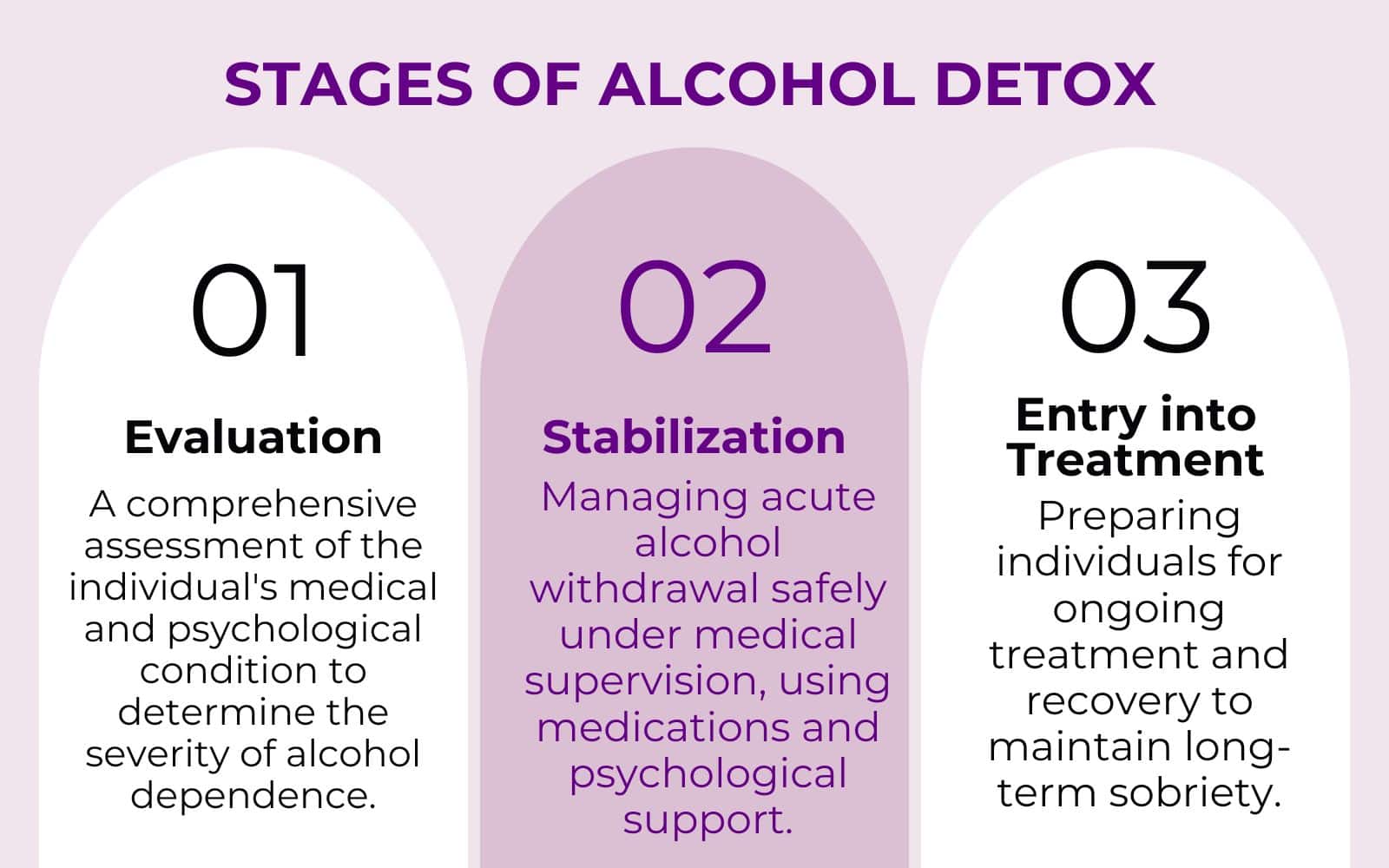
The three stages of alcohol detoxification are explained below:
1. Evaluation
The first stage involves a complete assessment of your medical and mental health to determine the severity of alcohol dependence. This process ensures a personalized treatment plan tailored to the patient's needs. The evaluation occurs within the first 24 hours of admission.
Common symptoms identified during evaluation include:- Anxiety
- Tremors
- Nausea
- Insomnia
2. Stabilization
This stage manages acute alcohol withdrawal with medications like benzodiazepines, hydration, and psychological support. It lasts 1 to 3 days under medical supervision.
Symptoms managed during stabilization include:- Increased heart rate
- Elevated blood pressure
- Hallucinations
- Seizures
3. Entry into treatment
Entry into treatment is the initial stage of alcohol detox, marking the beginning of the recovery journey. This phase involves recognizing the need for help and seeking professional assistance. During this stage, individuals undergo assessments to determine the severity of their alcohol use disorder and any co-occurring health conditions.
The steps involved in entry for treatment include:- Assessment and Evaluation: Medical staff assess physical, mental, and emotional health to determine alcohol severity and create a personalized treatment plan.
- Motivation and Commitment: Counseling helps build motivation to quit and strengthens commitment to recovery.
- Education and Planning: Patients learn what to expect in detox and how continued treatment supports long-term sobriety.
- Medical Stabilization and Preparation: Severe cases are stabilized before detox with monitoring and hydration to prevent complications.
What Are The Types of Alcohol Detox?
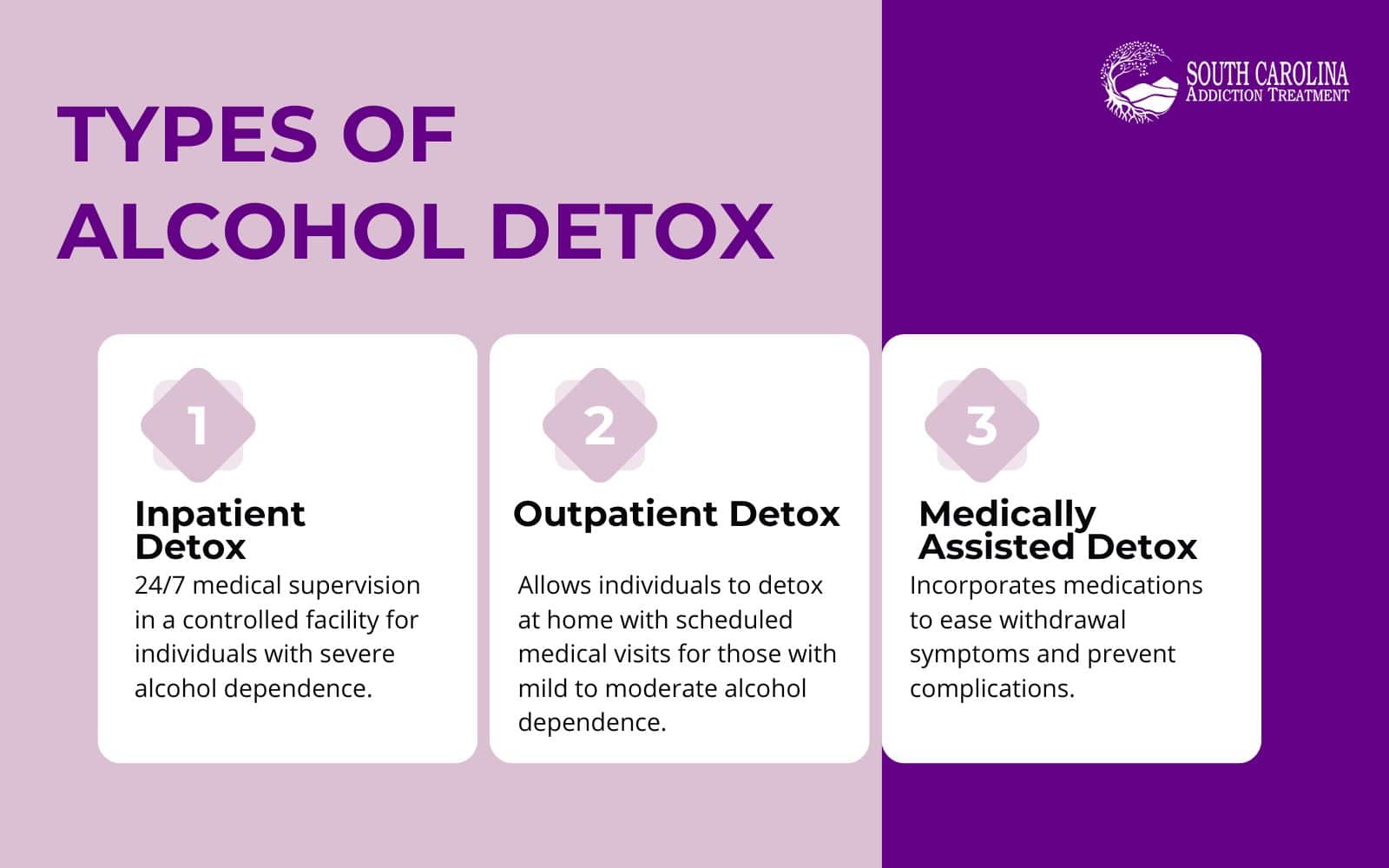
The types of alcohol detox include inpatient detox, outpatient detox, and medically assisted detox.
The types of alcohol detox are explained below:
Inpatient Detox
Inpatient detox provides 24/7 medical care in a controlled setting, ideal for those with severe withdrawal symptoms or co-occurring conditions. It includes medication, emergency care, and counseling in a structured environment.
South Carolina Addiction Treatment offers medically supervised detox programs with small therapy groups, compassionate staff, and a safe space to begin recovery. According to SAMHSA TIP 45, inpatient detox is best for managing severe withdrawal and preparing for further treatment.
Outpatient Detox
Outpatient detox lets individuals detox at home while attending scheduled medical appointments and counseling. It works for those with mild to moderate alcohol dependence and a stable home life.
It's less intensive than inpatient care, offering more flexibility and lower costs, but lacks 24-hour supervision. SAMHSA TIP 45 confirms that outpatient detox is effective for people without severe withdrawal risks.
Medically Assisted Detox
Medically assisted detox combines medications and supervision to manage withdrawal safely. Benzodiazepines help prevent seizures, and beta-blockers or anticonvulsants may control other symptoms.
This approach is used in hospitals or licensed facilities like South Carolina Addiction Treatment, which offers medically monitored detox tailored to each client's needs. This method is important for people with a high risk of complications and provides a stable start to long-term recovery.
What Medications Are Used for Alcohol Detox?
The medications used for alcohol detox include benzodiazepines, anticonvulsants, and adrenergic medications. These medications are selected based on individual patient needs, the severity of withdrawal symptoms, and the presence of any co-occurring medical conditions.
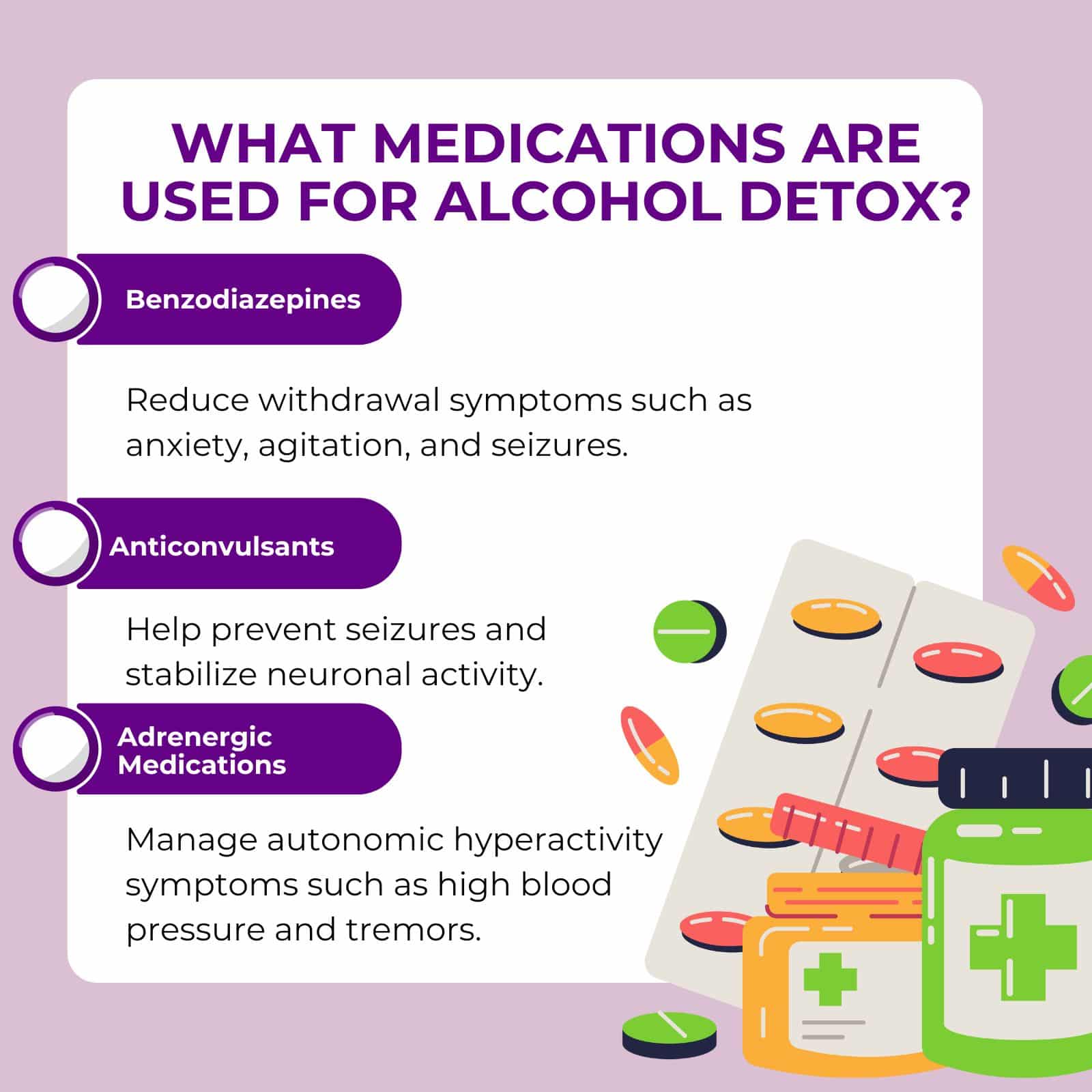
- Benzodiazepines: Diazepam and chlordiazepoxide reduce anxiety, agitation, and seizure risk by calming the central nervous system. They are the gold standard for managing alcohol withdrawal. ASAM confirms that benzodiazepines prevent seizures and reduce symptom severity.
- Anticonvulsants: Medications like carbamazepine and valproate stabilize brain activity and lower seizure risk. They are often used when benzodiazepines aren't suitable. WHO supports anticonvulsants as effective alternatives in withdrawal treatment.
- Adrenergic Medications: Clonidine and propranolol manage high blood pressure, rapid heart rate, and tremors. They improve comfort but don't prevent seizures. ASAM recommends using them as add-ons to benzodiazepines for specific symptoms.
- Beta-blockers lower heart rate and blood pressure during withdrawal. They're used alongside other medications for symptom relief. SAMHSA TIP 45 advises careful use in patients with persistent hypertension or tachycardia.
Do Supplements Help in Alcohol Detox?
Yes, certain supplements help in alcohol detoxification by addressing nutritional deficiencies common in individuals with alcohol use disorder. Chronic alcohol consumption leads to a deficiency in thiamine (vitamin B1), essential for brain function.
According to a study by the National Institutes of Health titled "Wernicke-Korsakoff Syndrome," Wernicke-Korsakoff syndrome is a brain disorder due to vitamin B1 (thiamine) deficiency. Supplementation with thiamine is important to prevent neurological complications such as Wernicke encephalopathy.
What Are the Side Effects of Alcohol Detox?
The side effects of alcohol detox include anxiety, tremors, and, in severe cases, seizures. These symptoms begin within hours of the last drink and persist for several days.
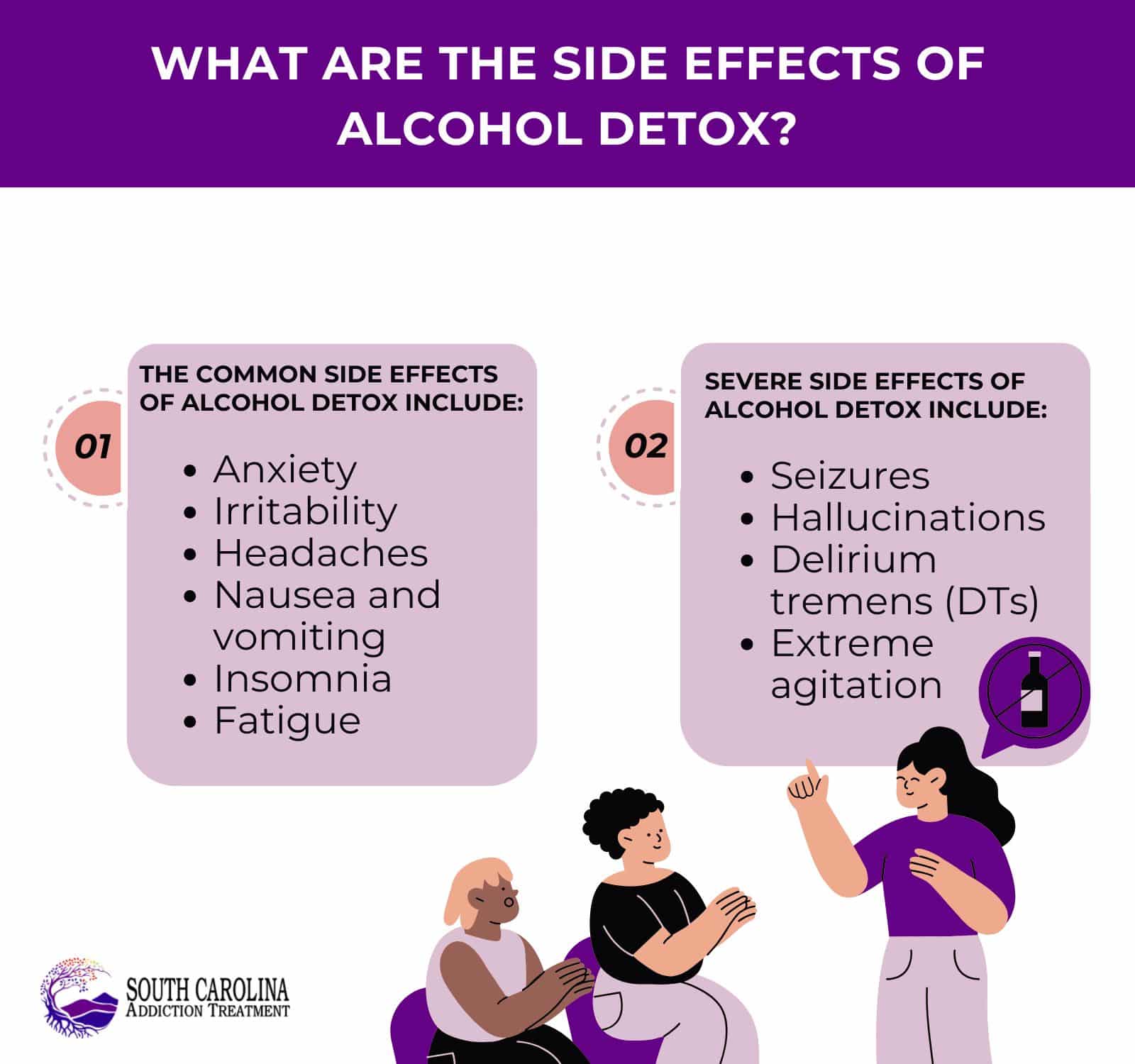
The side effects of alcohol detox are explained below:
Common Side Effects of Alcohol Detox
The common side effects of alcohol detox are explained below:- Anxiety: Nervousness and restlessness caused by an overstimulated nervous system adjusting to alcohol's absence.
- Irritability: Heightened frustration and agitation as the brain adapts to alcohol withdrawal.
- Headaches: Pain caused by dehydration, blood pressure changes, and brain chemical shifts.
- Nausea and Vomiting: Digestive upset from alcohol leaving the system, reducing appetite.
- Abdominal Pain: Cramping or discomfort due to liver stress and gastrointestinal distress.
- Insomnia: Difficulty sleeping due to imbalanced brain chemicals and reduced sedation.
- Fatigue: Ongoing tiredness as the body works to regain balance and heal.
- Mood Swings: Emotional ups and downs from changing brain chemistry during withdrawal.
Severe Side Effects
The severe side effects of alcohol detox are explained below:- Delirium Tremens (DTs): Confusion, fever, and rapid heartbeat, usually 48–72 hours after stopping alcohol.
- Seizures: Life-threatening convulsions typically occurring within 24–48 hours of withdrawal.
- Hallucinations: Seeing, hearing, or feeling things that aren't real, often within 12–24 hours.
- Tremors: Involuntary shaking, especially in hands, starting 5–10 hours after the last drink.
- Extreme Agitation: Severe restlessness and irritability from the brain's overstimulation.
What Is the Alcohol Detox Timeline?
The alcohol detox timeline ranges from 4 to 7 days, characterized by distinct onset times and symptoms. It's important to note that the severity and duration of withdrawal symptoms vary based on factors such as the duration and intensity of alcohol use, as well as individual health conditions.
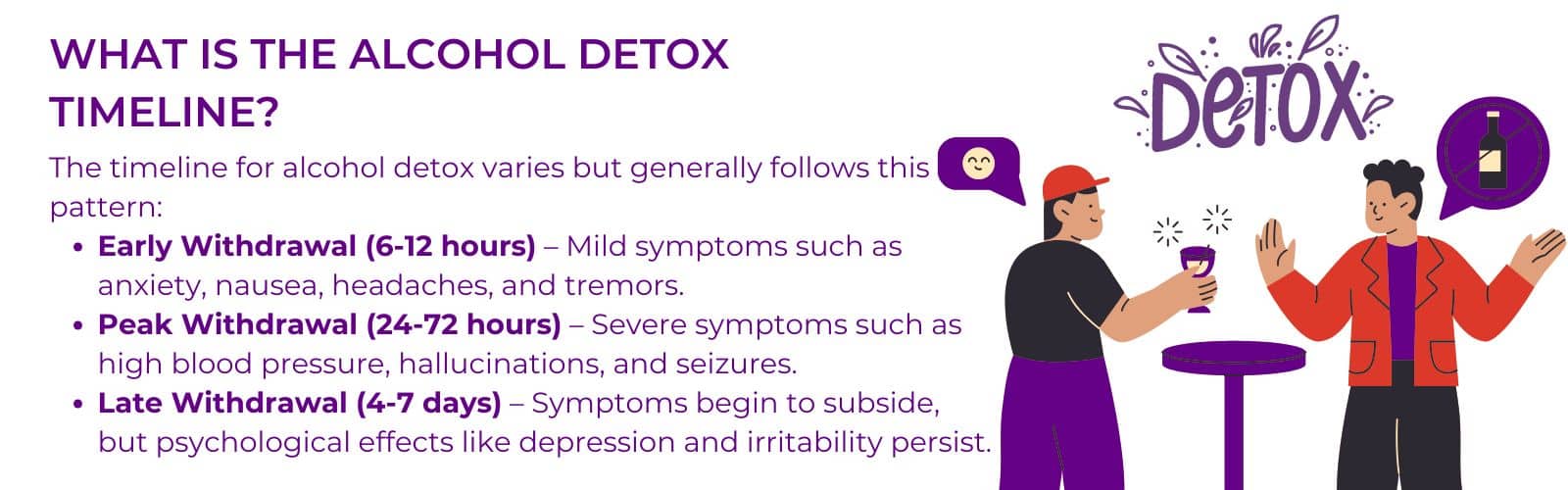
The alcohol detox timeline is explained below:
Early Withdrawal (6 to 12 hours after the last drink)
This first phase begins within hours after the last drink, as the body starts reacting to the absence of alcohol. Symptoms tend to be mild but quickly escalate depending on the individual's level of dependence because of the central nervous system's hyperactivity.
Symptoms of alcohol detox early withdrawal include:- Anxiety
- Nausea
- Headache
- Sweating
- Tremors
- Insomnia
Peak Withdrawal (24 to 72 hours)
This is the most intense phase of alcohol detox, as symptoms peak in severity, and serious complications, such as seizures or delirium tremens (DTs), can emerge. Medical supervision is required during this stage.
Symptoms of alcohol detox peak withdrawal include:- Severe tremors
- High blood pressure
- Increased heart rate
- Confusion
- Hallucinations
- Seizures (in severe cases)
Late Withdrawal (4 to 7 days)
During this stage, most physical symptoms begin to subside, but psychological effects persist. Protracted withdrawal symptoms persist for weeks in some cases, necessitating ongoing medical support.
Symptoms of alcohol detox late withdrawal stage include:- Fatigue
- Depression
- Irritability
- Difficulty concentrating
- Lingering anxiety
What Factors Influence The Timeline of Alcohol Detox?
The factors influencing the timeline of alcohol detox include the duration and intensity of alcohol use, individual health conditions, and previous history of alcohol withdrawal.
The factors influencing the timeline of alcohol detox are explained below:- Gender: Women detox slower due to hormonal changes and a faster onset of alcohol-related damage.
- Age: Older adults detox more slowly due to reduced liver function and coexisting health issues.
- Weight: Lower body weight intensifies withdrawal symptoms and slows alcohol elimination.
- Length of Alcohol Consumption: Long-term drinking creates deeper dependence, leading to longer detox.
- Severity of Alcohol Abuse: Heavier alcohol use causes stronger withdrawal, requiring extended care.
- Mental and Physical Health: Conditions like anxiety or liver disease worsen symptoms and prolong detox.
How Long Does It Take Your Liver to Detox From Alcohol?
It takes approximately one hour per standard drink for the liver to detox from alcohol. Still, full recovery from excessive alcohol use depends on the extent of liver damage and individual health factors.
According to a study by the National Health Service (NHS) titled "Alcohol-Related Liver Disease Treatment," abstaining from alcohol for several months allows the liver to repair damage caused by fatty liver disease. However, in cases of alcoholic hepatitis or cirrhosis, the liver takes significantly longer to heal, and in severe cases, the damage is permanent.
What Are the Other Alcohol Addiction Treatments Available After Detox in South Carolina?
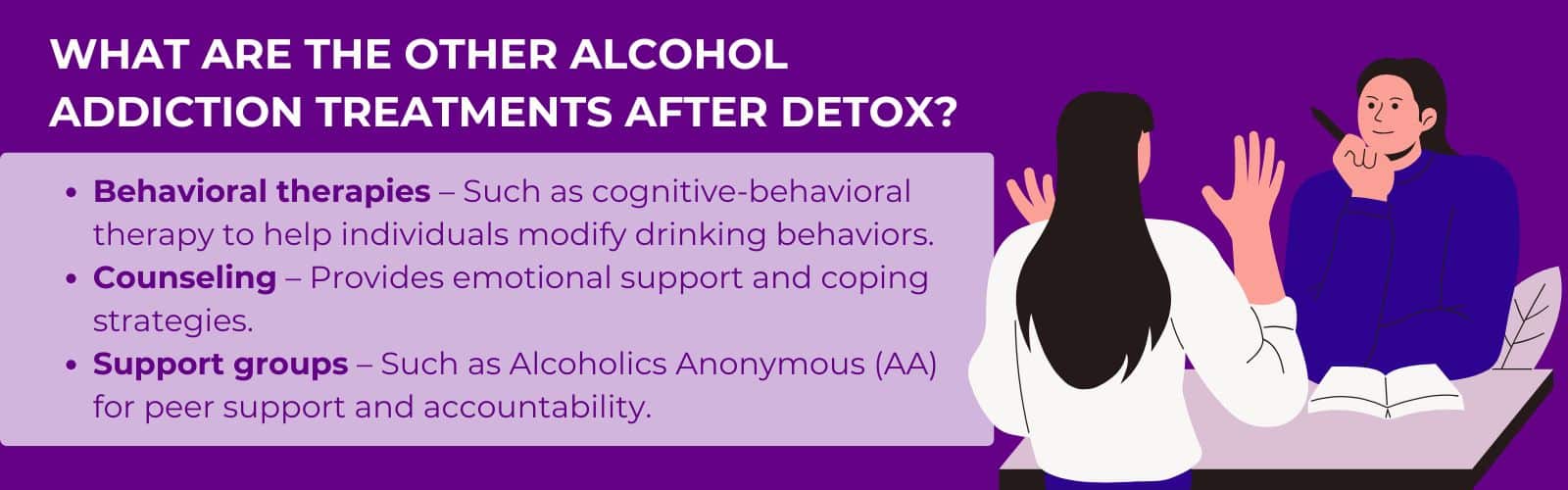
Other alcohol addiction treatments after detox are available in South Carolina, including behavioral therapies, counseling, and support groups. Counseling provides a platform for individuals to explore underlying issues related to their addiction and develop coping strategies. Alcohol addiction treatments work best using a combination of all methods.
Does Alcohol Detox Play a Role in Alcohol Addiction Recovery?
Yes, alcohol detox plays a role in alcohol addiction recovery, as it addresses the physical alcohol dependence and manages withdrawal symptoms. According to NIAAA, medical detoxification in alcohol addiction safely manages the acute physical symptoms of withdrawal associated with stopping drug use.
Can You Detox From Alcohol at Home?
Yes, you can detox from alcohol at home. Still, it is necessary to do so under medical supervision, especially for individuals with a history of heavy drinking or previous withdrawal complications.
According to a study by the British Journal of General Practice titled "Home detox – supporting patients to overcome alcohol addiction," the majority of dependent drinkers detox safely and successfully at home and do not require hospital admission.
How to Safely Detox From Alcohol at Home?
To safely detox from alcohol at home, individuals consult a healthcare professional to assess their condition and receive medical guidance on managing withdrawal symptoms. According to a study by NIAAA titled "Treatment of Alcohol Withdrawal," medical supervision is essential to prevent severe complications such as seizures and delirium tremens during alcohol detox.
Tips and strategies to detox from alcohol at home include:- Consult a Healthcare Professional: Get medical advice to see if home detox is safe and ask about medications for withdrawal.
- Establish a Support System: Have someone you trust stay with you to provide support and monitor your condition.
- Create a Safe Environment: Remove alcohol and create a calm, comfortable space to avoid triggers.
- Stay Hydrated and Maintain Nutrition: Drink fluids and eat balanced meals to support your body during detox.
- Monitor Withdrawal Symptoms: Watch for signs like seizures or hallucinations and seek help immediately if they occur.
- Gradual Reduction (Tapering): Reduce alcohol slowly under medical guidance to ease withdrawal.
- Engage in Stress-Relief Activities: Stay calm by using techniques like deep breathing, meditation, or light exercise.
- Avoid Triggers: Avoid people, places, or situations that make you want to drink.
- Plan for Medical Emergencies: Have a plan to get emergency help if severe symptoms appear.
What Is the Difference Between Alcohol Detox and Alcohol Withdrawal?
The difference between alcohol detox and alcohol withdrawal lies in their definitions and roles in recovery. Alcohol withdrawal refers to the physical and psychological symptoms that occur when an individual who has been consuming alcohol heavily reduces or stops intake. These symptoms range from mild anxiety and tremors to severe complications like seizures and delirium tremens.
In contrast, alcohol detox is the medically supervised process of managing these withdrawal symptoms to clear alcohol from the body safely. Detoxification aims to minimize discomfort and prevent serious health risks associated with withdrawal, serving as the initial step toward comprehensive addiction treatment.
Does Sauna Help With Alcohol Withdrawal?
No, the sauna does not help with alcohol withdrawal. There is no current scientific evidence supporting the use of sauna therapy as an effective treatment for alcohol withdrawal symptoms. While sauna bathing has been associated with certain health benefits, such as improved cardiovascular function and relaxation, its efficacy in managing alcohol withdrawal remains unproven.