Can You Smoke Shrooms or Magic Mushrooms?
You can physically pack dried mushrooms into a joint or pipe and light them, but smoking shrooms does not produce a reliable high. Heat from combustion destroys psilocybin, the compound responsible for psychedelic effects, before your body can absorb it.
Instead of a trip, smoking shrooms mostly delivers harsh smoke, throat irritation, and the risk of inhaling mold or fungal spores. There is no published clinical research showing it works, and anecdotal reports describe little more than nausea.
Shrooms and magic mushrooms are the same thing: fungi containing psilocybin, a naturally occurring psychedelic compound. The chemistry of heat, the actual effects on your body, the health and legal risks, and the potential for addiction all explain why smoking them fails and why oral methods dominate instead.
Key Takeaways
- Smoking shrooms is largely ineffective because combustion temperatures reach 600 to 950°C, far above the roughly 220°C point where psilocybin decomposes.
- Psilocybin is a Schedule I substance under federal law, meaning it has a high potential for abuse and no accepted medical use, according to the DEA.
- An estimated 10.4 million people aged 12 and older used hallucinogens in the past year, based on SAMHSA’s 2024 National Survey on Drug Use and Health.
- Inhaling burned fungal material can irritate the lungs and introduce mold spores linked to respiratory conditions like hypersensitivity pneumonitis.
- Psilocybin does not cause physical dependence, but tolerance builds within days and psychological dependence remains possible.
Can You Smoke Shrooms and Get High?
No, smoking shrooms will not get you high in any dependable way. Psilocybin, the active ingredient in magic mushrooms, is sensitive to heat and breaks down long before combustion produces inhalable vapor. The chemistry simply does not cooperate with a flame.
Psilocybin also works as a prodrug. Your body must convert it into psilocin, the compound that actually alters perception, through digestion and liver metabolism. Smoking bypasses this pathway entirely, so even trace surviving compounds cannot act efficiently.
People who have tried smoking dried mushrooms typically report no meaningful psychedelic experience. Most describe a wasted product, an unpleasant taste, or mild nausea rather than the visual and sensory shifts that oral ingestion reliably produces.
Why Heat Destroys Psilocybin?
The core problem is temperature. Psilocybin is a fragile molecule that degrades when exposed to sustained high heat, and the heat generated by burning plant or fungal material is extreme. Lighting a mushroom does not gently warm it. It incinerates it.
Research on psilocybin stability found rapid decay of the compound above 100°C, with meaningful degradation accelerating as temperatures climb. Reference chemistry data place psilocybin’s melting and decomposition point near 220 to 228°C, or roughly 428 to 442°F.
A burning cigarette or joint, by comparison, produces coal temperatures commonly measured between 700 and 900°C during active draws. Because combustion runs several times hotter than psilocybin’s breakdown point, most of the active compound is destroyed almost instantly.
Temperature and Its Effect on Psilocybin
| Temperature | Approximate Fahrenheit | Effect on Psilocybin |
|---|---|---|
| Room temperature | 68 to 77°F | Stable, though potency slowly fades over months |
| Below boiling (tea) | Under 212°F | Minimal loss, most potency preserved |
| Above 100 to 125°C | 212 to 257°F | Noticeable degradation begins |
| 220 to 228°C | 428 to 442°F | Melting and decomposition of the compound |
| Combustion (smoking) | 1,100 to 1,700°F | Rapid destruction, effectively no active dose |
Does Heat Destroy Psilocybin Completely?
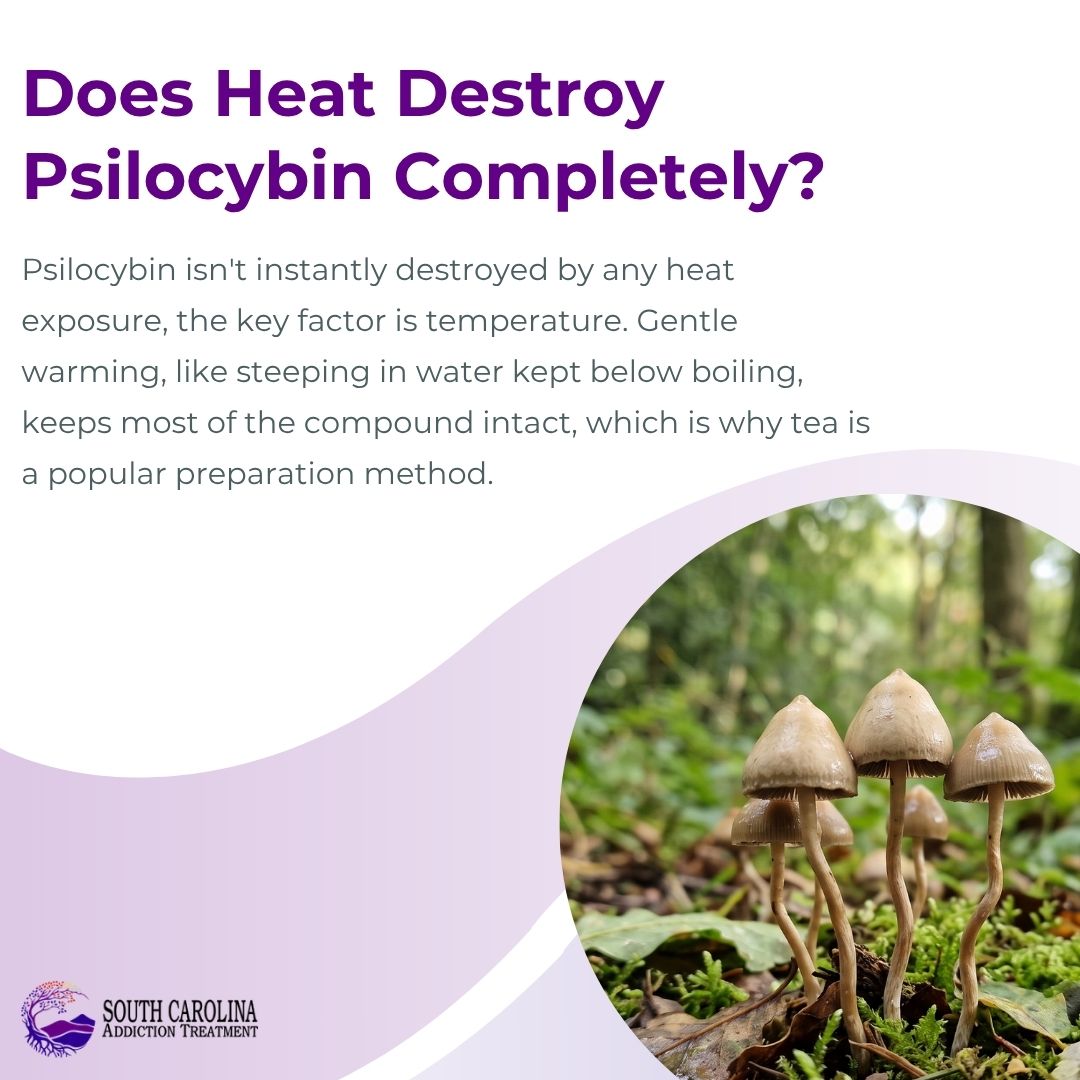
Heat does not destroy psilocybin instantly at every temperature, which is where confusion arises. Gentle warmth, such as steeping mushrooms in water below boiling, preserves most of the compound. This is why mushroom tea remains a common preparation method.
The distinction matters. Moderate cooking causes limited loss, but combustion is a different category entirely. When you apply an open flame, temperatures blow past the decomposition threshold so quickly that almost nothing psychoactive survives to reach your lungs.
So the honest answer to whether heat destroys psilocybin is: it depends on how much heat. Sub-boiling preparations work. Smoking does not, because the temperatures involved are far too high for the molecule to endure.
What Happens If You Smoke Shrooms?
If you smoke shrooms, you inhale combusted fungal material rather than a psychedelic dose. The immediate experience usually involves coughing, an acrid taste, and throat or lung irritation from the smoke itself, similar to inhaling any burned organic matter.
Because the psilocybin is largely gone, the anticipated trip does not materialize. Some users report a faint, placebo-like sensation, but controlled evidence for genuine psychoactive effects through smoking is absent. The effort produces discomfort without the intended result.
There is also a psychological dimension. Expecting a strong experience and feeling nothing can prompt some people to smoke more, escalating exposure to smoke and any contaminants without ever achieving the effect they were chasing.
What Are the Health Risks of Smoking Mushrooms?
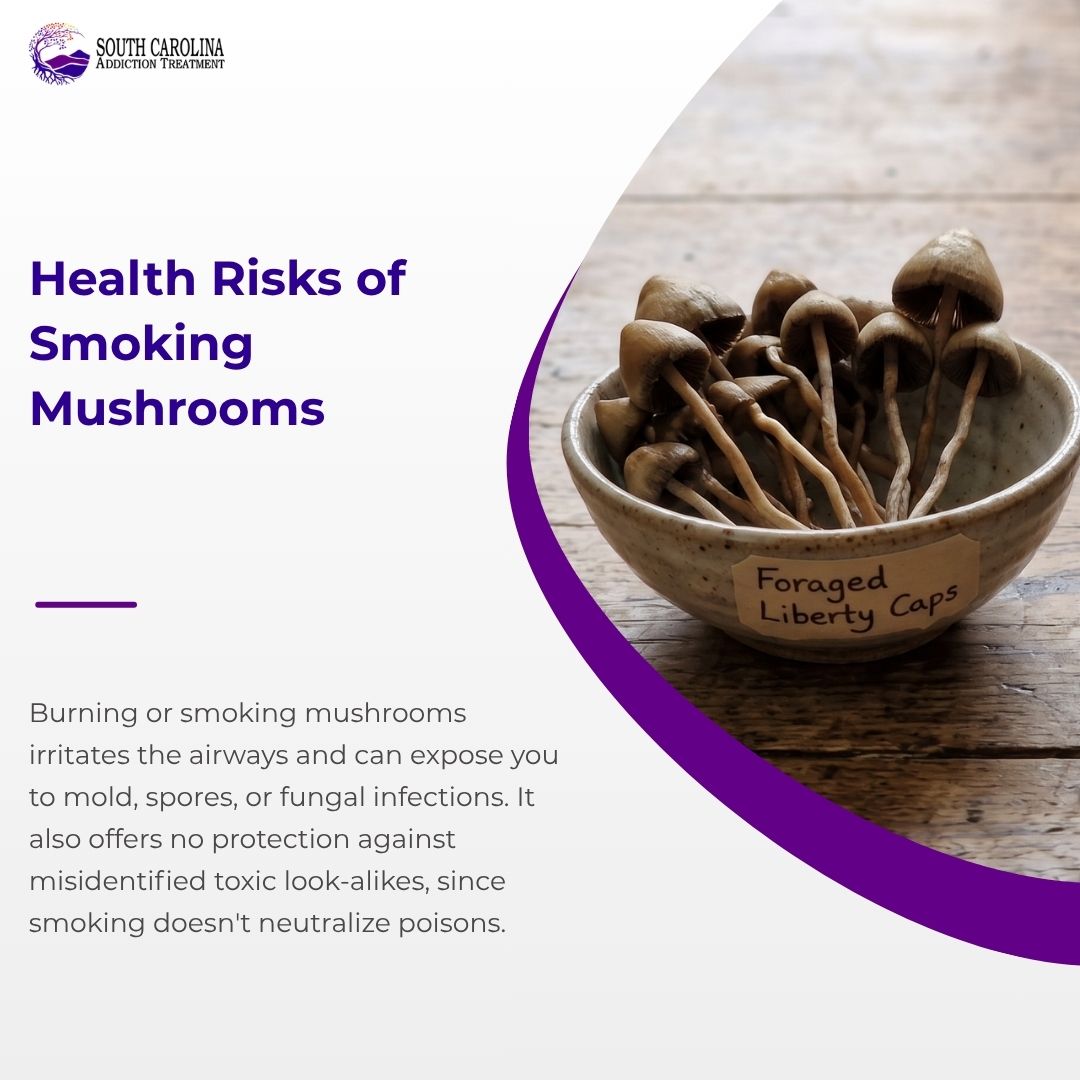
Smoking mushrooms carries risks that have nothing to do with psilocybin. The act of inhaling burned fungal tissue exposes your respiratory system to particulates, carbon monoxide, and potential biological contaminants that dried mushrooms can carry from cultivation and storage.
Dried mushrooms frequently harbor mold and fungal spores. Inhaling these can introduce organisms like Aspergillus into the lungs, which poses a serious danger for anyone with asthma, allergies, a weakened immune system, or existing respiratory disease.
Specific Dangers to Consider
- Respiratory irritation: Smoke from any burned material inflames airways and can trigger coughing, chest tightness, and shortness of breath.
- Mold and spore inhalation: Contaminated mushrooms may carry spores linked to hypersensitivity pneumonitis, an immune-driven lung inflammation documented in fungal-exposure cases.
- Lung infection risk: Aspergillus and similar molds can cause infections that become dangerous in immunocompromised individuals.
- Toxic look-alikes: Misidentified wild mushrooms may contain poisons, and smoking offers no protection against accidental poisoning.
Can You Smoke Shrooms With Weed?
Some people roll dried mushrooms into a blunt or joint with cannabis, believing it enhances the effect. In reality, the mushroom component still contributes no meaningful psilocybin because combustion destroys it just as thoroughly when mixed with weed.
Any effect felt comes from the cannabis alone. Adding mushrooms does not amplify a psychedelic experience, and it introduces the same smoke and spore risks discussed earlier. The mushroom material is essentially inert filler in that context.
Combining substances also raises the chance of anxiety, paranoia, or a distressing reaction, particularly with cannabis. Layering an ineffective route with a psychoactive drug adds unpredictability without delivering the mushroom effects people expect.
How Psilocybin Is Actually Consumed?
People who use magic mushrooms almost always consume them orally, because that is the only route that reliably delivers psilocybin. Understanding these methods clarifies why smoking stands out as the least effective option available.
Consumption Method Comparison
| Method | How It Works | Effectiveness |
|---|---|---|
| Eating dried mushrooms | Digested and metabolized into psilocin | Effective and most common |
| Mushroom tea | Steeped below boiling, then consumed | Effective, preserves potency |
| Capsules or powder | Ground mushrooms swallowed orally | Effective, controlled dosing |
| Smoking | Combusted and inhaled | Ineffective, destroys the compound |
The pattern is consistent. Every effective method relies on oral intake that lets the body convert psilocybin into psilocin. Smoking is the only widely attempted approach that fails on a chemical level, which is why harm-reduction and medical sources discourage it.
Legal Status of Psilocybin
Psilocybin is classified as a Schedule I controlled substance under federal law. The DEA states this designation means the substance has a high potential for abuse and no currently accepted medical use in treatment within the United States.
A few states, including Oregon and Colorado, have authorized supervised therapeutic access, and the FDA has granted psilocybin breakthrough therapy designation for depression research. Despite this, possession remains illegal under federal law and in most states.
Legal experimentation is not a safe workaround for the ineffectiveness of smoking. Attempting alternative routes to force an effect still carries legal exposure alongside the health risks, regardless of how the mushrooms are prepared or consumed.
Addiction Risk and When It Signals a Problem
Psilocybin does not produce physical dependence or a withdrawal syndrome, and NIDA notes that psychedelics like psilocybin do not typically lead to addiction. Unpleasant side effects often reduce the desire to repeat use, which limits compulsive patterns.
Tolerance, however, builds rapidly. After repeated use within a day or two, the same dose produces weaker effects, and cross-tolerance with other psychedelics develops. Some people also experience psychological dependence, using mushrooms to escape stress or difficult emotions.
Escalating experimentation, such as trying to smoke shrooms for a stronger or faster high, can signal a shifting relationship with substances. If mushroom use is affecting your health, relationships, or responsibilities, structured support through professional treatment programs can help you regain footing. South Carolina Addiction Treatment offers detox and residential care for adults navigating substance use, and staff who understand recovery firsthand can guide the next steps.
Frequently Asked Questions
At what temperature does psilocybin break down?
Psilocybin begins noticeable degradation above roughly 100 to 125°C and melts or decomposes near 220 to 228°C, about 428 to 442°F. Combustion from smoking reaches 600 to 950°C, far exceeding this point and destroying nearly all of the active compound.
Is it dangerous to smoke shrooms?
Yes, though not from psilocybin. Inhaling burned fungal material irritates the lungs and can introduce mold or spores such as Aspergillus. This raises the risk of respiratory inflammation and infection, especially for people with asthma or weakened immune systems.
Can you put shrooms in a blunt?
You can physically add mushrooms to a blunt, but they contribute no psychedelic effect because heat destroys psilocybin. Any sensation comes from the cannabis. Adding mushrooms only introduces smoke and spore risks without producing the mushroom effects people expect.
Are magic mushrooms addictive?
Magic mushrooms do not cause physical dependence, and addiction is uncommon. However, tolerance builds quickly with repeated use, and psychological dependence can develop when someone relies on mushrooms to cope. Escalating or compulsive use may indicate a need for support.
References
- Center for Behavioral Health Statistics and Quality. (2025). Key substance use and mental health indicators in the United States: Results from the 2024 National Survey on Drug Use and Health. Substance Abuse and Mental Health Services Administration. SAMHSA
- Drug Enforcement Administration. (2025). Psilocybin (drug fact sheet). U.S. Department of Justice. DEA
- National Institute on Drug Abuse. (n.d.). Psychedelic and dissociative drugs. National Institutes of Health. NIH
- Gotvaldová, K., Hájková, K., Borovička, J., Jurok, R., Cihlářová, P., & Kuchař, M. (2021). Stability of psilocybin and its four analogs in the biomass of the psychotropic mushroom Psilocybe cubensis. Drug Testing and Analysis, 13(2), 439-446.
- Baker, R. R. (1974). Temperature distribution inside a burning cigarette. Nature, 247(5405), 405-406.
- Nakazawa, T., & Tochigi, T. (1989). Hypersensitivity pneumonitis due to mushroom (Pholiota nameko) spores. Chest, 95(5), 1149-1151.