Adderall Addiction: Signs, Symptoms and Treatment
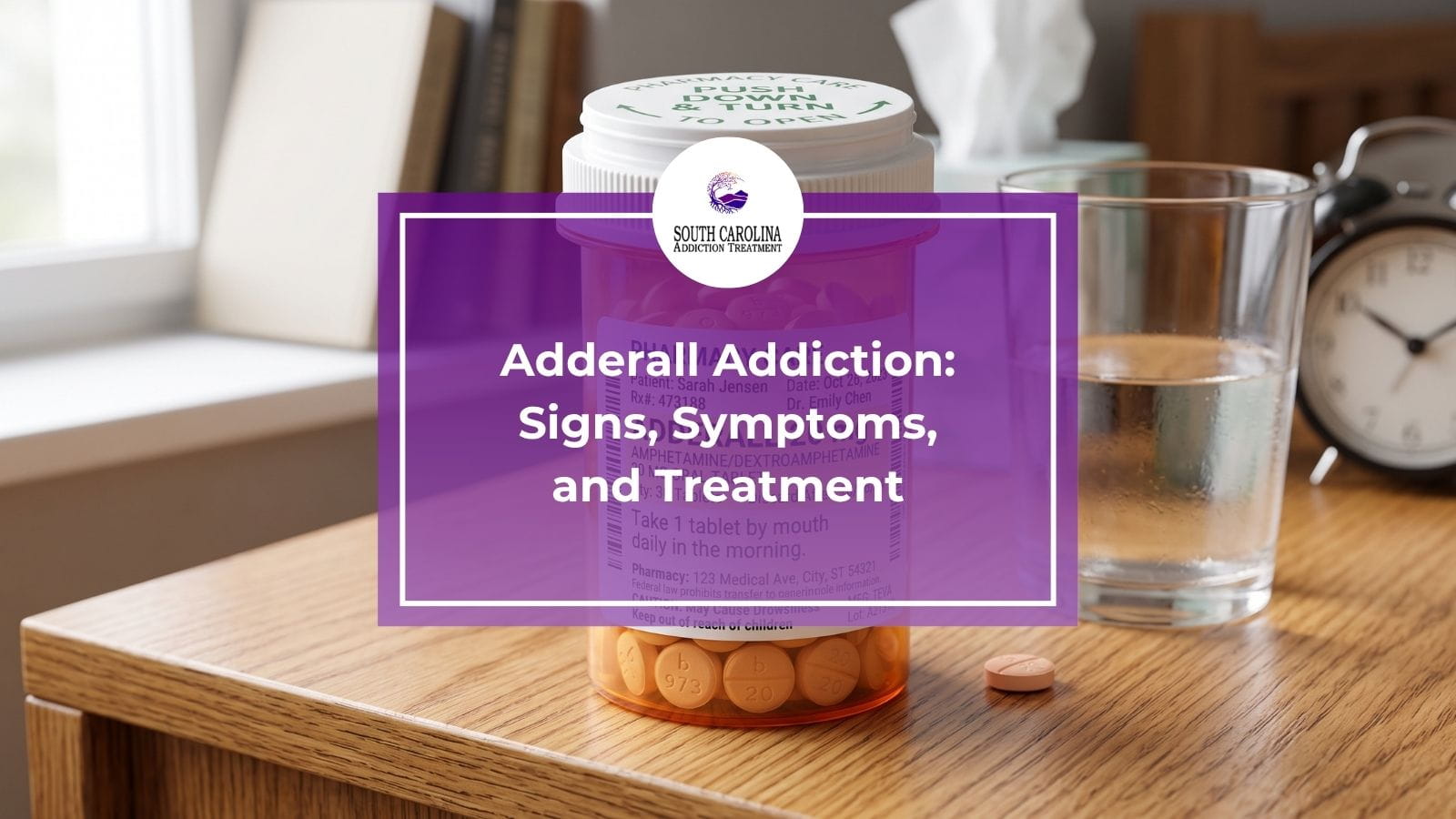
Adderall addiction is a stimulant use disorder in which a person keeps using amphetamine salts despite clear harm to health, school, work, or relationships. The condition develops when repeated dosing rewires the brain's reward system, not because someone lacks willpower.
Symptoms include loss of control, dose escalation beyond prescription, and continued use after consequences appear. Diagnosis follows the DSM-5-TR stimulant use disorder criteria, not dependence alone.
Key Takeaways
- The DSM-5-TR classifies it as stimulant use disorder, amphetamine-type substance. Taking a prescription exactly as directed does not produce the diagnosis on its own.
- The Substance Abuse and Mental Health Services Administration counted 3.9 million Americans aged 12 and older who misused prescription stimulants during 2023. That figure represents 1.4 percent of the population.
- A 2025 JAMA Psychiatry study by Han and colleagues found that 9.0 percent of adults prescribed stimulants met criteria for prescription stimulant use disorder. Amphetamine products accounted for 87.1 percent of that group.
- Withdrawal rarely turns medically dangerous, but it turns psychiatrically dangerous.
- No medication carries FDA approval for this condition.
What Is Adderall Addiction?
Adderall addiction describes a pattern in which amphetamine salts take priority over health, obligations, and relationships, and the person continues dosing anyway.
The DSM-5-TR places Adderall addiction inside stimulant use disorder, amphetamine-type substance. Clinicians count eleven criteria across four groups, then assign a severity specifier based on how many criteria a person meets.
Prescribed Adderall Dependence Versus Stimulant Use Disorder
Physical dependence and addiction describe two different biological situations. Prescribed ADHD patients frequently develop dependence without developing addiction.
Tolerance and withdrawal do not count toward the diagnostic criteria when the stimulant is taken under appropriate medical supervision. Someone managing ADHD with a stable prescribed dose is not addicted simply because stopping produces fatigue. The person doctor-shops, buys pills without a prescription, or hides consumption from a spouse. Those behaviors, not the withdrawal, establish the diagnosis.
How Does Adderall Affect the Brain?
Adderall floods the synapses of the mesolimbic reward pathway with dopamine and norepinephrine, and that flood explains both the therapeutic benefit and the addiction risk.
Amphetamine enters neurons and reverses the direction of the dopamine transporter (DAT), pushing dopamine out into the synapse instead of pulling it back in. It also empties the vesicular monoamine transporter 2 (VMAT2) storage vesicles and stimulates trace amine-associated receptor 1 (TAAR1).
Chronic amphetamine exposure depletes baseline dopamine and blunts the reward response to ordinary pleasures. Clinicians call this anhedonia, and patients describe it as emotional flatness or going through the motions.
- Natural rewards stop registering: Food, exercise, and social contact generate weaker dopamine signals than they did before amphetamine exposure, which deepens reliance on the drug.
- Executive function declines: Prolonged misuse impairs decision-making and sustained concentration, the exact abilities people originally took Adderall to improve.
- Recovery takes months rather than days: Dopamine receptor density rebounds gradually during sustained abstinence.
What Causes Adderall Addiction?
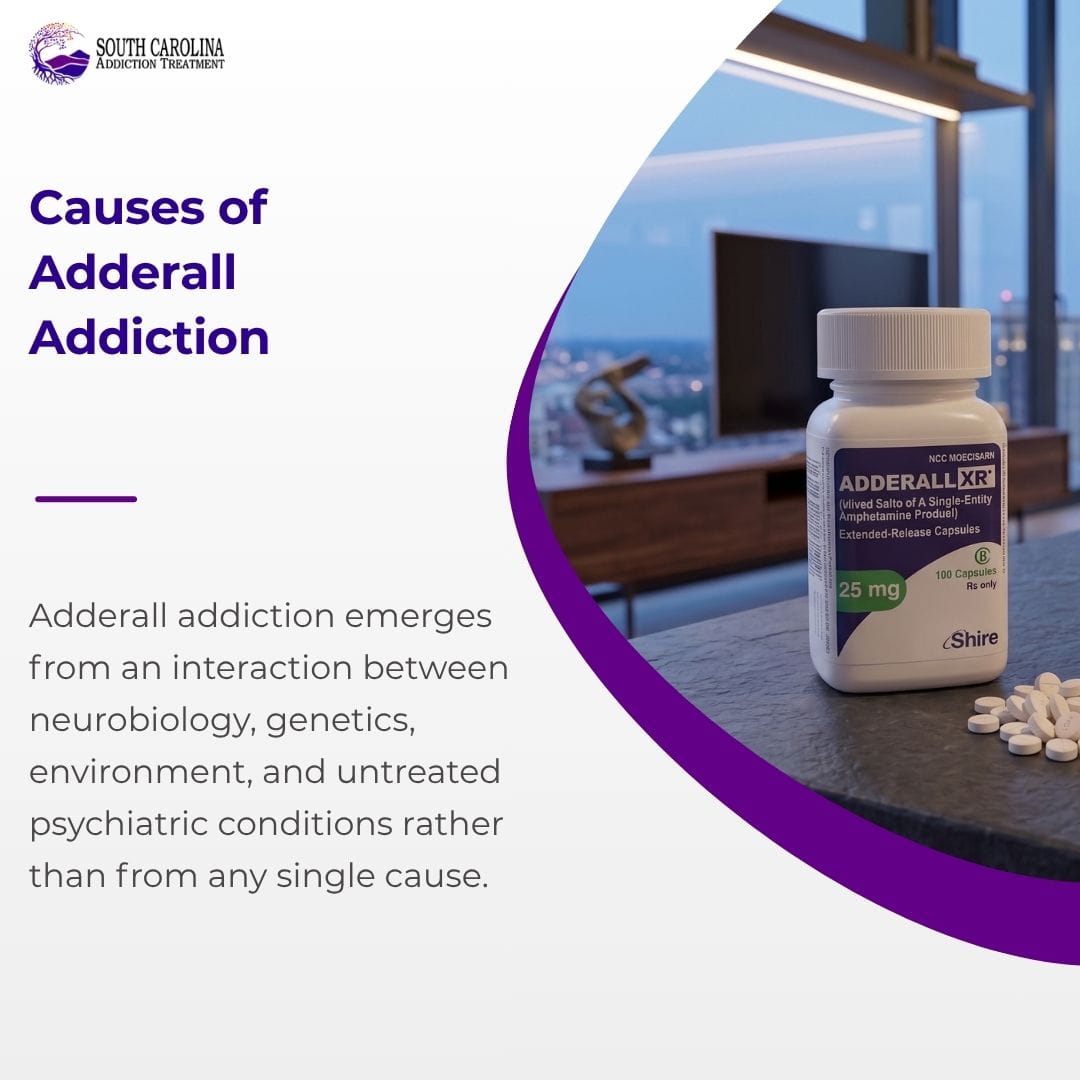
Adderall addiction emerges from an interaction between neurobiology, genetics, environment, and untreated psychiatric conditions rather than from any single cause.
- Neurobiological and Genetic: Individual differences in dopamine signaling determine how strongly amphetamine reinforces behavior. Some people experience an intense reward response from a standard dose while others feel almost nothing.
- Environmental: Access and pressure convert biological vulnerability into actual misuse. College campuses and high-demand workplaces concentrate both conditions.
- Co-Occurring Conditions: Untreated psychiatric illness pushes people toward stimulants and then worsens under them. Each comorbidity operates through a specific mechanism.
What Are the Signs and Symptoms of Adderall Addiction?
Signs of Adderall addiction progress from mild physical side effects through acute psychiatric emergencies to lasting cardiovascular and cognitive damage.
Common Signs and Side Effects of Adderall Misuse
Early indicators of Adderall misuse look ordinary enough that families overlook them for months. They cluster around sleep, appetite, and pill supply.
- Sleep collapses first: Insomnia appears within weeks of dose escalation, and people compensate with alcohol or sedatives at night.
- Appetite disappears: Amphetamine suppresses hunger signaling, producing noticeable weight loss and skipped meals.
- Pill counting becomes constant: A person tracks remaining tablets obsessively and panics about running out before a refill date.
- Physical side effects accumulate: Dry mouth, headaches, elevated blood pressure, and jaw clenching appear together in chronic users.
- Mood swings follow the dosing curve: Irritability and agitation surface as each dose wears off, then resolve after the next one.
- Functioning feels impossible without it: The person cancels commitments on days without pills because they cannot concentrate.
Severe Symptoms and Overdose Warning Signs of Adderall Abuse
Adderall abuse at high doses produces cardiovascular and psychiatric emergencies that require immediate medical attention.
- Chest pain and irregular heartbeat: Amphetamine constricts coronary arteries and accelerates heart rate, precipitating arrhythmia, myocardial infarction, and stroke even in young adults.
- Seizures: Amphetamine lowers the seizure threshold, and overdose triggers convulsions in people with no prior seizure history.
- Dangerously high body temperature: Hyperthermia above 104 degrees Fahrenheit damages organs and requires emergency cooling.
- Paranoia and hallucinations: Sustained high dosing produces stimulant-induced psychosis, which mimics schizophrenia closely enough to be misdiagnosed as it.
- Severe agitation and confusion: Disorientation combined with restlessness signals amphetamine toxicity and warrants an emergency department visit.
- Rhabdomyolysis: Muscle tissue breaks down and floods the kidneys with myoglobin, producing dark urine and acute kidney injury.
Long-Term Effects of Adderall Use
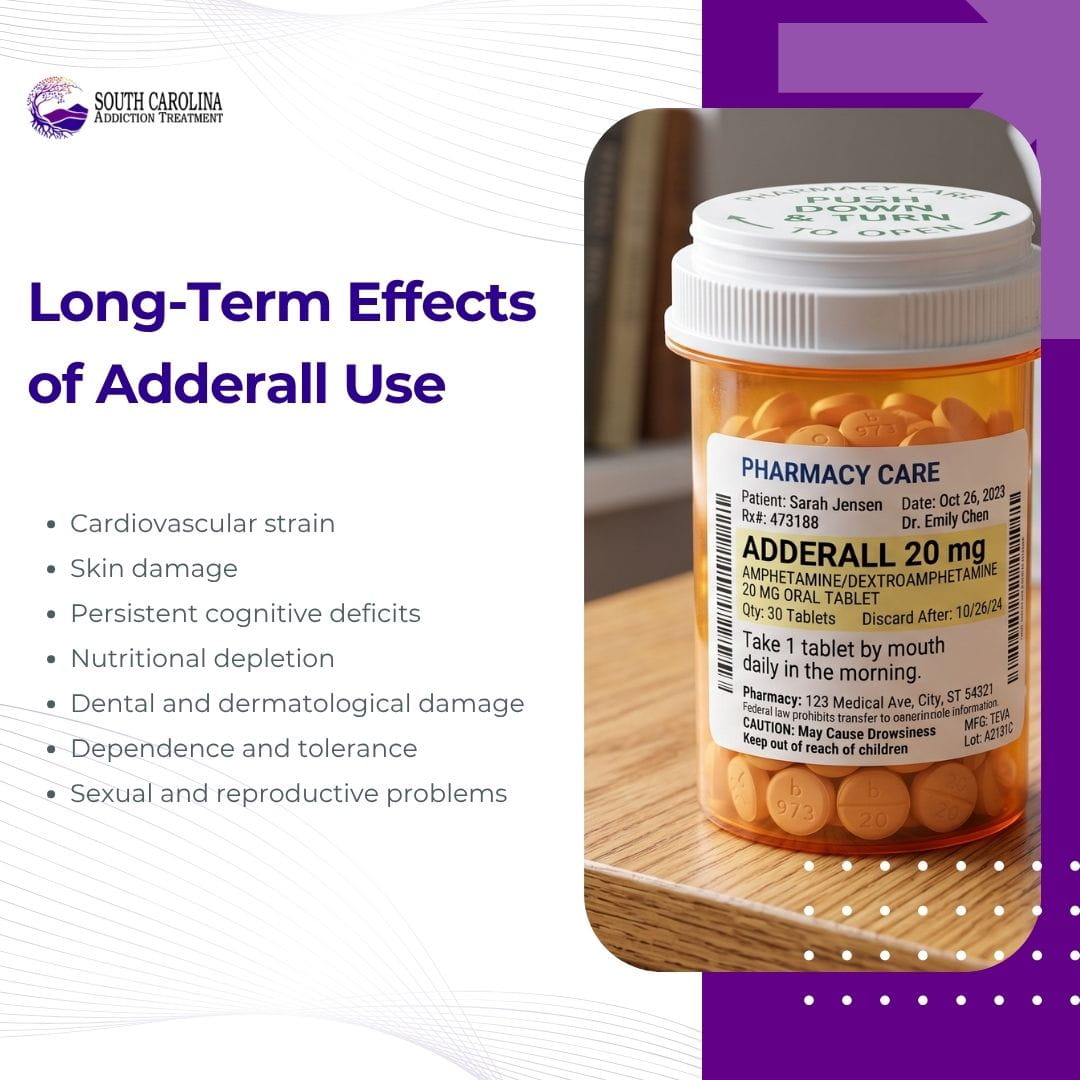
Long-term Adderall misuse damages the cardiovascular system and the cognitive functions the drug initially enhanced.
- Cardiac remodeling: Years of elevated blood pressure thicken the left ventricle and raise lifetime risk of heart failure.
- Persistent cognitive deficits: Memory and executive function remain measurably impaired for months after cessation in heavy chronic users.
- Chronic anhedonia: Depleted dopamine leaves people unable to enjoy activities they valued before, and this symptom outlasts acute withdrawal.
- Dental and dermatological damage: Chronic bruxism erodes enamel, and compulsive skin picking during high-dose periods produces lasting scarring.
- Nutritional depletion: Prolonged appetite suppression causes deficiencies that worsen fatigue and slow physical recovery.
Is Adderall the Same as Meth?
Adderall and methamphetamine share a core amphetamine structure, but a single methyl group changes how fast each drug enters the brain and how much damage it leaves behind.
Both compounds elevate dopamine through the same transporter mechanism. The differences lie in potency, delivery, and regulation.Both substances produce the same withdrawal syndrome and respond to the same treatment approaches, which is why the warning signs overlap so heavily with methamphetamine use.
What happens during Adderall withdrawal?
Amphetamine withdrawal is a recognized DSM-5-TR diagnosis requiring dysphoric mood plus at least two physiological changes. Symptoms typically begin within 24 hours of abrupt discontinuation and unfold across two distinct phases. The qualifying physiological changes are fatigue, vivid unpleasant dreams, insomnia or hypersomnia, increased appetite, and psychomotor retardation or agitation.
| Phase | Typical duration | Dominant features |
| Acute crash | Onset within 24 hours, resolving within about 1 week | Profound fatigue, hypersomnia, increased appetite, dysphoric mood |
| Protracted phase | Following the crash, generally resolving within 3 weeks | Depressed mood, anhedonia, cravings, sleep disruption, poor concentration |
Amphetamine withdrawal is rarely life-threatening. The primary clinical risk is severe depression, which can include suicidal ideation during the protracted phase.
How is Adderall Addiction Diagnosed?
Clinicians diagnose stimulant use disorder using DSM-5-TR criteria with an amphetamine-type substance specifier. Diagnosis requires at least 2 of 11 criteria occurring within a 12-month period and causing clinically significant impairment or distress.
Severity thresholds are fixed. Two to three criteria indicate mild, four to five indicate moderate, and six or more indicate severe stimulant use disorder.
The criteria cover larger or longer use than intended, unsuccessful efforts to cut down, time spent obtaining the drug, cravings, failure to fulfill obligations, social problems, activities given up, hazardous use, continued use despite physical or psychological harm, tolerance, and withdrawal.
Assessment also screens for co-occurring conditions. Depression, anxiety disorders, and undiagnosed ADHD frequently accompany stimulant misuse and change the clinical plan.
Treatment for Adderall Addiction
Treatment for Adderall addiction combines behavioral therapy, targeted medication for specific symptoms, and structured aftercare, because no medication yet carries FDA approval for stimulant use disorder itself. Behavioral interventions carry the strongest evidence base for stimulant use disorder.
South Carolina Addiction Treatment operates a CARF-accredited, 16-bed facility in Simpsonville that provides medical detox and residential care for adults withdrawing from amphetamines and other substances.
Medically Supervised Detox
Track One delivers a minimum seven-day medically supervised detox and serves as the baseline program every admitted client receives. Amphetamine withdrawal makes this level of care important for a specific reason: the psychiatric symptoms peak between days four and seven, exactly when unsupported people abandon the attempt.
Extended Residential Care
Track Two adds a second week of residential treatment for a 14-day total, with the step-down occurring on day eight. This structure aligns closely with the amphetamine withdrawal course, since the subacute phase begins right as clients transition into residential programming.
Aftercare and Alumni Support
Aftercare planning determines outcomes for stimulant use disorder because craving persists for months past discharge. A clinical case manager handles aftercare planning for every client.
Frequently Asked Questions About Adderall Addiction
Is it bad to take Adderall every day?
Daily use at a prescribed dose under physician supervision is the standard treatment protocol for ADHD and narcolepsy. Daily use becomes harmful when the dose exceeds the prescription, when someone takes it without a prescription, or when tolerance drives escalation.
Can you stop taking Adderall cold turkey?
Abrupt cessation does not produce the medical dangers that alcohol or benzodiazepine withdrawal creates. The risk is psychiatric. Severe depression and suicidal ideation peak between days four and seven, so clinicians recommend either a supervised taper or a monitored detox setting rather than stopping alone.
How long does Adderall withdrawal last?
Acute withdrawal runs 7 to 10 days, with symptoms peaking early and declining steadily. A subacute phase extends at least two additional weeks. Anhedonia and episodic craving frequently continue for two to three months. Higher doses and longer use histories extend every stage of this timeline.
Can you get addicted to Adderall if you have ADHD?
Yes. An ADHD diagnosis reduces but does not eliminate the risk. The 2025 JAMA Psychiatry analysis found that 42.5 percent of adults with prescription stimulant use disorder reported no misuse at all, meaning the disorder developed within prescribed parameters. Regular prescriber screening catches this pattern early.
Can you overdose on Adderall?
Yes, and Adderall overdose becomes fatal. Warning signs include chest pain, irregular heartbeat, seizures, body temperature above 104 degrees Fahrenheit, severe agitation, and confusion. Combining Adderall with other stimulants or alcohol raises overdose risk substantially.
Can Adderall cause a positive result on a drug test?
Yes. Adderall produces positive results on standard amphetamine immunoassay panels, and prescribed use is not distinguishable from misuse on initial screening.
References
- Han, B., Jones, C. M., Volkow, N. D., Rikard, S. M., Dowell, D., Einstein, E. B., Guy, G. P., Tomoyasu, N., Ko, J., Baldwin, G., Olsen, Y., & Compton, W. M. (2025). Prescription stimulant use, misuse, and use disorder among US adults aged 18 to 64 years. JAMA Psychiatry, 82(6), 572–581.
- McGregor, C., Srisurapanont, M., Jittiwutikarn, J., Laobhripatr, S., Wongtan, T., & White, J. M. (2005). The nature, time course and severity of methamphetamine withdrawal. Addiction, 100(9), 1320–1329.
- Substance Abuse and Mental Health Services Administration. (2024). Key substance use and mental health indicators in the United States: Results from the 2023 National Survey on Drug Use and Health. U.S. Department of Health and Human Services. SAMHSA
- Trivedi, M. H., Walker, R., Ling, W., Dela Cruz, A., Sharma, G., Carmody, T., Ghitza, U. E., Wahle, A., Kim, M., Shores-Wilson, K., Sparenborg, S., Coffin, P., Schmitz, J., Wiest, K., Bart, G., Sonne, S. C., Wakhlu, S., Rush, A. J., Nunes, E. V., & Shoptaw, S. (2021). Bupropion and naltrexone in methamphetamine use disorder. New England Journal of Medicine, 384(2), 140–153.
- National Institute on Drug Abuse. (2024). Prescription stimulants DrugFacts. National Institutes of Health. NIH
- Drug Enforcement Administration. (2025). Controlled substance schedules. U.S. Department of Justice. DEA