Does Adderall Show Up on a Drug Test?
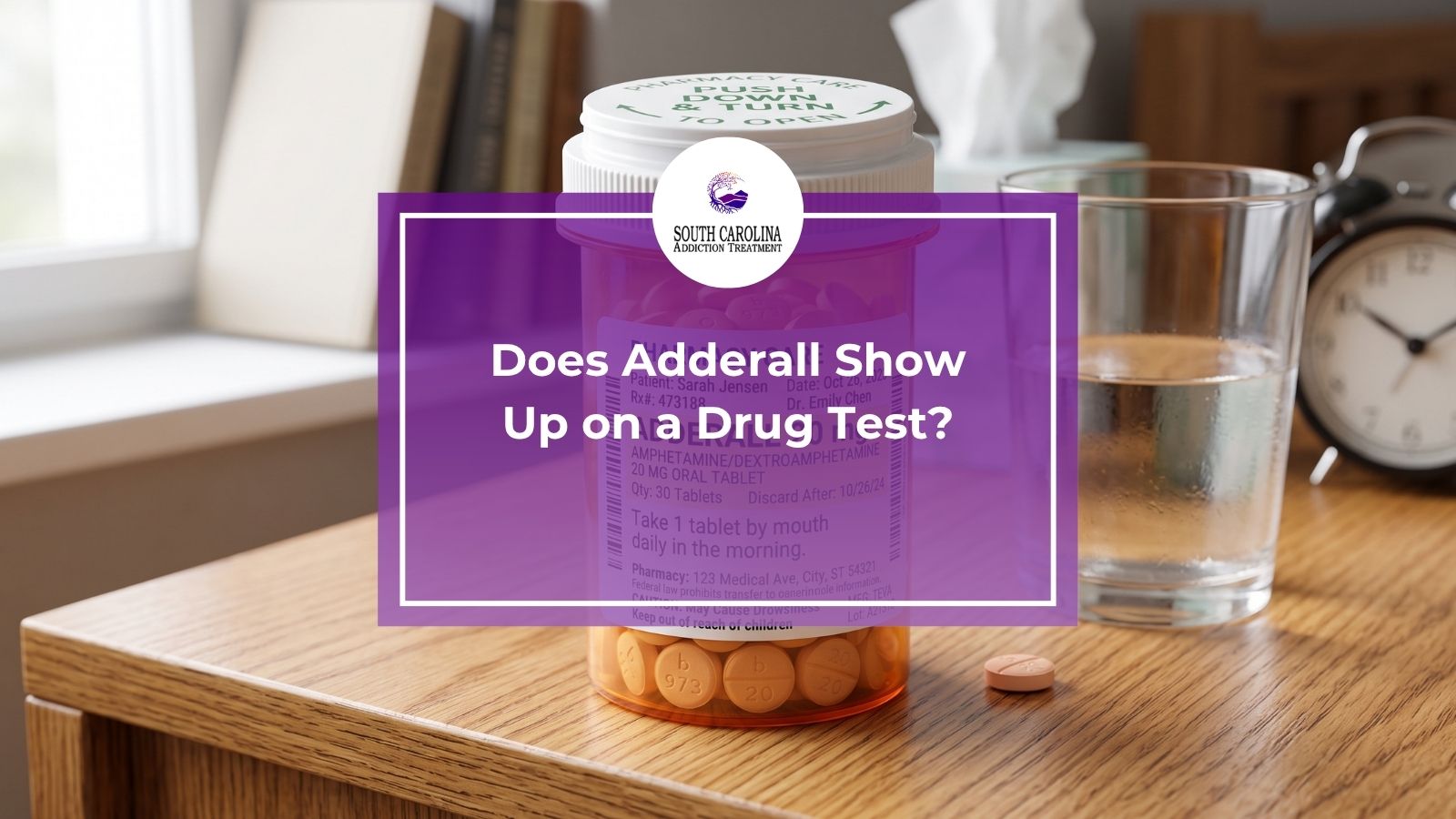
Yes, Adderall shows up on a drug test. Adderall contains amphetamine salts, and amphetamines are one of the 5 core drug classes on standard workplace urine panels. A prescribed dose of Adderall therefore triggers a positive amphetamine screen.
A single therapeutic dose of Adderall typically stays detectable in urine for about 1 to 3 days. Regular daily use extends the urine window to about 3 to 5 days.
A valid prescription changes the reported result, not the lab finding. A Medical Review Officer verifies the Adderall prescription and reports a lawful result to the employer as negative.
Key Highlights
- Adderall registers as “AMP” (amphetamines) on 5-panel, 10-panel, and 12-panel urine drug tests.
- Federal workplace urine tests flag amphetamines at 500 ng/mL on the initial screen and confirm at 250 ng/mL, according to the HHS Mandatory Guidelines.
- A Medical Review Officer reports a positive Adderall result as negative when the person holds a valid prescription.
- About 3.9 million people aged 12 or older misused prescription stimulants in the past year, according to SAMHSA’s 2024 National Survey on Drug Use and Health.
- South Carolina pharmacies dispensed 1,133,780 dextroamphetamine-amphetamine prescriptions in 2023, making Adderall the state’s most dispensed controlled substance, according to the SC Department of Public Health.
What Does Adderall Show Up as on a Drug Test?
Adderall shows up as amphetamine, labeled “AMP” on most drug test panels. Adderall contains dextroamphetamine and levoamphetamine salts in a 3:1 ratio, and standard urine immunoassays detect both forms as amphetamines.
Adderall IR and Adderall XR share the same 4 amphetamine salts, according to the FDA Adderall XR prescribing information. The 5 drug classes historically screened in federal workplace testing are amphetamines, cannabinoids, cocaine, opiates, and phencyclidine (PCP), according to the StatPearls drug testing review published by the National Library of Medicine.
Amphetamines appear on every common panel size. A 5-panel, 10-panel, or 12-panel urine test detects Adderall, because each panel includes the amphetamine class. Expanded panels add drugs such as benzodiazepines and oxycodone but keep amphetamines in place.
Does Adderall Show Up as Meth on a Drug Test?
No, Adderall does not show up as methamphetamine on a confirmed drug test. Adderall contains amphetamine only. Some initial screens combine amphetamine and methamphetamine into one result, but laboratory confirmation separates the two compounds.
How Long Can Drug Tests Detect Adderall?
Drug tests detect Adderall for about 1 to 3 days in urine, up to 48 hours in saliva, 1 to 2 days in blood, and up to 90 days in hair. Dose, frequency, and urine pH shift each window.
Detection windows and screening cutoffs differ across the 4 main drug test types, based on HHS, SAMHSA, and StatPearls data.
| Test type | Typical detection window | Screening cutoff | Common setting |
| Urine | 1 to 3 days after a single dose; 3 to 5 days with regular use | 500 ng/mL screen, 250 ng/mL confirmation (federal); 1,000 ng/mL on many instant cups | Pre-employment and random workplace testing |
| Oral fluid (saliva) | Up to 48 hours | 50 ng/mL screen, 25 ng/mL confirmation (federal) | Workplace and roadside testing |
| Blood | 1 to 2 days | Set by each laboratory | Hospital and legal cases |
| Hair | Up to 90 days, appearing about 1 week after use | Set by each laboratory | Long-term use history |
Cutoff levels explain why detection windows vary. A sensitive laboratory cutoff detects Adderall longer than a 1,000 ng/mL instant cup does. The full elimination timeline across the body is covered in how long Adderall stays in your system.
How Many Days Will Adderall Show Up in a Urine Test?
Adderall shows up in a urine test for about 1 to 3 days after a single dose and about 3 to 5 days with regular use. SAMHSA’s Medical Review Officer Manual states that one therapeutic dose produces a positive urine result for about 24 hours.
Sensitive laboratory methods extend this window. Helland and colleagues’ 2025 study in the Journal of Analytical Toxicology detected amphetamine in urine for about 78 hours after a single 10 mg dextroamphetamine dose at a 50 ng/mL cutoff. The same study found that each doubling of dose adds about 13 to 14 hours to the detection window.
Will 5 mg of Adderall Show Up on a Drug Test?
Yes, 5 mg of Adderall shows up on a drug test, most often within the first 24 hours. SAMHSA’s Medical Review Officer Manual identifies 5 mg as a typical therapeutic dose that produces a positive urine result for about 24 hours.
Timing and cutoff decide whether a 5 mg dose appears. A low dose falls below a 1,000 ng/mL instant-cup cutoff sooner than below a 500 ng/mL federal cutoff. A 10 mg dose of Adderall stays detectable roughly 13 to 14 hours longer than a 5 mg dose, based on the dose-doubling pattern in the Helland study.
What Affects How Long Adderall Is Detectable?
Urine pH, dose, frequency of use, formulation, kidney function, and age determine how long Adderall stays detectable. Urine pH has the largest effect, because acidic urine speeds amphetamine elimination and alkaline urine slows it.
The FDA Adderall label lists a mean elimination half-life of 10 hours for dextroamphetamine and 13 hours for levoamphetamine in adults. About 30% to 40% of an Adderall dose leaves the body unchanged in urine at normal pH, and urinary recovery ranges from 1% to 75% depending on urine pH and flow rate.
The following are the 6 factors that change Adderall’s detection window, based on the FDA label and toxicology references.
- Urine pH: Alkaline urine above pH 7.5 extends amphetamine’s half-life, while acidic urine shortens it.
- Dose: Higher doses leave more amphetamine to clear and lengthen the detection window.
- Frequency: Daily use builds amphetamine levels and extends detection to about 3 to 5 days in urine.
- Formulation: Adderall XR peaks at about 7 hours, compared with about 3 hours for Adderall IR, which delays clearance.
- Kidney function: Reduced kidney function slows amphetamine excretion.
- Age and body size: Half-life differs by age group, with children clearing amphetamine slightly faster than adults.
What Can Cause a False Positive for Amphetamines?
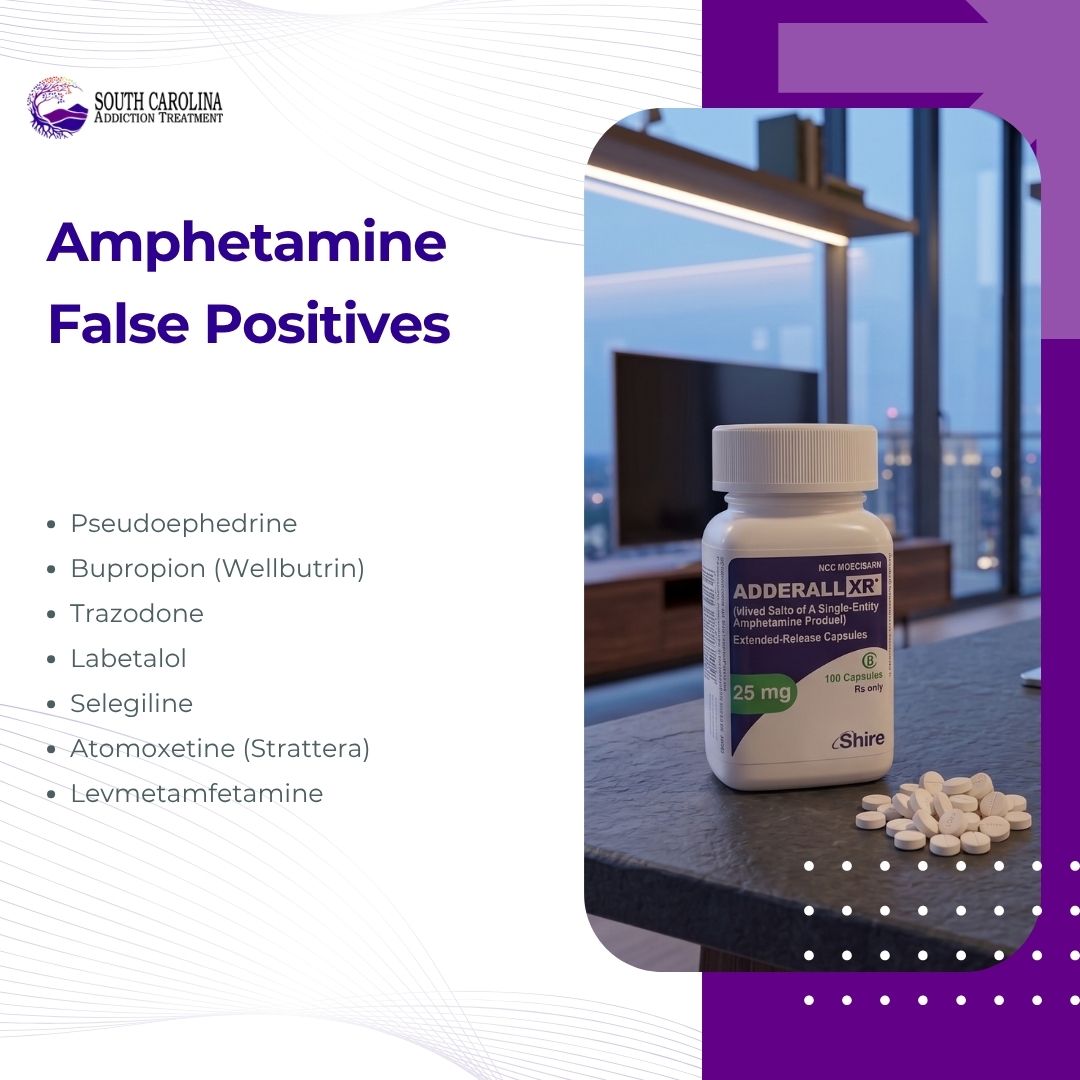
Pseudoephedrine, bupropion, trazodone, labetalol, selegiline, and several other medications can trigger a false-positive amphetamine screen. Confirmatory GC-MS or LC-MS/MS testing identifies the real compound and clears a false positive.
The following are the 7 medications and products linked to positive amphetamine screens, based on StatPearls and case reports indexed by the National Library of Medicine.
- Pseudoephedrine: This over-the-counter decongestant is structurally similar to amphetamine and can cross-react on urine immunoassays.
- Bupropion (Wellbutrin): This antidepressant and smoking-cessation medication has documented cross-reactivity on amphetamine screens.
- Trazodone: This antidepressant, often prescribed as a sleep aid, has documented cross-reactivity on amphetamine immunoassays.
- Labetalol: This blood pressure medication can cross-react on amphetamine immunoassays.
- Selegiline: This Parkinson’s disease medication is metabolized into l-amphetamine and l-methamphetamine, which chiral testing identifies as prescription isomers.
- Atomoxetine (Strattera): This non-stimulant ADHD medication has caused a positive amphetamine screen in a published case report.
- Levmetamfetamine: This ingredient in older Vicks VapoInhaler formulations produces l-methamphetamine, which chiral testing separates from illicit use.
What Happens After a Positive Drug Test With an Adderall Prescription?
A Medical Review Officer contacts the person, verifies the Adderall prescription, and reports the result to the employer as negative. Under federal rule 49 CFR 40.137, a legitimate medical explanation requires the MRO to verify the test as negative.
The following are the 5 steps of the MRO verification process under federal drug testing rules.
- Confirm the positive screen with GC-MS or LC-MS/MS testing at a certified laboratory.
- Contact the donor privately to discuss the confirmed result.
- Review the prescription, pharmacy record, or prescriber information the donor provides.
- Report the result to the employer as negative when the prescription is valid.
- Notify the employer separately of a significant safety concern only after allowing the prescriber 5 business days to respond, in safety-sensitive cases.
Rebecca Littlejohn, MSN, APRN, AGACNP-BC, APCNP-BC, PMHNP-BC, a board-certified psychiatric-mental health nurse practitioner and medical provider at South Carolina Addiction Treatment, explains the practical step: “A positive amphetamine screen is expected for anyone taking Adderall as prescribed. Keep the pharmacy label or prescription record ready, and share it with the Medical Review Officer rather than a supervisor. The MRO is the person trained to verify it, and the employer receives only the verified result.”
Can an Employer Refuse to Hire Someone Who Takes Adderall?
An employer cannot refuse to hire someone solely for lawful, prescribed Adderall use under the Americans with Disabilities Act. Exceptions include safety-sensitive federal positions, roles where the medication creates a direct safety threat, and employers with fewer than 15 employees.
How Do Drug Tests Tell Prescribed Adderall From Misuse?
Drug tests identify amphetamine but cannot prove whether someone took the prescribed dose. Confirmation testing distinguishes amphetamine from methamphetamine, and chiral analysis separates prescription isomers from illicit drugs, while clinicians judge misuse through history and patterns.
Stimulant misuse remains common nationally. SAMHSA’s 2024 National Survey on Drug Use and Health reports that 1.4% of people aged 12 or older, about 3.9 million people, misused prescription stimulants in the past year. The South Carolina Department of Public Health recorded 521 psychostimulant-involved overdose deaths in 2024, a category dominated by illicit methamphetamine rather than prescribed Adderall. Snorting Adderall raises these risks further.
Treatment for Stimulant Use Disorder
Adderall misuse that has grown into stimulant use disorder responds to structured, evidence-based care. For adults whose use no longer follows a prescription, South Carolina Addiction Treatment offers treatment for prescription drug addiction at a CARF-accredited, 16-bed center in Simpsonville, Greenville County.
The first week is spent in medical detox. Clients on the 14-day track then move into a week of inpatient rehab built around one-on-one counseling. At intake, licensed nurses collect a urine sample and complete the nursing admission, and within 24 hours each client has had a nursing assessment, a biopsychosocial assessment, a history and physical, and a psychiatric evaluation.
Frequently Asked Questions
Can drinking water hide Adderall on a drug test?
No, drinking extra water does not reliably hide Adderall. Certified laboratories measure creatinine and specific gravity to identify diluted urine samples. A dilute specimen is reported as dilute and often leads to a retest, and adulterated samples are reported as invalid or adulterated.
Do college athletes need permission to take Adderall?
Yes, NCAA athletes taking Adderall need a documented medical exception. The NCAA bans stimulants, including amphetamines, unless the athlete’s school keeps documentation of an ADHD diagnosis and prescription on file. Without that documentation, a positive amphetamine test counts as a violation.
Do hospital drug screens detect Adderall?
Yes, hospital drug screens detect Adderall. Emergency departments commonly use urine immunoassays that include amphetamines. A hospital screen guides immediate medical care and is not reviewed by a Medical Review Officer, so sharing current prescriptions with the care team prevents misinterpretation.
What Is the 28-Day Rule for Adderall?
The 28-day rule for Adderall is a pharmacy and insurance practice, not a law. Insurers typically allow the next fill of a 30-day Adderall supply around day 28, because federal law prohibits refills on Schedule II prescriptions.
References
- Drug Enforcement Administration. (n.d.). 21 CFR Part 1306: Prescriptions. Electronic Code of Federal Regulations.
- Gourlay, D. L., et al. (2019). Urine drug tests: Ordering and interpretation. American Family Physician, 99(1), 33-39.
- Helland, A., et al. (2025). Drug detection in oral fluid and urine after single therapeutic doses of dexamphetamine, lisdexamphetamine, and methylphenidate in healthy volunteers. Journal of Analytical Toxicology, 49(2), 65. NIH
- South Carolina Department of Public Health. (2024). 2023 annual report: South Carolina Prescription Monitoring Program. SC
- South Carolina Department of Public Health. (2026). Drug overdose deaths: South Carolina, 2024.
- Substance Abuse and Mental Health Services Administration. (2022). Medical review officer case studies.
- Substance Abuse and Mental Health Services Administration. (2025). Key substance use and mental health indicators in the United States: Results from the 2024 National Survey on Drug Use and Health.