How Long Does Dilaudid Stay in Your System?
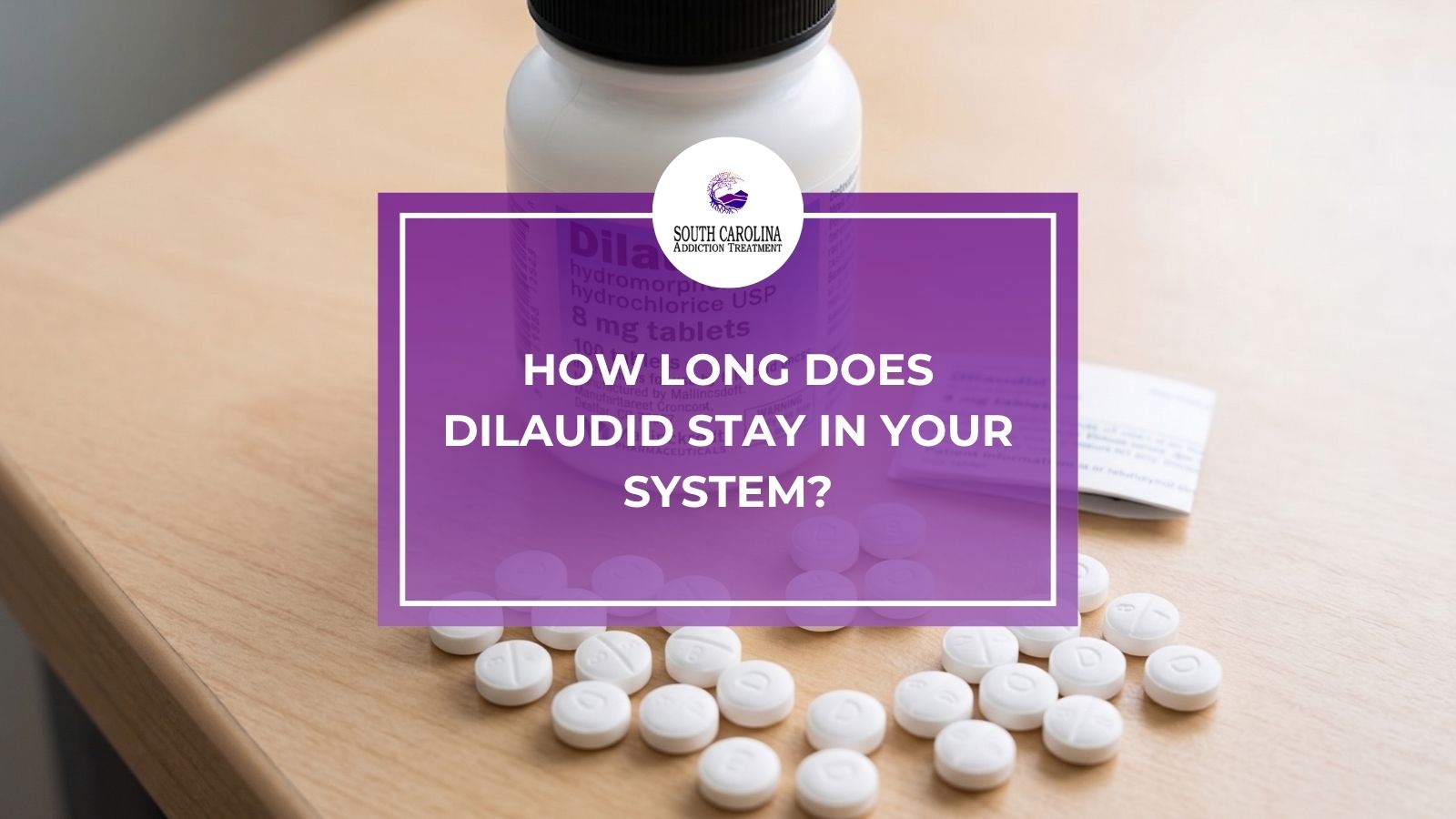
Dilaudid stays in your system for roughly 10 to 15 hours after an immediate-release dose, and drug tests detect it longer. Urine testing detects hydromorphone for 2 to 4 days.
Blood testing detects the drug for around 10 hours and saliva for up to 2 days. Hair follicle testing reaches back 90 days.
The formulation changes everything. Extended-release hydromorphone runs a half-life near 11 hours, which pushes total clearance past two and a half days.
Key Takeaways
- Immediate-release hydromorphone carries a half-life of 2 to 3 hours, while extended-release ranges from 8 to 15 hours with a typical value near 11 hours (Abi-Aad and Derian, 2023).
- The liver converts the majority of hydromorphone to hydromorphone-3-glucuronide, a metabolite providing no pain relief. Only 7% leaves the body unchanged in urine and 1% in feces.
- Hydromorphone runs roughly 5 to 7 times more potent than morphine milligram for milligram, which is why milligram-for-milligram substitution between the two causes fatal overdoses.
- Basic opiate immunoassays are calibrated for morphine and codeine, so a patient taking prescribed Dilaudid can produce a negative 5-panel result.
- Respiratory depression risk concentrates in the first 24 to 72 hours of starting therapy and after any dose increase.
Dilaudid Detection Window for Each Drug Test
Laboratories detect hydromorphone for 2 to 4 days in urine, around 10 hours in blood, up to 2 days in saliva, and up to 90 days in hair. Extended-release tablets sit at the longer end of every range above. Every range below assumes an immediate-release dose in an adult with normal liver and kidney function.
| Test type | Detection window | Clinical notes |
|---|---|---|
| Urine | 2 to 4 days | A single therapeutic dose may clear in 11 to 24 hours |
| Blood | Up to 10 hours | Used clinically and forensically rather than for employment |
| Saliva | Up to 2 days | Some laboratories report windows reaching 4 days |
| Hair follicle | Up to 90 days | Reflects a standard 1.5-inch sample lookback |
How long does Dilaudid stay in urine?
Urine detects hydromorphone for 2 to 4 days and serves as the standard matrix for clinical monitoring and workplace screening. Urine assays measure both the parent drug and its glucuronide metabolite.
The metabolite outlasts hydromorphone itself, which is why the urine window extends well past what the 2 to 3 hour half-life alone predicts. Extended-release formulations and reduced kidney function both push results toward the four-day end.
How long does Dilaudid stay in blood?
Blood detects hydromorphone for approximately 10 hours, and some references report shorter windows near 4 hours depending on assay sensitivity. The narrow range reflects the short elimination half-life directly.
Blood testing appears in emergency medicine, postmortem toxicology, and impaired driving investigation. Employers rarely order it.
How long does Dilaudid stay in saliva and hair?
Saliva detects hydromorphone for up to 2 days, with some laboratories reporting up to 4 days. Collection is simple and can be directly observed, which suits for-cause testing.
Hair follicle testing detects hydromorphone for up to 90 days but establishes exposure across the growth period rather than recent use. A positive hair result cannot distinguish a dose taken last week from one taken two months ago.
Half-Life Difference Between Dilaudid Immediate-Release and Extended-Release
Immediate-release hydromorphone carries a half-life of 2 to 3 hours while extended-release runs approximately 11 hours. Half-life measures the time required to eliminate half the drug in circulation, and clinicians treat four to five half-lives as near-complete clearance.
Applied to immediate-release hydromorphone, that arithmetic produces clearance in roughly 10 to 15 hours. Applied to extended-release, the same arithmetic produces roughly 55 to 75 hours.
That gap explains most of the confusion around Dilaudid timelines. Two people prescribed the same drug name face detection windows differing by more than two days depending on which formulation the prescription specified.
Route changes onset far more than it changes elimination. Intravenous hydromorphone clears on a timeline similar to oral immediate-release despite reaching the bloodstream within minutes.
How long does Dilaudid last?
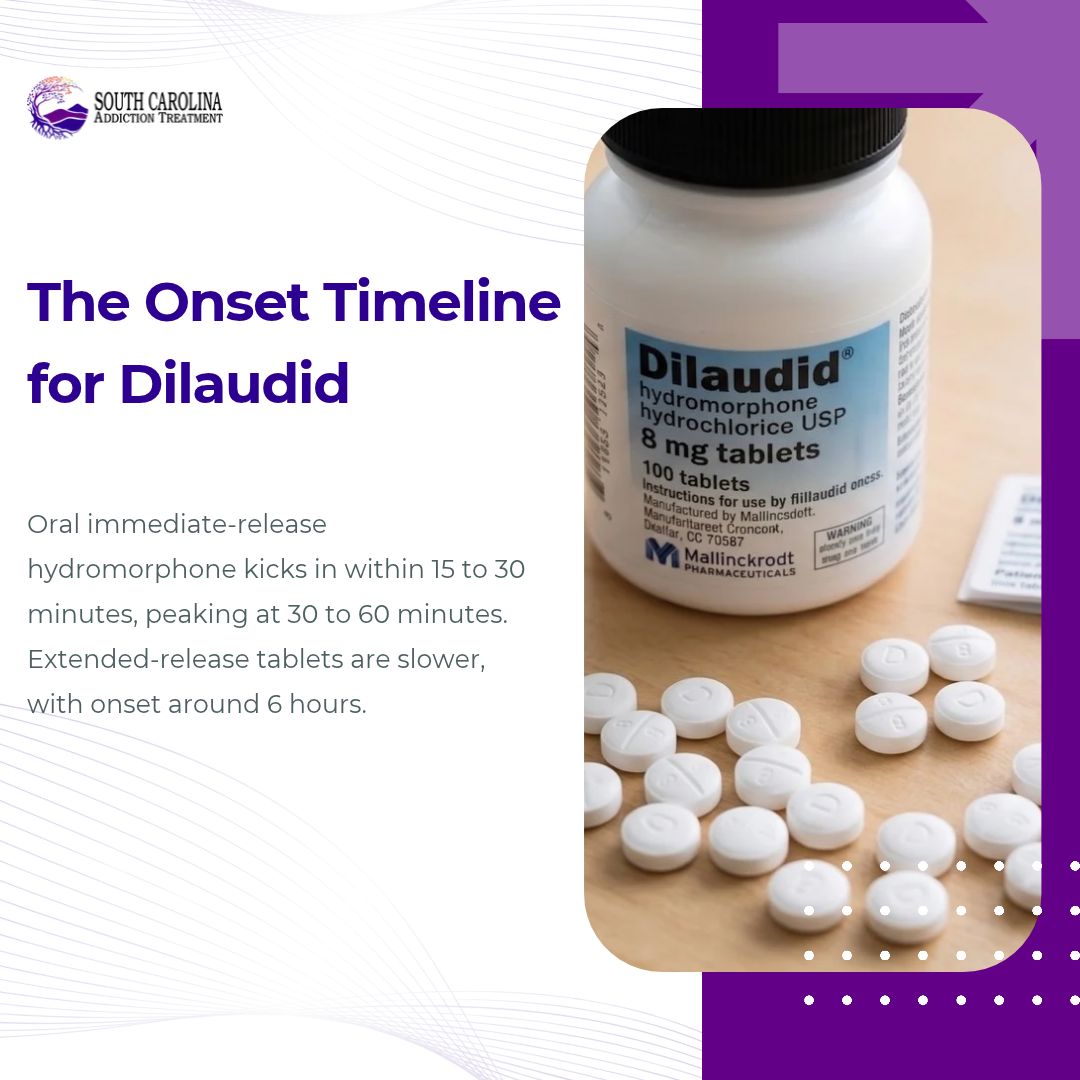
Immediate-release Dilaudid produces 3 to 4 hours of pain relief and extended-release produces approximately 13 hours. Route of administration shifts how quickly effects begin without meaningfully changing how long they persist.
| Route and form | Onset | Peak effect | Duration |
|---|---|---|---|
| Oral immediate-release | 15 to 30 minutes | 30 to 60 minutes | 3 to 4 hours |
| Oral extended-release | Around 6 hours | Around 9 hours | Around 13 hours |
| Intravenous | Within 5 minutes | 10 to 20 minutes | 3 to 4 hours |
How long does IV Dilaudid last?
Intravenous hydromorphone produces effects within 5 minutes and lasts 3 to 4 hours, with peak effect at 10 to 20 minutes. Hospitals use the intravenous route for acute severe pain precisely because of that speed.
The same speed makes intravenous misuse substantially more dangerous. Respiratory depression develops before a person recognizes the dose was excessive.
How long does Dilaudid take to work?
Oral immediate-release hydromorphone begins working within 15 to 30 minutes and reaches full effect between 30 and 60 minutes. Extended-release tablets behave differently, taking roughly 6 hours to reach onset.
That six-hour delay is why extended-release hydromorphone treats continuous background pain rather than breakthrough episodes. Crushing or chewing an extended-release tablet destroys the release mechanism and delivers the full dose at once.
What does Dilaudid show up as on a drug test?
Dilaudid registers as hydromorphone on expanded opioid panels and frequently produces a false negative on basic opiate screens. Standard opiate immunoassays are calibrated primarily for morphine and codeine, and semi-synthetic opioids cross-react with them incompletely.
A person taking hydromorphone exactly as prescribed can therefore produce a negative result on a basic five-panel opiate screen. That outcome surprises patients and employers regularly and reflects assay design rather than any error in collection.
Reliable detection requires an expanded opioid panel or targeted confirmatory testing. Laboratories confirm presumptive results using gas chromatography or liquid chromatography mass spectrometry before reporting a positive.
One interpretive complication matters clinically. Hydromorphone appears as a minor metabolite in patients taking high-dose morphine, so its presence on a confirmatory test does not by itself establish that a person took Dilaudid.
What affects how long Dilaudid stays in the body?
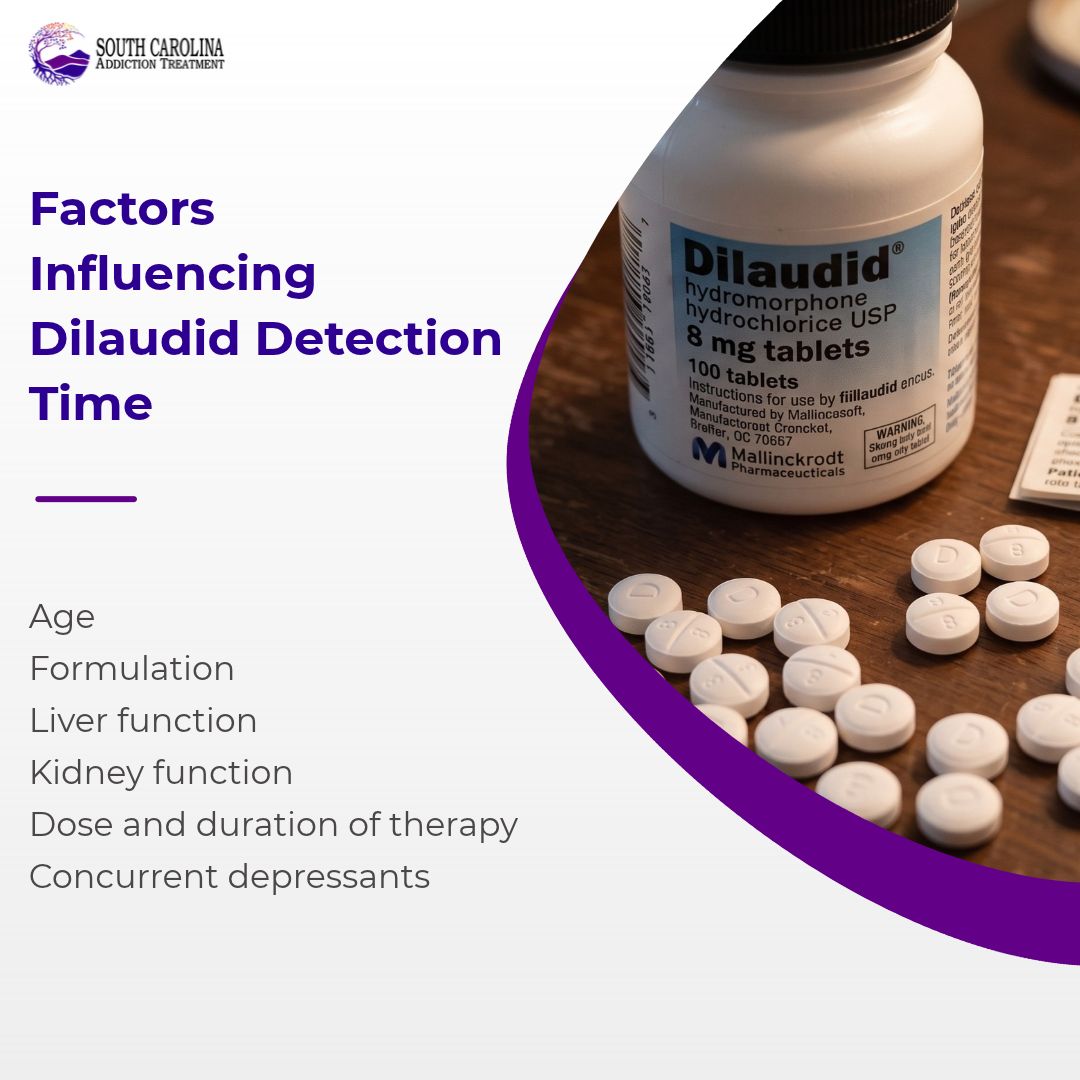
Formulation is the single largest determinant of Dilaudid clearance, followed by kidney function, liver function, and duration of use. These variables move a person within and occasionally beyond the published detection ranges.
Variables that lengthen or shorten hydromorphone detection windows:
- Formulation: Extended-release adds more than two days of clearance time compared with immediate-release at the same dose.
- Dose and duration of therapy: Higher doses and chronic use accumulate metabolites faster than the kidneys remove them.
- Kidney function: Reduced renal clearance causes hydromorphone-3-glucuronide to accumulate, and clinicians start impaired patients at one-quarter to one-half the standard dose.
- Liver function: Hepatic glucuronidation drives hydromorphone breakdown, so impairment slows elimination and warrants the same dose reduction.
- Age: Older adults clear opioids more slowly, and the Beers Criteria list hydromorphone as potentially inappropriate in this population.
- Concurrent depressants: Alcohol and benzodiazepines compound respiratory depression without changing clearance rate.
Nothing safely accelerates elimination. Detox drinks, niacin, and heavy water intake do not alter hepatic glucuronidation and will flag a specimen as dilute, which triggers a repeat collection.
Is Dilaudid stronger than morphine?
Hydromorphone is roughly 5 to 7 times more potent than morphine on a milligram-for-milligram basis. The Pennsylvania Patient Safety Authority places the intravenous potency estimate near 7.5 to 1, while published conversion reviews span a range from about 4 to 1 up to 8 to 1.
Potency and effectiveness describe different properties. Higher potency means a smaller quantity produces the same analgesic effect, not that the pain relief is superior or longer lasting.
That ratio is why substitution errors between the two drugs kill people. The Pennsylvania Patient Safety Authority found that 70% of wrong-drug reports involving hydromorphone were mix-ups with morphine, and 65% of the resulting adverse reactions were preventable.
Hydromorphone also behaves differently in kidney disease. Unlike morphine, it forms no 6-glucuronide metabolite, which alters its accumulation profile in patients with reduced renal clearance.
Hydromorphone is also frequently confused with fentanyl, a much stronger synthetic opioid, though the two drugs differ significantly in potency, origin, and typical use.
What is the most common side effect of Dilaudid?
Constipation, nausea, and sedation are the most common adverse effects of hydromorphone. Flushing, pruritus, sweating, dry mouth, dizziness, headache, and asthenia also appear frequently across treatment.
Constipation is the effect least likely to resolve. Tolerance develops to sedation and nausea over days to weeks, while opioid-induced constipation typically persists for the duration of treatment.
Respiratory depression is the effect that kills. Risk is dose-dependent, concentrates in the first 24 to 72 hours of therapy and after any dose increase, and rises sharply when hydromorphone is combined with alcohol or benzodiazepines.
Signs of hydromorphone overdose requiring immediate emergency care:
- Slow, shallow, or stopped breathing.
- Bluish lips or fingernails and cold, clammy skin.
- Pinpoint pupils with confusion or extreme drowsiness.
- Unresponsiveness to voice or physical stimulation.
Naloxone reverses opioid overdose and is available without a prescription in South Carolina. Administering naloxone and calling 911 are the two actions that change the outcome.
Hydromorphone also carries interaction risks people rarely anticipate. Combining it with selective serotonin reuptake inhibitors or tricyclic antidepressants raises the risk of serotonin syndrome, and combining it with benzodiazepines or barbiturates produces severe respiratory and central nervous system depression.
"Respiratory depression is the complication that kills, and it does not always look dramatic. Sometimes it's just someone who's harder and harder to wake up. We keep naloxone accessible and train staff to recognize the early signs, because the window to reverse an opioid overdose is short."
— Sahil Talwar, PA-C, MBA, Medical Provider, South Carolina Addiction Treatment
Internal outcomes data at South Carolina Addiction Treatment from January 2025 to April 2026 show an average 62% decrease in withdrawal symptoms among clients who complete treatment, and 82% of clients who begin treatment complete it.
When does Dilaudid use signal dependence or addiction?
Physical dependence develops with sustained hydromorphone use even under correct medical supervision and is not the same condition as addiction.
Hydromorphone withdrawal begins within hours of a missed immediate-release dose and produces severe muscle and bone pain, agitation, vomiting, diarrhea, and intense craving. Untreated withdrawal is where relapse concentrates, and tolerance falls fast enough during abstinence that returning to a previous dose causes fatal respiratory depression.
Medication-assisted treatment such as Suboxone can reduce cravings and relapse risk for clients continuing opioid use disorder treatment after detox.
Opioid detox at South Carolina Addiction Treatment runs approximately seven days under 24-hour medical supervision, followed by an optional residential week. The facility holds 16 beds across eight rooms in Simpsonville, which keeps the staff-to-client ratio near three to one.
Medical detox
The medical detox program is licensed by the South Carolina Department of Public Health and accredited by CARF International. Clients withdrawing from hydromorphone frequently arrive dependent on more than one substance, and the program manages simultaneous withdrawal from opioids, alcohol, and benzodiazepines rather than requiring separate admissions.
Residential care and step-down
The inpatient rehab week addresses the relapse risk that detox alone leaves untouched, since tolerance loss after withdrawal is exactly when overdose deaths cluster. As a sister program to Carolina Center for Recovery, South Carolina Addiction Treatment transitions clients directly into partial hospitalization, intensive outpatient program, or outpatient care rather than discharging them without a next level.
References
- Abi-Aad, K. R., & Derian, A. (2023). Hydromorphone. In StatPearls. StatPearls Publishing. https://www.ncbi.nlm.nih.gov/books/NBK470393/
- Dowell, D., Ragan, K. R., Jones, C. M., Baldwin, G. T., & Chou, R. (2022). CDC clinical practice guideline for prescribing opioids for pain, United States, 2022. MMWR Recommendations and Reports, 71(3), 1–95. https://www.cdc.gov/mmwr/volumes/71/rr/rr7103a1.htm
- Vaillancourt, R., & Pouliot, A. (2022). Hydromorphone prescription for pain in children: What place in clinical practice? Frontiers in Pediatrics, 10, 842835.
- Smith, H. S. (2009). Opioid metabolism. Mayo Clinic Proceedings, 84(7), 613–624.
- Murray, A., & Hagen, N. A. (2005). Hydromorphone. Journal of Pain and Symptom Management, 29(5 Suppl), S57–S66.
- American Psychiatric Association. (2022). Diagnostic and statistical manual of mental disorders (5th ed., text rev.). American Psychiatric Publishing.