What Is Fentanyl Addiction?
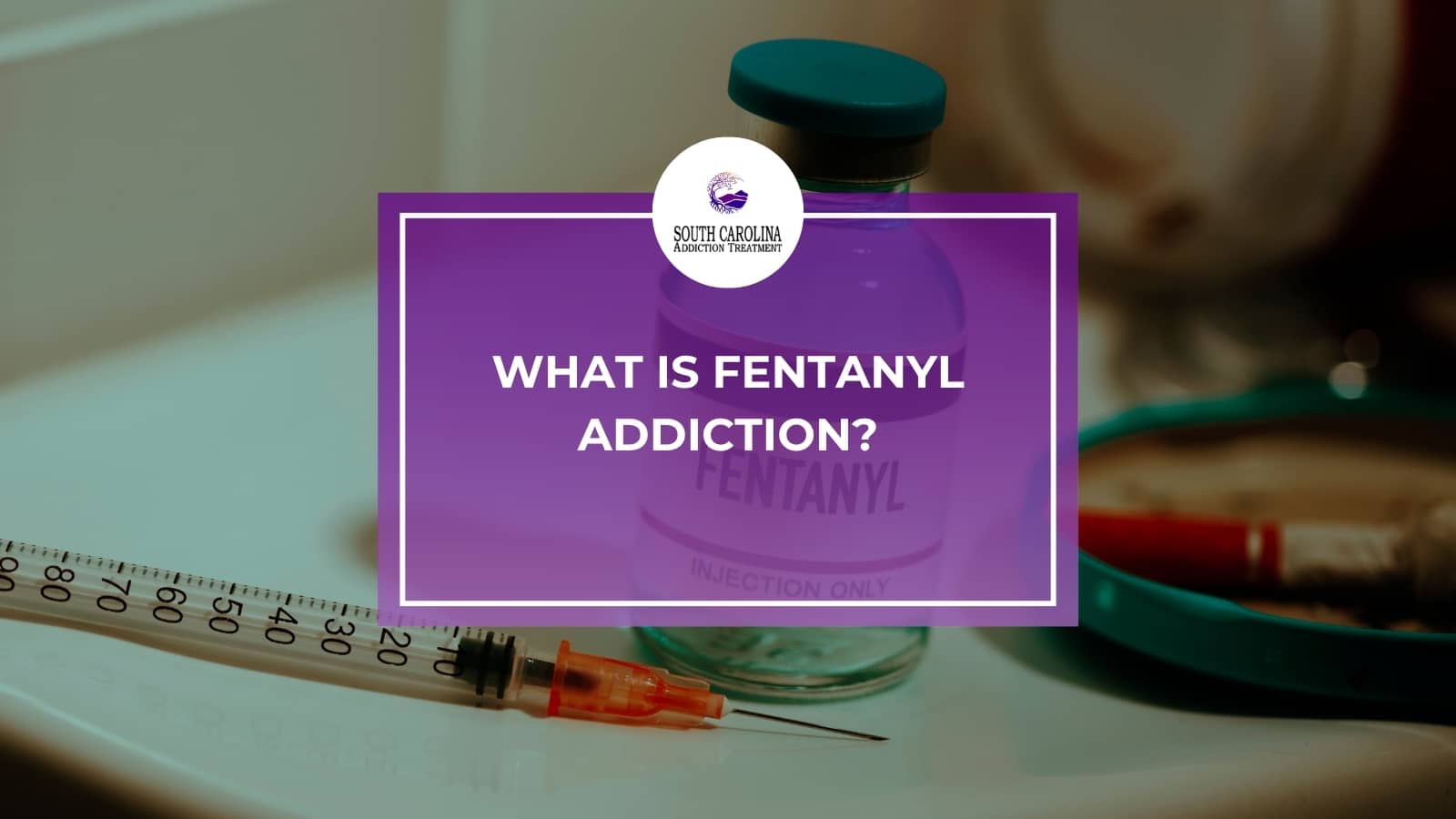
Fentanyl addiction is caused by a synthetic opioid, fentanyl, that is 50 to 100 times more potent than morphine and approximately 50 times more potent than heroin.
The DEA classifies fentanyl as a Schedule II controlled substance with accepted medical use as a surgical anesthetic and prescription pain reliever, but illicitly manufactured fentanyl (IMF) is now the primary driver of drug overdose deaths in the United States.
A dose of just two milligrams of fentanyl is potentially lethal. That amount is equivalent to a few grains of salt, making fentanyl the most dangerous drug in the current overdose crisis by a wide margin.
Understanding what fentanyl is, how it works in the body, what it looks like on the street, and what treatment options exist for fentanyl dependence is essential for anyone affected by this epidemic.
Key Takeaways
- According to CDC provisional data, approximately 79,384 drug overdose deaths occurred in the United States in 2024, with synthetic opioids (primarily fentanyl) involved in the majority of those fatalities.
- Fentanyl binds to mu-opioid receptors with an affinity approximately 50 to 100 times greater than morphine, producing profound analgesia and respiratory depression at microgram-level doses.
- The DEA reports that fentanyl is the single greatest drug threat in the United States, with most illicit supply originating from clandestine laboratories in Mexico using precursor chemicals from China.
- Fentanyl overdose deaths declined approximately 34% in 2024 compared to the prior year, but fentanyl still accounts for more overdose deaths than any other single substance.
- Naloxone (Narcan) reverses fentanyl overdose, but fentanyl's extreme potency frequently requires multiple doses of naloxone compared to heroin or prescription opioid overdoses.
How Fentanyl Works in the Body
Fentanyl produces its effects by binding to mu-opioid receptors in the central nervous system with extreme affinity, triggering a cascade of neurochemical changes that produce analgesia, euphoria, sedation, and dose-dependent respiratory depression.
Mu-Opioid Receptor Binding
Fentanyl's potency derives from its receptor pharmacology
- High receptor affinity: Fentanyl binds to mu-opioid receptors with approximately 50 to 100 times the affinity of morphine and 50 times the affinity of heroin. This means microgram-level quantities produce equivalent pharmacological effects to milligram-level quantities of other opioids.
- Rapid onset: Fentanyl crosses the blood-brain barrier within seconds of intravenous administration due to its high lipophilicity (fat solubility). This rapid CNS penetration produces near-instantaneous effects and is the primary reason fentanyl carries such extreme overdose risk. Inhaled fentanyl also reaches the brain within seconds, which is why smoking fentanyl is now one of the most common routes involved in overdose deaths.
- Dopamine release: Mu-opioid receptor activation in the ventral tegmental area triggers dopamine release in the nucleus accumbens, producing the intense euphoria that drives repeated use and addiction.
Pharmacokinetics
Fentanyl's movement through the body determines both its clinical utility and its danger
- Half-life: Fentanyl has an elimination half-life of approximately 3 to 7 hours depending on the route of administration and individual metabolism. Intravenous fentanyl has a shorter effective duration (30 to 60 minutes) due to rapid redistribution from the brain into fat and muscle tissue.
- Hepatic metabolism: The liver metabolizes fentanyl primarily through the CYP3A4 enzyme pathway, producing the inactive metabolite norfentanyl. Individuals with impaired liver function or those taking CYP3A4 inhibitors clear fentanyl more slowly.
- Renal excretion: Approximately 75% of fentanyl is excreted through urine as metabolites, with less than 10% excreted unchanged.
Fentanyl Forms: Prescription vs. Illicit
Fentanyl exists in two fundamentally different categories that carry vastly different risk profiles: FDA-approved pharmaceutical formulations and illicitly manufactured fentanyl (IMF).
Prescription Fentanyl
The FDA approves fentanyl for specific medical indications
- Transdermal patches (Duragesic): Slow-release patches delivering 12 to 100 mcg/hr over 72 hours, prescribed for chronic pain in opioid-tolerant patients.
- Transmucosal formulations: Fentanyl lozenges (Actiq), buccal tablets (Fentora), and sublingual sprays (Subsys) for breakthrough cancer pain in patients already receiving around-the-clock opioid therapy.
- Intravenous fentanyl: Used as a surgical anesthetic and for procedural sedation in hospital settings.
- Medical use context: Fentanyl was first synthesized in 1960 by Paul Janssen. Its primary medical applications are surgical anesthesia and management of severe pain in opioid-tolerant patients. When used as prescribed under medical supervision, fentanyl dosing is carefully titrated to minimize respiratory depression risk.
Illicitly Manufactured Fentanyl (IMF)
IMF represents the primary driver of the current overdose crisis
- Counterfeit pills: IMF is frequently pressed into counterfeit tablets designed to resemble legitimate prescription medications including oxycodone (fake "M30" pills), Xanax, and Adderall. The DEA reports that 7 out of every 10 counterfeit pills seized contain a potentially lethal dose of fentanyl.
- Powder form: IMF is sold as white, off-white, or tan powder that is indistinguishable from heroin by appearance alone. It is frequently mixed into heroin, cocaine, and methamphetamine supplies without the buyer's knowledge.
- Supply chain: The DEA identifies Mexico-based transnational criminal organizations as the primary manufacturers of IMF, using precursor chemicals (primarily NPP and ANPP) sourced predominantly from China.
What Does Fentanyl Look Like?
Fentanyl's physical appearance varies by form
- Pharmaceutical patches: Clear or translucent adhesive patches labeled with dosage information.
- Counterfeit pills: Blue, green, or white round tablets stamped with markings mimicking legitimate medications. These pills contain inconsistent dosing, with some containing no fentanyl and others containing lethal amounts within a single batch.
- Powder: Fine white, off-white, or tan powder visually identical to heroin or cocaine powder. Rainbow-colored fentanyl ("rainbow fentanyl") has been seized in some markets.
- Blotter paper: Less common, but fentanyl-soaked blotter paper resembling LSD tabs has been documented.
Where Fentanyl Comes From
Fentanyl enters the U.S. drug supply through both legitimate pharmaceutical channels and illicit manufacturing networks.
Pharmaceutical Production
Legitimate fentanyl is manufactured by licensed pharmaceutical companies
- FDA-regulated manufacturing: Companies including Teva, Mylan, and Mallinckrodt produce FDA-approved fentanyl formulations under strict quality controls ensuring consistent dosing.
- Diversion risk: Pharmaceutical fentanyl diversion (theft from hospitals, clinics, or pharmacies) was the primary source of illicit fentanyl before 2013. Since then, IMF has overwhelmingly replaced diverted pharmaceutical fentanyl as the dominant supply source.
Illicit Manufacturing and Trafficking
The illicit fentanyl supply chain operates through international networks
- Precursor chemicals: NPP (N-Phenethyl-4-piperidone) and ANPP (4-Anilino-N-phenethyl-4-piperidone) are the primary precursor chemicals used to synthesize fentanyl. These chemicals are predominantly manufactured in China and shipped to Mexican laboratories.
- Clandestine laboratories: Mexican drug trafficking organizations (primarily the Sinaloa Cartel and Jalisco New Generation Cartel) operate large-scale fentanyl synthesis laboratories using these precursors.
- Distribution routes: Finished fentanyl crosses the U.S.-Mexico border primarily through legal ports of entry concealed in vehicles and commercial shipping, according to DEA intelligence reports.
Side Effects and Risks of Fentanyl
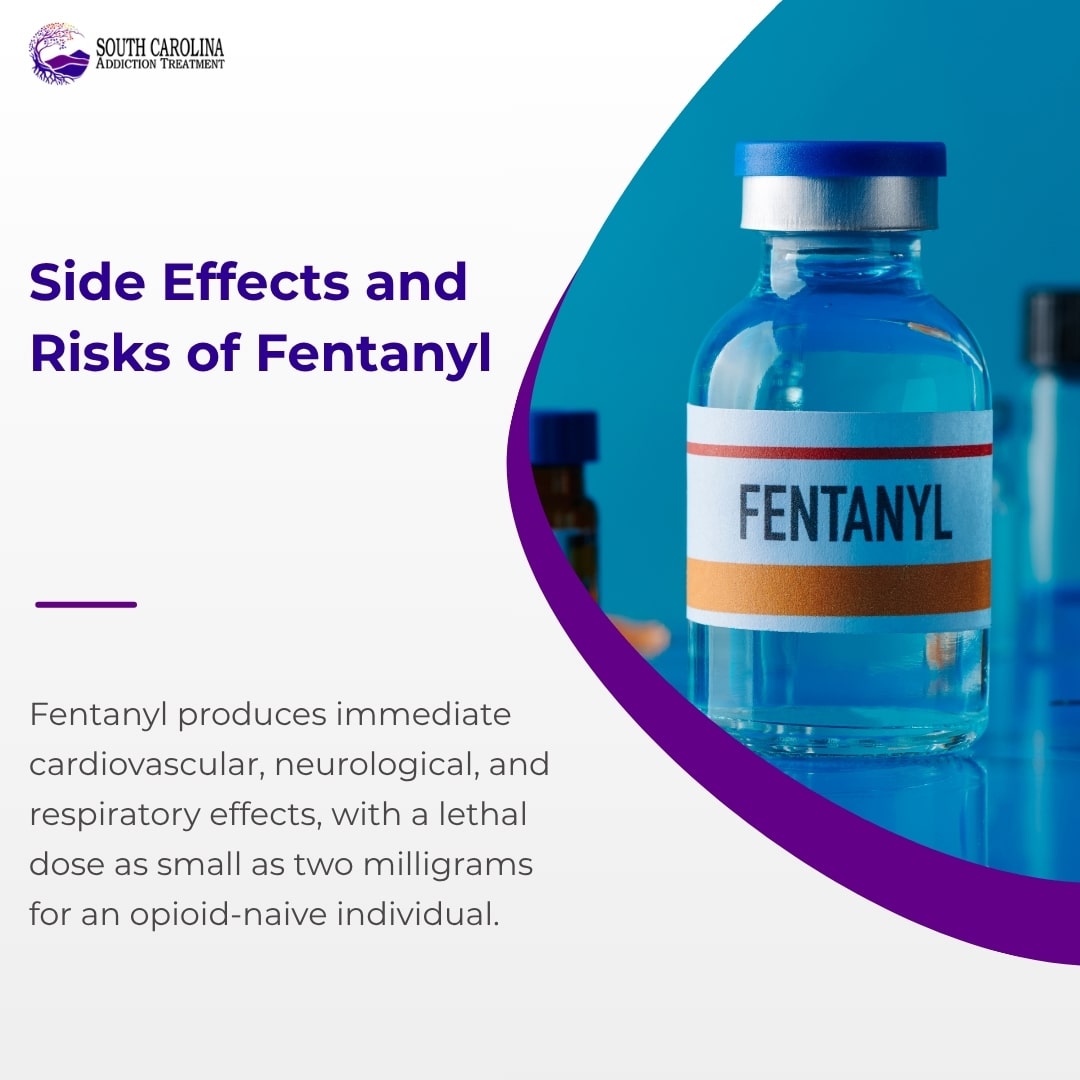
Fentanyl produces dose-dependent effects that escalate rapidly from therapeutic analgesia to fatal respiratory arrest, with an extremely narrow margin between effective dose and lethal dose.
Common Side Effects
Expected fentanyl effects at prescribed doses reflect mu-opioid receptor activation
- Respiratory depression: Fentanyl suppresses the brainstem respiratory center in a dose-dependent manner. Even therapeutic doses reduce respiratory rate and tidal volume, producing the most dangerous acute effect of any opioid.
- Sedation and euphoria: Central nervous system depression produces drowsiness, mental clouding, and in recreational use, intense but short-lived euphoria.
- Nausea and vomiting: Stimulation of the chemoreceptor trigger zone produces nausea in approximately 20 to 40% of patients.
- Constipation: Mu-opioid receptor activation in the gastrointestinal tract reduces peristalsis, producing opioid-induced constipation in the majority of chronic users.
- Miosis: Pupil constriction (pinpoint pupils) is a hallmark physical sign of opioid exposure.
Severe and Life-Threatening Effects
Fentanyl's extreme potency collapses the margin between therapeutic and lethal effects
- Fatal respiratory arrest: Fentanyl suppresses the brainstem respiratory drive at doses only marginally above those producing analgesia. Two milligrams of fentanyl is a potentially lethal dose for an opioid-naive individual, according to the DEA.
- Wooden chest syndrome: Rapid IV administration of high-dose fentanyl produces acute rigidity of the chest wall and diaphragm muscles, preventing mechanical ventilation and requiring neuromuscular blockade (paralytic agents) to restore breathing. This is a documented phenomenon in emergency medicine literature.
- Bradycardia and hypotension: Fentanyl's vagotonic effects produce dangerous slowing of heart rate and blood pressure drops that compound respiratory depression during overdose.
Long-Term Risks of Fentanyl Use
Chronic fentanyl exposure produces severe physiological and neurological consequences
- Rapid tolerance development: Fentanyl's extreme potency accelerates mu-opioid receptor downregulation faster than less potent opioids, driving dose escalation at a pace that quickly exceeds the safety margin.
- Opioid Use Disorder: The DSM-5-TR classifies persistent fentanyl use despite harmful consequences as Opioid Use Disorder (OUD). SAMHSA estimates 2.1 million Americans met criteria for OUD in 2023.
- Opioid-induced hyperalgesia: Chronic fentanyl exposure paradoxically increases pain sensitivity through central sensitization mechanisms, worsening the pain it was used to treat.
- Endocrine disruption: Long-term opioid use suppresses hypothalamic-pituitary-gonadal axis function, producing testosterone deficiency in men and menstrual irregularities in women.
- Xylazine co-contamination: An increasing proportion of IMF contains xylazine ("tranq"), a veterinary sedative that produces severe skin ulceration and tissue necrosis at injection sites and is not reversed by naloxone.
Fentanyl Overdose: Signs and Emergency Response
Fentanyl overdose is a medical emergency requiring immediate naloxone administration and emergency medical services.
Recognizing Fentanyl Overdose
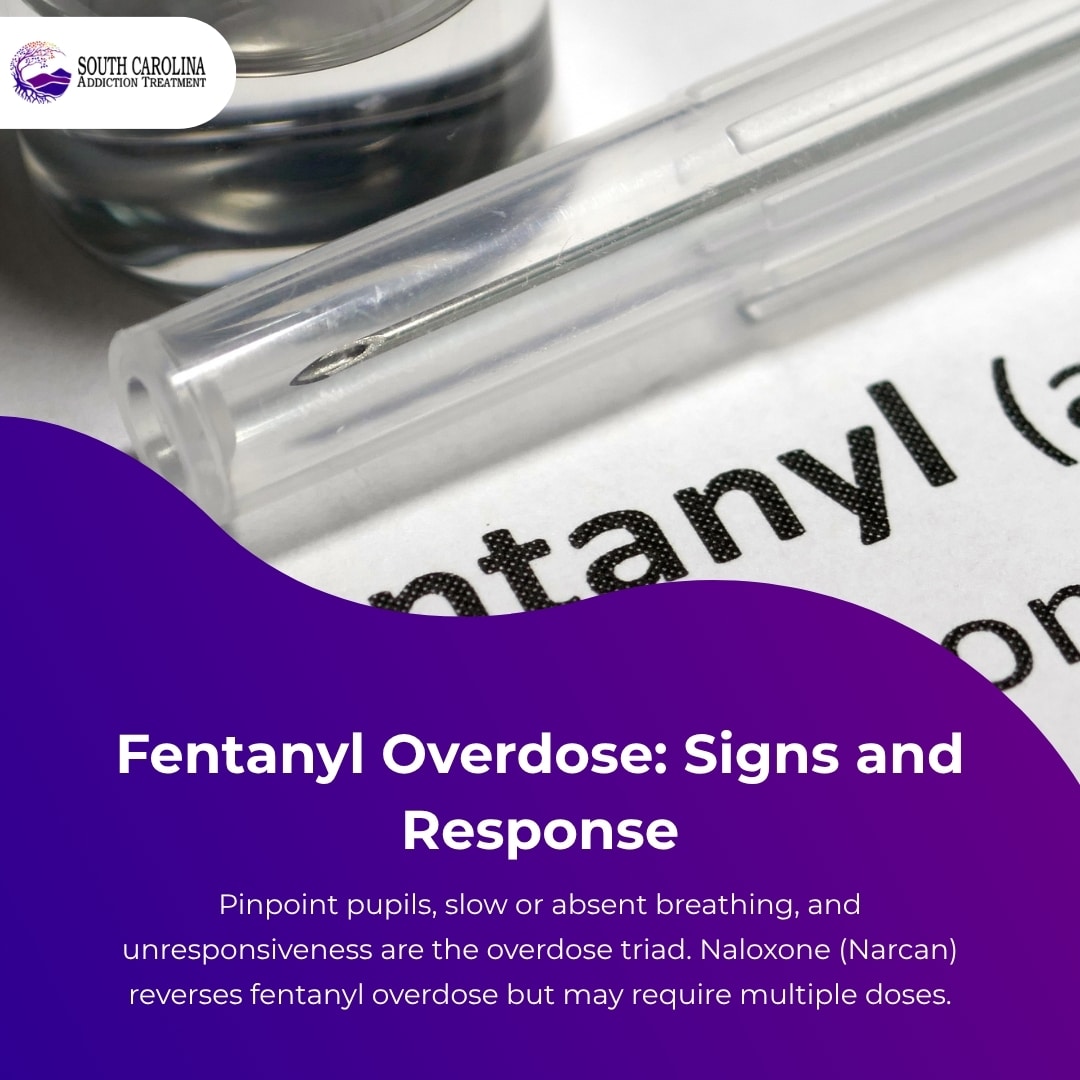
The overdose triad identifies opioid toxicity
- Pinpoint pupils (miosis): Bilateral pupil constriction to less than 2mm is the most reliable clinical indicator of opioid intoxication.
- Respiratory depression or arrest: Slow, shallow, or absent breathing. Agonal gasping (irregular, gasping breaths) indicates impending respiratory arrest.
- Decreased level of consciousness: Unresponsiveness to verbal or physical stimulation, progressing to complete unconsciousness.
Additional overdose indicators include
- Blue or gray skin discoloration (cyanosis): Particularly visible around the lips, fingertips, and nail beds, indicating oxygen deprivation.
- Choking or gurgling sounds: Fluid accumulation in the airway produces audible obstruction.
- Limp body: Complete loss of muscle tone throughout the body.
Naloxone (Narcan) Administration
Naloxone is a mu-opioid receptor antagonist that reverses fentanyl overdose
- Mechanism: Naloxone competitively displaces fentanyl from mu-opioid receptors, rapidly restoring respiratory drive. Effects begin within 2 to 5 minutes of intranasal or intramuscular administration.
- Multiple doses required: Fentanyl's extreme receptor affinity frequently requires 2 to 3 doses of naloxone (4 to 12 mg total) compared to the single 4 mg dose sufficient for most heroin overdoses.
- Duration mismatch: Naloxone's duration of action (30 to 90 minutes) is shorter than fentanyl's. Patients may return to overdose state after naloxone wears off, requiring emergency medical monitoring.
- Fentanyl test strips: These harm reduction tools detect fentanyl in drug samples before use. SAMHSA endorses fentanyl test strip distribution as an evidence-based overdose prevention strategy.
Fentanyl Withdrawal Timeline
Fentanyl withdrawal follows the characteristic opioid withdrawal pattern but with a compressed onset timeline due to fentanyl's short half-life.
- Phase 1 (6 to 12 hours after last dose): Muscle aches, anxiety, excessive tearing, runny nose, yawning, and insomnia emerge as mu-opioid receptor rebound activity begins. Fentanyl withdrawal onset is faster than heroin (12 to 24 hours) or methadone (24 to 48 hours) due to fentanyl's shorter half-life.
- Phase 2 (12 to 72 hours): Peak withdrawal intensity produces abdominal cramping, diarrhea, nausea, vomiting, goosebumps (piloerection), dilated pupils, elevated heart rate, and intense cravings.
- Phase 3 (72 hours to 7 days): Acute physical symptoms gradually diminish. Insomnia, irritability, and persistent cravings continue as neurochemical rebalancing progresses.
- Phase 4 (1 to 4 weeks, post-acute): Protracted withdrawal symptoms including dysphoria, fatigue, difficulty concentrating, and intermittent cravings persist for weeks to months. Post-acute withdrawal syndrome (PAWS) affects a significant subset of chronic fentanyl users and is a primary driver of early relapse.
Treatment for Fentanyl Addiction
Fentanyl addiction treatment requires a multi-layered approach combining medically supervised detox, medication-assisted treatment, and behavioral therapy.
Medication-Assisted Treatment (MAT)
MAT is the evidence-based standard of care for Opioid Use Disorder
- Buprenorphine (Suboxone, Sublocade): A partial mu-opioid receptor agonist that reduces cravings and withdrawal symptoms without producing the euphoria or respiratory depression of full agonists. Buprenorphine is the first-line medication for fentanyl use disorder.
- Methadone: A full mu-opioid receptor agonist administered through licensed opioid treatment programs (OTPs). Methadone provides sustained receptor activation that eliminates cravings and withdrawal for 24 to 36 hours.
- Naltrexone (Vivitrol): A mu-opioid receptor antagonist administered as a monthly intramuscular injection. Naltrexone blocks all opioid effects and is initiated only after complete detoxification.
Evidence-Based Behavioral Therapies
Psychotherapy addresses the psychological dimensions of fentanyl dependence
- Cognitive behavioral therapy (CBT): Identifies and restructures thought patterns that trigger drug-seeking behavior.
- Contingency management: Uses positive reinforcement (incentives) for verified abstinence, producing the strongest short-term treatment retention evidence of any behavioral intervention.
- 12-step facilitation: Structured introduction to mutual-aid recovery programs including Narcotics Anonymous (NA).
Treatment at South Carolina Addiction Treatment
South Carolina Addiction Treatment provides medically supervised opioid detox and residential care for individuals with fentanyl dependence through its SCAT2Track program in Simpsonville, South Carolina.
Medical Detox (Track One)
Track One delivers 7-day medically supervised detoxification for fentanyl withdrawal
- Opioid withdrawal management: Licensed nursing and psychiatric staff administer symptom-targeted medications around the clock, managing withdrawal severity through 24-hour monitoring in a 16-bed CARF-accredited facility under the direction of Dr. Gergana Dimitrova, MD.
- MAT evaluation: The medical team evaluates each client for buprenorphine, naltrexone, and other medication-assisted treatment options to support sustained recovery beyond the detox period.
- Comprehensive assessment: All four core assessments (nursing, biopsychosocial, history and physical, psychiatric evaluation) are completed within the first 24 hours.
"Fentanyl withdrawal onset is faster and often more intense than withdrawal from heroin or prescription opioids. Our medical team uses validated assessment protocols to anticipate symptom progression and intervene before patients reach peak distress, which is critical for retention in the early hours of detox."
— Sahil Talwar, PA-C, MBA, Medical Provider, South Carolina Addiction Treatment
Residential Treatment (Track Two)
Track Two extends care to 14 total days with structured clinical programming
- Individualized therapy: Licensed counselors including Pam DeHart, MA, LPC, LAC, ADC, Clinical Supervisor, address the behavioral and psychological dimensions of opioid dependence through individual sessions, group therapy, and relapse prevention planning.
- Aftercare coordination: The clinical case manager connects graduating clients with PHP, IOP, and sober living programs to maintain treatment continuity beyond discharge.
Frequently Asked Questions
What is fentanyl used for medically?
Fentanyl is FDA-approved for surgical anesthesia and for managing severe pain in opioid-tolerant patients, including breakthrough cancer pain. It is administered as transdermal patches, transmucosal lozenges, sublingual sprays, and intravenous injection. Fentanyl is never a first-line pain medication for opioid-naive patients due to its extreme potency.
Why is fentanyl so dangerous?
Fentanyl's extreme potency creates a nearly invisible lethal dose threshold. Two milligrams (equivalent to a few grains of salt) is potentially fatal for an opioid-naive person. Street fentanyl contains wildly inconsistent doses, meaning one pill from the same batch may contain no fentanyl while another contains a lethal amount.
What does fentanyl do to you?
Fentanyl binds to mu-opioid receptors in the brain, producing intense euphoria, sedation, pain relief, and respiratory depression. At doses only marginally above the therapeutic range, fentanyl suppresses the brainstem respiratory center to the point of respiratory arrest. Chronic use produces rapid tolerance, physical dependence, and Opioid Use Disorder.
Is fentanyl an opioid?
Fentanyl is a fully synthetic opioid, meaning it is manufactured entirely in a laboratory rather than derived from the opium poppy plant. It belongs to the phenylpiperidine class of synthetic opioids. The DEA classifies fentanyl as a Schedule II controlled substance alongside morphine, oxycodone, and hydromorphone.
How long does fentanyl stay in your system?
Fentanyl is detectable in urine for 1 to 3 days, blood for 5 to 48 hours, saliva for 1 to 4 days, and hair for up to 90 days. Standard opioid immunoassay panels detect fentanyl, though confirmation testing by LC-MS/MS may be required for precise identification.
What is the trade name for fentanyl?
Brand-name fentanyl formulations include Duragesic (transdermal patch), Actiq (transmucosal lozenge), Fentora (buccal tablet), Subsys (sublingual spray), Abstral (sublingual tablet), and Lazanda (nasal spray). All require prescriptions and are indicated only for opioid-tolerant patients with severe pain.
How is fentanyl different from heroin?
Fentanyl is 50 times more potent than heroin by weight. While both bind to mu-opioid receptors, fentanyl is fully synthetic (heroin is semi-synthetic, derived from morphine). Fentanyl crosses the blood-brain barrier faster due to higher lipophilicity, producing more rapid onset and greater overdose risk at smaller quantities.
Why is fentanyl given at the end of life?
Fentanyl transdermal patches deliver continuous pain relief over 72 hours without requiring the patient to swallow pills, making them effective for end-of-life pain management when oral medication is no longer practical. The steady-state delivery reduces breakthrough pain episodes while minimizing the sedation peaks associated with intermittent dosing.
References
- Drug Enforcement Administration. (2024). Fentanyl drug fact sheet. U.S. Department of Justice. https://www.dea.gov/factsheets/fentanyl
- Centers for Disease Control and Prevention. (2025). Drug overdose deaths in the United States, 2023-2024. NCHS Data Brief No. 549. https://www.cdc.gov/nchs/products/databriefs/db549.htm
- National Institute on Drug Abuse. (2024). Fentanyl DrugFacts. National Institutes of Health. https://nida.nih.gov/publications/drugfacts/fentanyl
- Substance Abuse and Mental Health Services Administration. (2024). Key substance use and mental health indicators in the United States: Results from the 2023 NSDUH. https://www.samhsa.gov/data/report/2023-nsduh-annual-national-report
- U.S. Food and Drug Administration. (2024). Fentanyl transdermal system (Duragesic) prescribing information [Drug label].
- Stanley, T. H. (2014). The fentanyl story. The Journal of Pain, 15(12), 1215-1226.
- American Psychiatric Association. (2022). Diagnostic and statistical manual of mental disorders (5th ed., text rev.). American Psychiatric Publishing.
- Ciccarone, D. (2021). The rise of illicit fentanyls, stimulants and the fourth wave of the opioid overdose crisis. Current Opinion in Psychiatry, 34(4), 344-350.