Why Fentanyl Users Bend Over (The Fentanyl Fold)

The fentanyl fold describes the extreme slouching or forward bend seen in people who’ve used fentanyl. It signals heavy sedation and muscle control loss, making it a key visual marker of opioid toxicity. According to the South Carolina Department of Health and Environmental Control (DHEC) (2023), fentanyl contributed to more than 70% of opioid overdose deaths in the state.
If you or someone you know shows signs of fentanyl addiction, like the fold, treatment in South Carolina includes detox, rehab, and medication-assisted therapy. Local centers are available to guide recovery and reduce overdose risk.
What Is The Fentanyl Fold?
The fentanyl fold is a distinctive posture where a person bends sharply at the waist, slumps forward, or appears frozen in a mid-slouch. This posture is involuntary and occurs during or after fentanyl use. It's distinct and recognizable, seen in public settings where users appear stuck in a leaning or folding position.
This phenomenon has become a marker of opioid toxicity, especially with synthetic opioids like fentanyl. Unlike casual nodding, the fentanyl fold shows a deeper level of sedation and muscle control loss, sometimes mimicking paralysis. It reflects how powerfully fentanyl affects the nervous system and motor control.
Why Does Fentanyl Fold Happen?
Fentanyl fold happens due to extreme central nervous system depression caused by fentanyl's potency. The drug slows down brain activity that controls alertness, posture, and muscle coordination. As a result, you lose the ability to sit or stand upright, leading to a forward slump or fold.
This bending is a sign of heavy sedation rather than sleep. Fentanyl binds rapidly to opioid receptors, overpowering normal muscle tone and disrupting balance. It’s more than drowsiness. Your body enters a state where maintaining posture becomes neurologically impossible without awareness or control.
What Are The Signs Of Fentanyl Fold?
The signs of fentanyl fold are forward bending at the waist, frozen or locked posture, head drooping or hanging, minimal eye movement, unresponsiveness to noise or touch, and slow or shallow breathing. These signs appear within minutes of drug use and persist for extended periods.
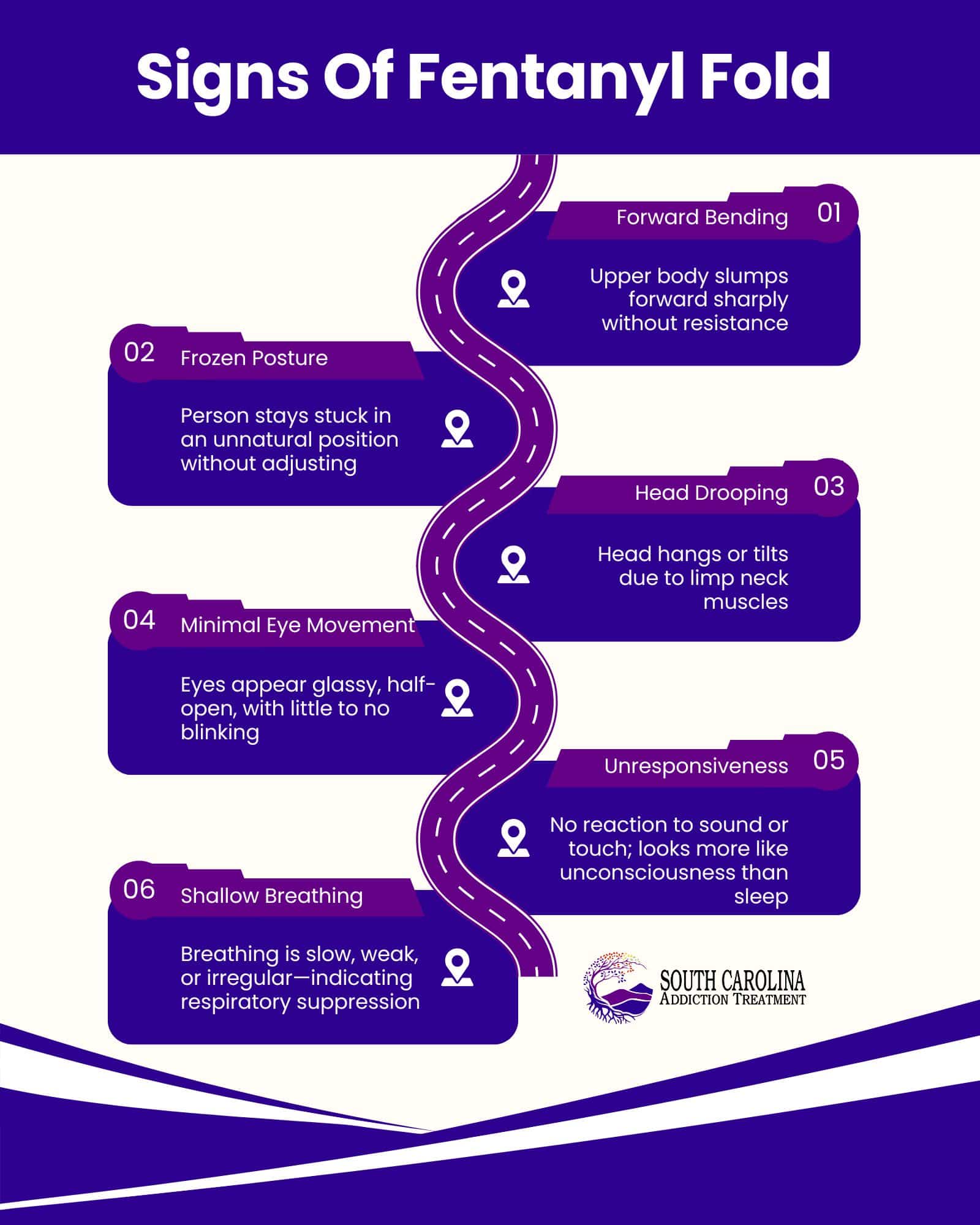
- Forward Bending at the Waist: The upper body slumps forward dramatically, sometimes at a near right angle. This collapse happens without any attempt to brace or resist.
- Frozen or Locked Posture: The person remains stuck in an unnatural position without moving. Even when unbalanced, they don’t correct their posture.
- Head Drooping or Hanging: The neck muscles go limp, causing the head to hang low or tilt forward. This happens even if the person is seated upright.
- Minimal Eye Movement: Eyes appear glassy, half-open, or fixed in place. Blinking slows or stops entirely.
- Unresponsiveness to Noise or Touch: The person doesn’t react to being spoken to or physically nudged. It resembles unconsciousness more than sleep.
- Slow or Shallow Breathing: Breathing becomes barely noticeable and irregular. This signals suppressed brain function and respiratory risk.
Why Do Fentanyl Users Bend Forward Or Slouch?
Fentanyl users bend forward or slouch because the drug causes extreme sedation and loss of muscle control. It directly affects your brain's motor centers, making it difficult to hold your body upright. The visible folding or slumping is a physical reaction to the drug’s depressant effects.
This bending isn’t intentional; it happens when your nervous system shuts down postural reflexes. People searching phrases like “why do fentanyl users slouch” or “why do they bend over like that” are witnessing this effect. It reflects how fentanyl overwhelms both awareness and muscle tone, resulting in a slouched, folded, or stuck body position.
What Happens To The Body During A Fentanyl High?
During a fentanyl high, your brain is flooded with dopamine while your central nervous system slows down. You feel numb, detached, or euphoric, but basic functions like breathing, movement, and alertness become suppressed. The effect is fast and overwhelming due to fentanyl’s strength and speed of action.
Your body becomes limp or rigid, depending on the dose and tolerance. Muscles weaken, posture collapses, and reflexes fade. Heart rate and respiratory rate drop, which increases overdose risk. Mental clarity vanishes, leaving you unaware of your surroundings or condition.
Is The Fentanyl Fold A Sign Of Overdose?
Yes, the fentanyl fold is a sign of overdose. While not every instance indicates a life-threatening dose, the posture shows dangerous levels of sedation and loss of control. If breathing is shallow or unresponsive, it's a medical emergency requiring naloxone and immediate help.
Repeated episodes of fentanyl fold also point to ongoing fentanyl addiction. The body’s repeated collapse under the drug's effect shows rising tolerance and deeper dependence. Without treatment, the risk of a fatal overdose increases with every use.
How Is The Fentanyl Fold Different From A Heroin Nod?
The fentanyl fold is different from the heroin nod in terms of posture severity, awareness, and muscle response. While both involve sedation, the fentanyl fold shows a deeper physical collapse with no active movement. In contrast, a heroin nod usually includes head-drooping with occasional eye-opening or speech.
Fentanyl users tend to lock into a bent position without adjusting, while heroin users sway or shift slightly. The fentanyl fold reflects a more potent neurological shutdown, making it harder to wake or stimulate someone. It’s a stiffer, more dangerous freeze than the looser nod seen with heroin.
Can Fentanyl Make You Lose Control Of Your Muscles?
Yes, fentanyl can make you lose control of your muscles. It interferes with the brain’s ability to signal movement, causing weakness, stiffness, or sudden collapse. High doses especially affect posture, coordination, and the ability to stay upright.
This muscle loss contributes to the fentanyl fold. Your body becomes slack or frozen because neural pathways are suppressed. In extreme cases, even facial muscles or airway muscles relax, increasing the risk of choking or respiratory failure.
Are People Aware When They’re In The Fentanyl Fold?
No, most people are not aware when they’re in the fentanyl fold. The drug dulls both physical sensation and mental alertness, making you unaware of posture, surroundings, or danger. Even if eyes are open, cognitive function is shut down.
This lack of awareness of fentanyl addiction is part of what makes the fentanyl fold so risky. Without realizing it, you stop responding to pain, imbalance, or breathing difficulty. Many users don’t remember the episode afterward, highlighting the drug’s impact on consciousness.
What Should You Do If You See Someone In The Fentanyl Fold?
If you see someone in the fentanyl fold, check if they’re responsive and breathing normally. Speak loudly, tap their shoulder, and watch for movement. If they don’t respond or have slow, shallow breathing, call 911 immediately.
Administer naloxone if available and stay with them until help arrives. Roll them onto their side to prevent choking in case of vomiting. Even if they appear “just high,” the risk of overdose is real and urgent. Your quick response saves a life.
Can Long-Term Fentanyl Use Cause Permanent Postural Damage?
Yes, long-term fentanyl use can contribute to permanent postural damage. Repeated episodes of collapsing into the fentanyl fold strain your spine, neck, and back muscles. Over time, this pressure leads to joint stiffness, nerve compression, or abnormal curvature.
Chronic slouching weakens core and postural muscles, especially if paired with poor nutrition or physical inactivity. Some users develop lasting mobility issues, balance problems, or musculoskeletal pain even after stopping drug use. Early treatment reduces the risk of permanent damage.
How Is Fentanyl Addiction Treated?
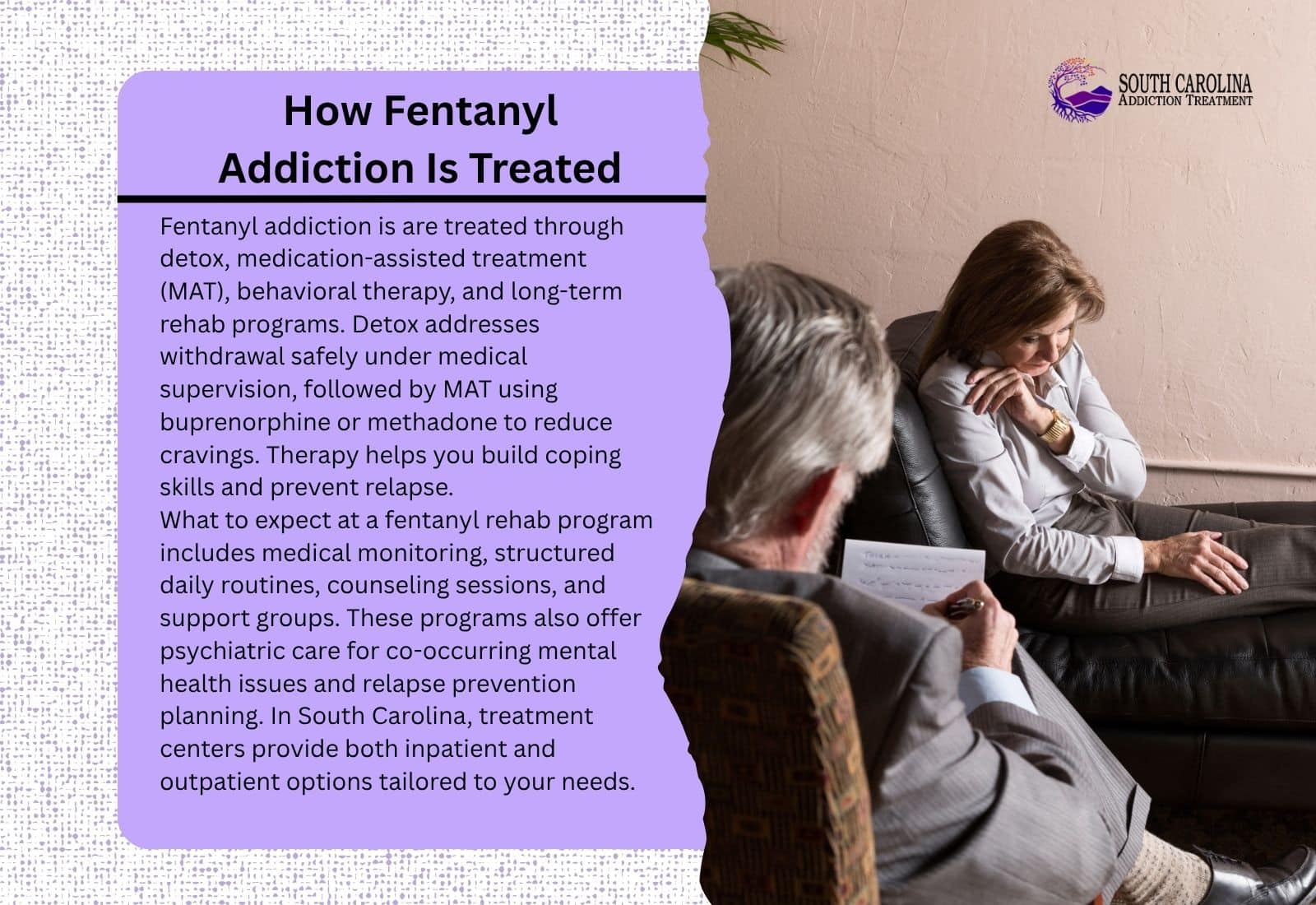
Fentanyl addiction is treated through detox, medication-assisted treatment (MAT), behavioral therapy, and long-term rehab programs. Detox addresses withdrawal safely under medical supervision, followed by MAT using buprenorphine or methadone to reduce cravings. Therapy helps you build coping skills and prevent relapse.
What to expect at a fentanyl rehab program includes medical monitoring, structured daily routines, counseling sessions, and support groups. These programs also offer psychiatric care for co-occurring mental health issues and relapse prevention planning. In South Carolina, treatment centers provide both inpatient and outpatient options tailored to your needs.